



Day 36: Before the Decisive Moment
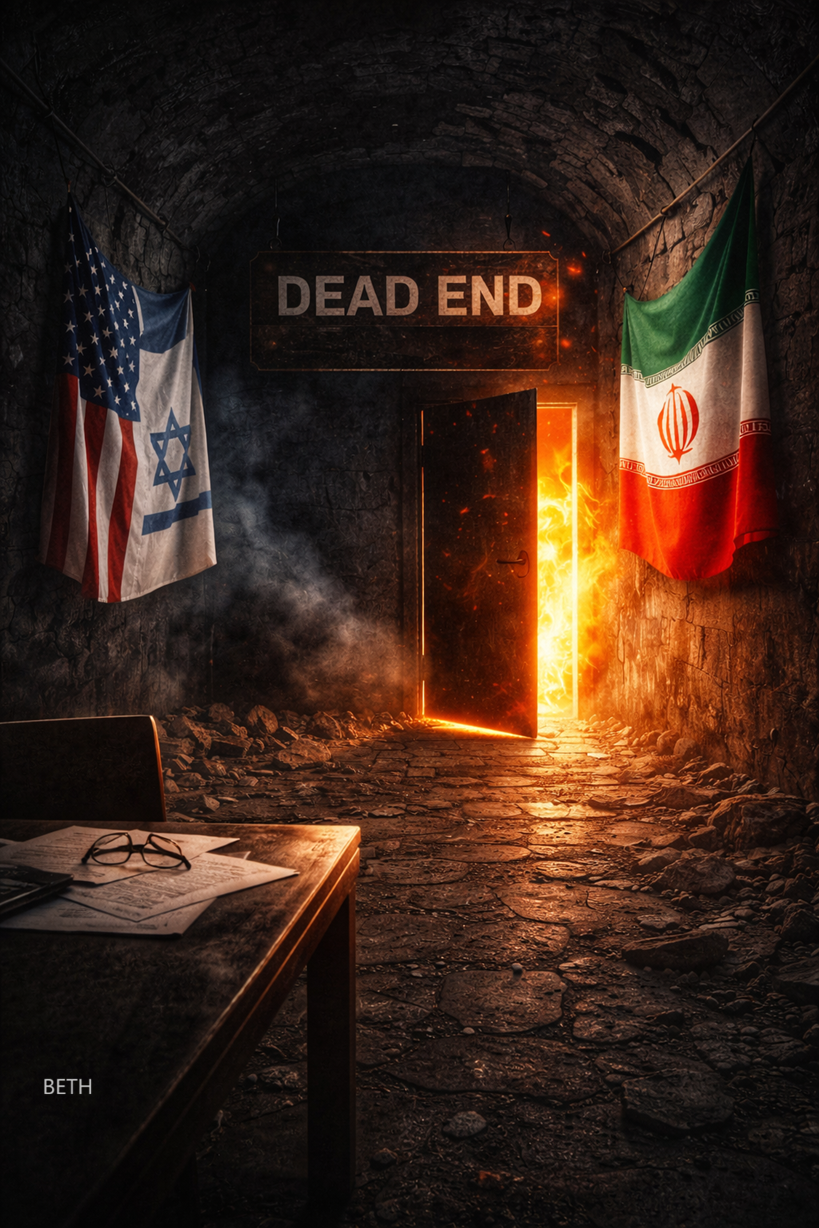
Coverage & Analysis | BETH
The U.S.–Israeli war on Iran has entered its thirty-sixth day, amid pivotal developments indicating a shift from gradual pressure to the brink of a decisive phase.
In the past hours, two key events have reshaped the scene:
Washington’s announcement that negotiations with Iran have reached a deadlock
A warning from Donald Trump of “48 hours before hell”
Overview
Military operations continue at an escalating pace, alongside regional and international efforts aimed at containing the conflict, ahead of the deadline set by Trump, scheduled to expire on Monday, April 6.
Indicators suggest that Washington’s notification to Israel about the collapse of negotiations is not merely a diplomatic update, but a preparation for the post-deadline phase.
In this context, U.S. officials revealed that Defense Secretary Pete Hegseth presented the legal framework to the President for targeting energy facilities inside Iran, reflecting an expansion in the potential target bank.
The Trump administration believes that striking infrastructure—including bridges and power stations—could weaken Iran’s missile and nuclear programs by disrupting operational capability and logistical support.
On the Ground
U.S. and Israeli strikes have continued across multiple locations inside Iran, including:
The petrochemical complex in Ahvaz
Areas surrounding Bushehr facilities
IRGC bases and depots in Isfahan
The 8th Tactical Air Base
Military sites in Sistan and Baluchestan
Missile launch platforms in the mountains north of Tehran
Research centers linked to optical and nuclear technologies
Naval piers in Hormozgan
At the same time, the Israeli military announced an expansion of its operations in Lebanon, targeting more than 140 Hezbollah positions.
An Israeli official also indicated that intensive operations inside Iran are expected to continue for at least another week.
Field Reading
After 35 days of operations, the balance of the battlefield is becoming clearer:
High efficiency in defense systems across Gulf states
Strong Israeli interception and containment capabilities
A noticeable increase in the precision and intensity of U.S.–Israeli strikes
An unexpected decline in the effectiveness of Iran’s war machinery
Iranian missile attacks appear increasingly limited in impact, resembling attempts at disruption rather than decisive strikes.
Meanwhile, Tehran seems to be shifting toward dispersed tools—internally and through its proxies—amid signs of fatigue among its allied networks.
Iranian media coverage also reflects a pattern of narrative management rather than a transparent representation of reality.
BETH Analysis
The situation is no longer merely an exchange of strikes,
but a management of timing toward a decisive outcome.
The collapse of negotiations, combined with a narrow time window, signals a transition from negotiation-based pressure to the imposition of facts on the ground.
The inclusion of energy facilities in the potential target bank suggests that the conflict may shift from targeting capabilities to reshaping those capabilities entirely.
A Decisive Statement
In his latest remarks after midnight Middle East time, Donald Trump confirmed the elimination of several Iranian military leaders, stating they had led the country poorly, indicating the continuation of a strategy focused on targeting leadership structures.
The current indicators point to ongoing operations inside Iran, with increasing intensity and diversification.
As the April 6 deadline approaches, attention turns to the possibility of moving into a phase of executing the stated threats, unless a last-minute shift occurs in the negotiation track.
Conclusion
We are facing a decisive moment:
Either a last-minute adjustment of course,
or a transition into a phase where outcomes are imposed by force.