



Arab Six-Nation Statement Affirms Right of Self-Defense… and UN Condemnation of Iranian Attacks on the Gulf
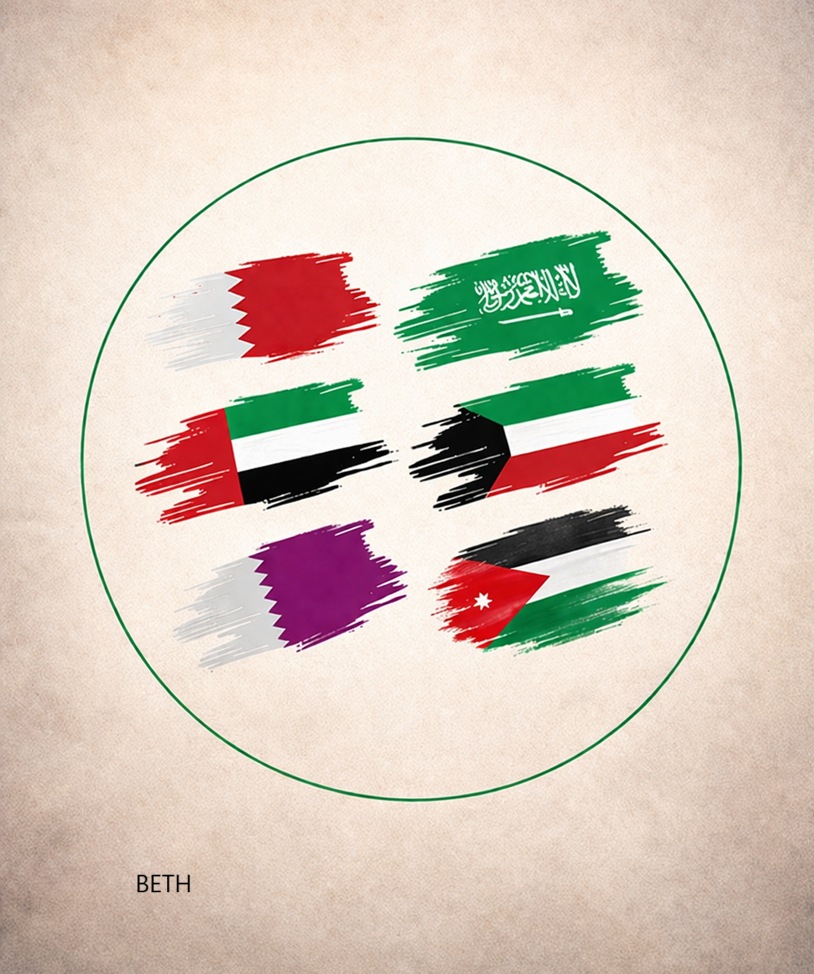
Riyadh, Geneva | BETH
6 Shawwal 1447H | March 25, 2026
Saudi Arabia, Kuwait, the UAE, Qatar, Bahrain, and Jordan issued a joint statement condemning the Iranian attacks on countries in the region, including those carried out through Tehran’s proxies.
The statement stressed rejection of these attacks, affirming that they undermine the sovereignty and security of states, in an escalation that reflects the widening scope of regional threats.
The statement also called on Iraq to take the necessary measures to stop militia attacks launched from its territory, in order to preserve fraternal relations and prevent further escalation.
The countries affirmed in the statement the right to self-defense against what they described as criminal attacks, in a clear indication of legitimizing responses to sources of threat.
The statement also praised the role of the military and security forces in foiling the plans of Iranian sleeper cells.
BETH Analysis
The statement does not stop at condemnation…
but establishes an advanced legal and political position:
From reaction… to affirming the right to respond
The reference to “self-defense” shifts the discourse
from mere denunciation
to an international legal framework that allows action.
Unanimous UN Condemnation of Iranian Attacks on the Gulf and Adoption of a Saudi-Led Resolution
In a parallel development, the United Nations Human Rights Council in Geneva today unanimously adopted, without a vote, a draft resolution submitted by Saudi Arabia, in cooperation with the GCC states and Jordan, regarding the human rights implications of Iranian attacks targeting countries in the region.
The resolution came following an urgent debate, condemning the Iranian attacks in the strongest terms, and describing them as a flagrant violation of international law and a serious breach of international peace and security.
It also stressed the need to ensure accountability for these violations, and condemned any Iranian attempts to disrupt international navigation through the Strait of Hormuz.
The resolution highlighted the seriousness of targeting energy infrastructure, and the resulting direct consequences on human rights and regional stability.
It called on Iran to comply with UN Security Council Resolution (2817), and to cease practices that threaten regional security.
BETH Analysis
The UN resolution provides the Arab statement with international cover:
A unified regional position
- unanimous international legitimacy
= a calculated escalation within a legal framework
Conclusion
What is happening is not merely condemnation…
but the construction of an integrated path:
Arab political
and international legal
At its core, a clear principle is taking shape:
Self-defense is no longer an option…
but a declared and supported right.