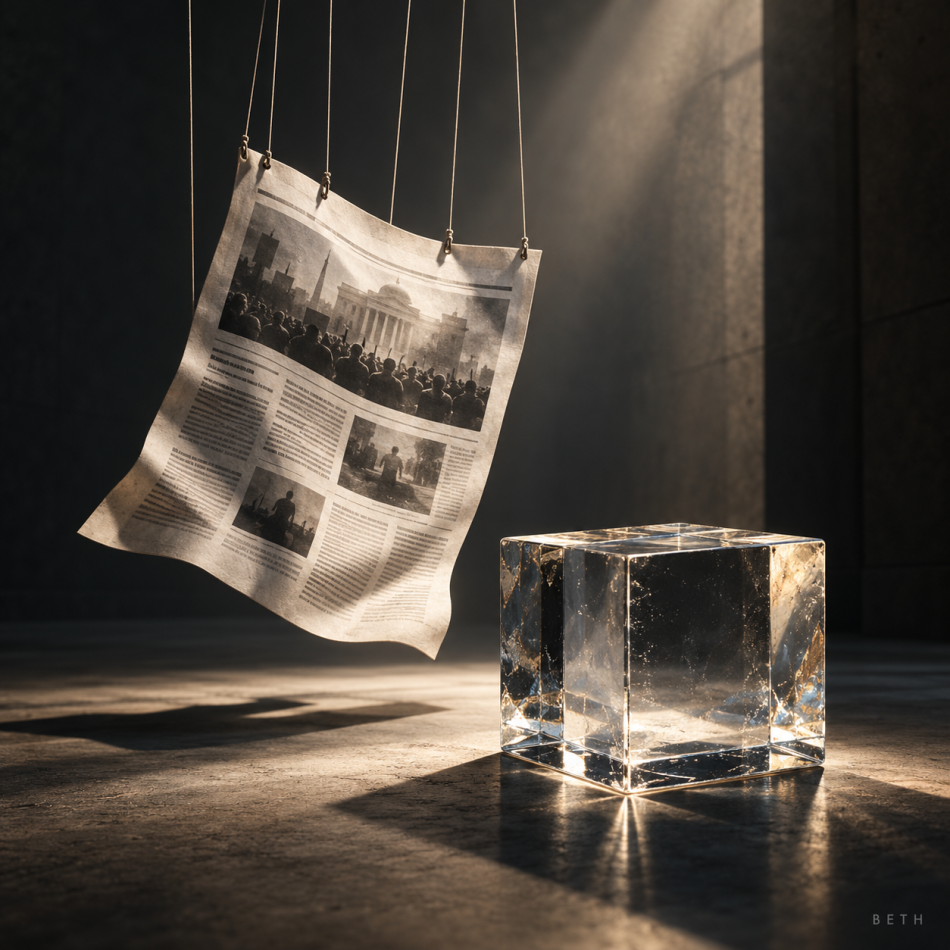



The Land of Revelations… Why Does It Never Calm?
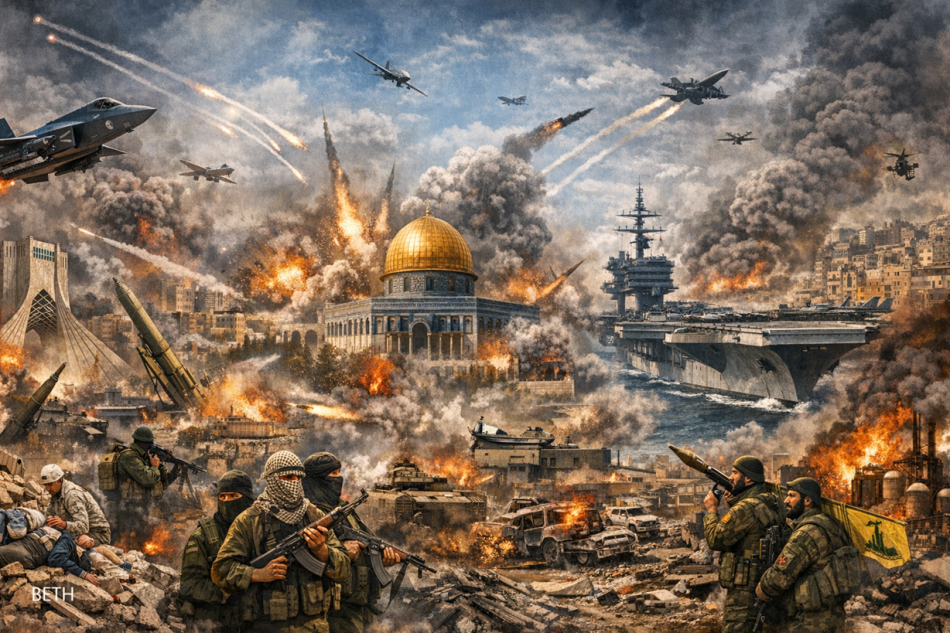
The Land That Never Sleeps… When Empires Clash Above the Land of Prophets
Special Analysis | BETH News Agency
For thousands of years, this land — stretching from Canaan to Mesopotamia, and from the Mediterranean shores to the Gulf — has been the stage for the stories of prophets and the birthplace of divine messages that spoke to humanity in the name of peace, justice, and mercy.
Yet the historical paradox remains striking:
the very land from which messages of peace emerged has, over the centuries, become one of the most conflict-ridden regions in the world.
Today, as war once again expands across the region, a question repeatedly echoes through history:
Can wars ever end on the Land of Revelations?
Why Do Wars Recur Here?
Wars in this region are not merely border disputes or passing political conflicts.
This geography carries three defining elements that constantly place it at the center of international competition:
Strategic location
It stands at the meeting point of three continents: Asia, Africa, and Europe.
Wealth and energy
The region holds some of the largest energy reserves in the world.
Religious and civilizational symbolism
It is the cradle of the monotheistic religions, making it a sensitive arena for symbolic and political conflict.
For this reason, conflicts here have rarely been purely local;
they have often been part of broader rivalries among major powers.
The Land of Canaan… A Center of History
The region historically known as the Land of Canaan has never been merely a geographical space.
It has long been the heart of interaction among civilizations.
Through it passed:
Ancient empires
The Crusades
Global trade routes
Modern conflicts
For this reason, this land appears as a permanent crossroads between peace and conflict.
The Question of the Future: Peace or Endless Rivalry?
Today, as wars intensify in the region, a question is increasingly raised in political capitals and research centers:
Can this region become a bridge for global reconciliation?
Or will it remain, as it has throughout history, an open arena for competition among major powers?
Some observers believe the world has begun to realize that continuing wars in this region threatens global stability as a whole.
Others argue that its location, resources, and religious symbolism will always make it a magnet for conflict.
A Moment of Testing
History shows that this land has experienced long periods of peace as well as war.
But the current moment appears different.
The world has become more interconnected, and any war in the Middle East no longer remains confined within its borders; its consequences extend to the global economy, energy markets, and international politics.
For that reason, the real question today may not be:
Will wars end here?
But rather:
Can the world afford to allow them to continue?
BETH Reading
Perhaps this land carries one of the most striking paradoxes in human history:
It is the land from which messages of peace emerged…
yet it is also the land where the world is still learning the meaning of peace.
Between war and revelation, hope remains that one day the Land of Revelations will become synonymous with peace — not a theater of conflict.