



Day Seven: The War Expands
Follow-up & Analysis | BETH News Agency
Riyadh | BETH
The war in Iran entered its seventh day on Friday amid simultaneous field escalation marked by airstrikes deep inside Iran and continued exchanges of missiles and drones, while tensions expanded to Lebanon, Iraq, and the Gulf.
Correspondents for Al Arabiya and Al Hadath reported the launch of Iranian missiles toward central Israel. Israeli defenses said they intercepted them, while sirens sounded alongside explosions in Tel Aviv.
The Israeli military said:
“Missiles launched from Iran toward the territory of the State of Israel were detected a short while ago. Defense systems are operating to intercept this threat.”
A New Wave on Tehran
Earlier, the Israeli military announced the launch of the fourteenth wave of strikes on Tehran, confirming a new round of attacks targeting infrastructure inside Iran, while loud explosions were heard in the capital.
In response, the Islamic Revolutionary Guard Corps said it had launched missiles and drones toward Tel Aviv.
Shiraz and Civilian Losses
Iran’s Fars Province announced that 20 people were killed and 30 others injured in a U.S.-Israeli airstrike targeting the city of Shiraz in southern Iran.
The Iranian Red Crescent also announced that 3,643 civilian facilities had been damaged during the attacks carried out by the United States and Israel on Iran. It said the damage included:
3,090 residential homes
528 commercial and service facilities
14 medical and pharmaceutical centers
9 Red Crescent facilities
It added that damage also affected several ambulances and relief operational vehicles.
Israel: A New Phase of Operations
Israeli Chief of Staff Eyal Zamir announced that the army is moving into a new phase of military operations inside Iran, targeting what he described as the military structure of the Iranian regime.
Reports on Friday morning also spoke of a series of explosions in different parts of Tehran, particularly in the east and west of the city.
In the same context, the Iranian Red Crescent announced that the death toll from the airstrikes had risen to 1,332 fatalities.
Iran: Expanding the Attacks
For its part, the Iranian Revolutionary Guard announced on Friday the launch of a barrage of missiles toward Tel Aviv, where explosions had been heard on Thursday evening, with no confirmed reports of casualties.
It also said its attacks would intensify and expand in scope in the coming days, referring to:
the targeting of a site housing U.S. soldiers in Erbil, Iraq, with drones
the targeting of Ramat David Air Base in Israel
The Lebanon Front Reignites
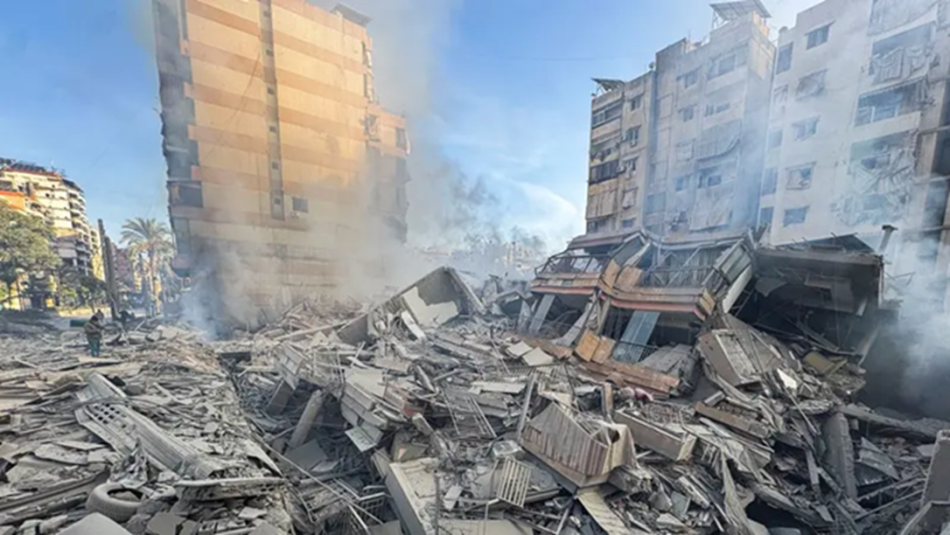
Israeli airstrikes resumed on Beirut’s southern suburbs on Friday afternoon.
As bombardment of the southern suburbs continued and Hezbollah responded, Israeli Chief of Staff Eyal Zamir said the campaign in Lebanon would not end before the threat is removed.
The Israeli military also stated that overnight strikes targeted command headquarters and infrastructure belonging to Hezbollah.
Trump: No Ground Attack
U.S. President Donald Trump said the pace and intensity of the strikes on Iran will continue, while expressing his desire to change the leadership in Tehran.
In an interview with NBC News, Trump ruled out any ground intervention, saying:
“We are not considering a ground attack on Iran at this time. They have lost everything. They lost their navy. They lost everything they could lose.”
He added that Iran’s air defenses and missile capabilities had been completely or largely destroyed, in his words.
Institute of War: The Gulf Under Greater Pressure
The Institute of War in the United States said on Friday that Iranian missiles and drones directed at the Gulf states amounted to eight times what Iran had launched toward Israel.
Background to the Operations
It is worth noting that the United States and Israel began a large-scale military operation against Iran on February 28.
The White House said the attack came in response to what it described as Iranian missile and nuclear threats.
According to publicly announced data from the Western side, the U.S.-Israeli strikes resulted in the killing of several senior Iranian leaders, including:
Ali Khamenei
Mohammad Pakpour
Abdolrahim Mousavi
Analysts’ Views for BETH
Readings on Iran After Khamenei
Alongside the military developments, BETH received several analytical readings from writers and researchers addressing the phase of Iran after Khamenei, with clear focus on the question of political legitimacy and the prospects for internal transition.
These readings converge around several key themes:
1. The Legitimacy Battle
A number of analysts believe that Khamenei’s killing, according to the arguments presented, has opened a broad debate over the legitimacy of the next authority, and whether the regime is capable of reproducing itself through the appointment of a new supreme leader, or whether the country is heading toward a deeper political transition.
2. The Interim Government as an Opposition Proposal
Some views focused on the National Council of Resistance of Iran’s announcement of a project for the interim government of the Democratic Republic of Iran, considering it an attempt to present an organized political alternative in the event of regime collapse or a breakdown in succession mechanisms from within.
3. Growing Western Political Support
Several writers pointed to the conference held in the British Parliament under the title:
“Iran: Toward a Democratic Republic – Support for the Interim Government”
and to the political backing expressed by a number of British lawmakers for the option of democratic transition.
4. Women and the Political Alternative
Some readings highlighted the central role of women within the ranks of the Iranian opposition, especially in the discourse of Maryam Rajavi, viewing this as a defining feature of the proposed political alternative.
5. Between the Fall of the Regime and the Reshaping of the Republic
These analyses suggest that Iran now stands before a phase of political reconfiguration, in which two paths are competing:
reproduction of the regime
transition to a new republican formula
BETH Reading
The developments of day seven show that the war is no longer merely an exchange of strikes between Israel and Iran. It has begun to evolve into a multi-front regional scene, involving:
Iran’s interior
Israel
Lebanon
Iraq
the Gulf
At the same time, the military escalation is unfolding alongside growing political debate over the future of rule in Iran, whether within opposition circles or in some Western arenas.
Yet, it remains too early to determine whether these readings represent a realistic and imminent political path, or merely early attempts to fill a possible vacuum should the war continue and further weaken the regime’s structure.
Conclusion
On its seventh day, the war on Iran appears to be moving along three parallel tracks:
continued military escalation inside and outside Iran
expanding fronts of confrontation across the region
an early political struggle over the shape of Iran after Khamenei
Between the battlefield and politics, the larger question remains:
Is the war moving toward the collapse of the regime’s structure… or toward its reshaping under fire?
Intercepting 4 Drones Near Riyadh, Similar Ones in the Empty Quarter, and Destroying a Cruise Missile East of Al-Kharj
The official spokesperson for the Ministry of Defense, Major General Turki Al-Maliki, stated that a drone was intercepted and destroyed northeast of the city of Riyadh, with no damage reported.
The official spokesperson for the Ministry of Defense, Major General Turki Al-Maliki, also stated that three drones were intercepted and destroyed east of the Riyadh region.
The official spokesperson for the Ministry of Defense, Major General Turki Al-Maliki, further stated that a cruise missile was intercepted and destroyed east of Al-Kharj Governorate.
He also stated that four drones were intercepted and destroyed in the Empty Quarter while heading toward the Shaybah oil field.
Explosion Heard in Erbil
An explosion was heard shortly ago in the city of Erbil in the Kurdistan Region of Iraq, reportedly resulting from defensive interception operations, according to local sources.
Missiles Launched Toward Southern Israel
Reports indicated that missiles were launched from Iran toward southern Israel as part of the ongoing military escalation between the two sides.
Drone Targets Iranian Opposition Camp
Reports also indicated that a drone targeted a camp belonging to the Iranian opposition in the Kurdistan Region of Iraq, amid rising security tensions in the region.
Khamenei Bunker Targeted with 100 Bombs
Reports indicated that an airstrike targeted a bunker believed to be linked to Iranian Supreme Leader Ali Khamenei, using around 100 bunker-busting bombs.
According to circulating security estimates, a number of Iranian commanders were believed to have been inside the targeted site at the time of the strike. No official confirmation has yet been issued by Iranian authorities regarding the nature of the location or the extent of the damage.
The development comes amid escalating military exchanges across the region and an expansion of aerial strikes in recent days.
The Targeted Bunker
Military reports indicate that the site struck in Tehran is considered one of the most important fortified bunkers associated with Iran’s leadership complex. It had reportedly been used for years by Supreme Leader Ali Khamenei and senior military commanders as a secure location for high-level meetings and crisis management.
The bunker is located deep underground beneath a leadership compound that stretches across several streets in the Iranian capital. It includes command rooms and heavily fortified shelters designated for the country’s top leadership in times of war or national emergencies.
According to the military accounts circulating about the operation, around 50 fighter jets took part in the strike, dropping approximately 100 bunker-busting bombs on the site, which is believed to have served as an emergency command center for managing military operations during periods of escalation.
Iranian Media: Attacks Target Presidential Buildings in Tehran
Iranian media reported that attacks struck presidential buildings in Tehran at around 3:00 PM, amid the ongoing military escalation in the region.
No official details have yet been released regarding the extent of the damage or possible casualties.