



The Custodian of the Two Holy Mosques Chairs Cabinet Session
Riyadh | BETH
23 December 2025
3 December 2025 – 3 Rajab 1447 AH
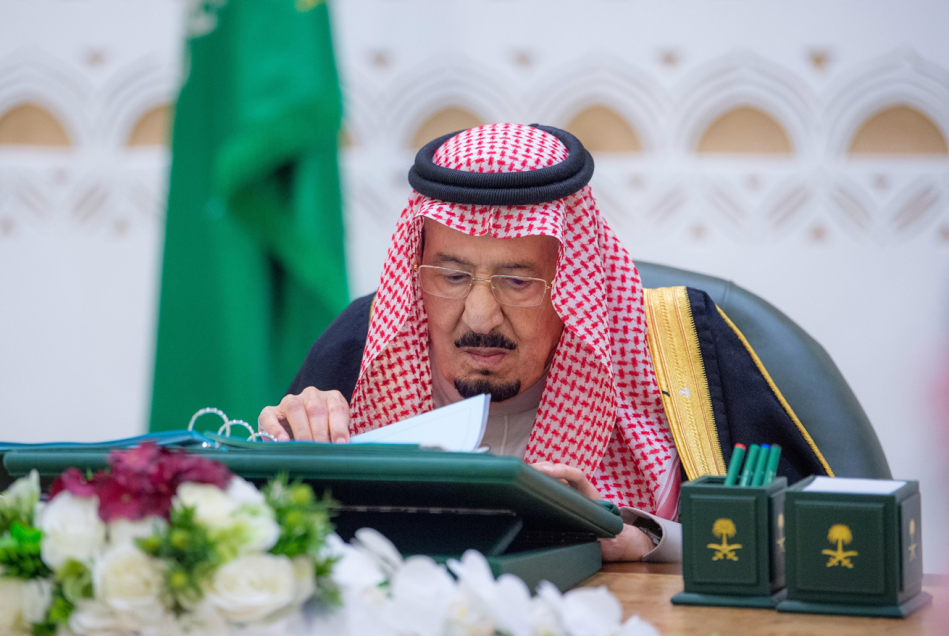
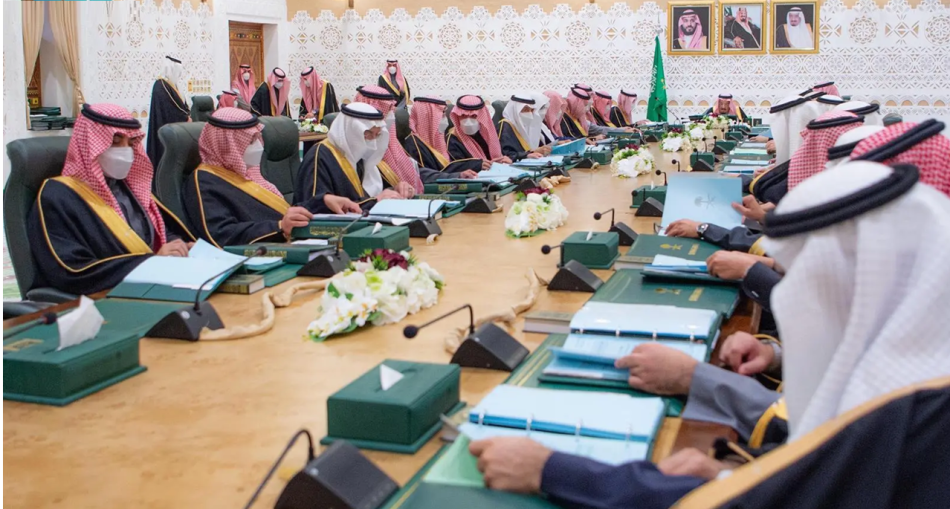
The Custodian of the Two Holy Mosques, King Salman bin Abdulaziz Al Saud, chaired the Cabinet session held today in Riyadh.
International Relations and Regional Coordination
At the outset of the session, the Cabinet reviewed the substance of recent discussions and communications conducted over the past days between His Royal Highness Prince Mohammed bin Salman bin Abdulaziz Al Saud, Crown Prince and Prime Minister, and a number of leaders of brotherly and friendly countries, aimed at expanding frameworks of mutual cooperation and enhancing coordination on global issues and challenges.
In this context, the Cabinet commended the outcomes of:
The fourth meeting of the Saudi–Bahraini Coordination Council
The eighth meeting of the Saudi–Qatari Coordination Council
These meetings reaffirmed the commitment to further strengthening bilateral relations at all levels, in addition to signing several agreements and memoranda of understanding that open new horizons for joint cooperation, particularly in development-related fields.
Strategic Projects and Gulf Integration
Following the session, Minister of Media Salman bin Youssef Al-Dosary stated that the Cabinet approved the high-speed electric railway project linking the Kingdom of Saudi Arabia with the State of Qatar. The project is expected to support mobility, enhance tourism and economic activity, and—God willing—become one of the region’s most prominent development projects, serving as a key driver of Gulf integration through an advanced railway network.
Political and Diplomatic Positions
The Cabinet reviewed the Kingdom’s participation in regional and international meetings, as well as the outcomes of the 46th session of the Supreme Council of the Gulf Cooperation Council (GCC), which emphasized the full, precise, and continuous implementation of the vision of the Custodian of the Two Holy Mosques to strengthen joint Gulf action.
The Cabinet welcomed the decision by the United States of America to lift sanctions imposed on the Syrian Arab Republic, praising the positive role played by President Donald Trump, beginning with his announcement during his visit to the Kingdom and culminating in the signing of the law repealing the so-called “Caesar Act.”
The Cabinet reiterated that Saudi Arabia’s foreign policy prioritizes:
Consolidating regional security and stability
Resolving disputes through peaceful means
Providing humanitarian assistance
Promoting dialogue among cultures
Supporting international organizations
Creating enabling conditions for development in the Middle East and globally
National Achievements and Digital Leadership
Domestically, the Cabinet expressed appreciation for the achievements of government entities through continued investment in national talent, the realization of comprehensive development goals, and leadership across various sectors. It stressed the importance of accelerating efforts to secure further national gains.
The Cabinet affirmed that the inclusion of Riyadh, AlUla, and Riyadh Al-Khubara in the UNESCO Global Network of Learning Cities underscores the Kingdom’s commitment to providing lifelong learning opportunities for all, thereby enhancing its global standing.
The Cabinet highlighted Saudi Arabia’s achievement of:
Second place globally in digital government according to the World Bank Group’s 2025 index
Fifth place globally and first in the Arab world in artificial intelligence growth, according to the Global AI Index
These accomplishments reflect the integration of government systems, advanced digital infrastructure, and the high quality of electronic services.
The Cabinet also praised the success of the “Made in Saudi Arabia 2025” Exhibition, which featured the Syrian Arab Republic as Guest of Honor and resulted in the signing of strategic agreements and partnerships that enhance the competitiveness of Saudi products in regional and global markets.
Cabinet Decisions
After reviewing items on its agenda, including those studied in coordination with the Shura Council and relevant councils and committees, the Cabinet issued the following decisions:
First:
Authorization for the Minister of Interior—or his delegate—to negotiate with the Uzbek side on a draft extradition agreement and sign it.
Second:
Authorization for the Minister of Foreign Affairs—or his delegate—to negotiate with Spain on a draft memorandum of understanding to establish a Strategic Partnership Council and sign it.
Third:
Authorization for the Minister of Culture, Chairman of the Board of Trustees of the King Salman Global Academy for Arabic Language—or his delegate—to negotiate with the Muslim World League on a memorandum of understanding to serve the Arabic language.
Fourth:
Approval of a draft memorandum of cooperation between the Ministry of Justice of Saudi Arabia and the Ministry of Justice of Japan in legal and judicial fields.
Fifth:
Authorization for the Minister of Transport and Logistics Services, Chairman of the Saudi Ports Authority—or his delegate—to negotiate with Singapore on a memorandum of understanding in green and digital shipping and sign it.
Sixth:
Authorization for the Chairman of the Saudi Food and Drug Authority—or his delegate—to negotiate with the Food and Agriculture Organization of the United Nations (FAO) on designating the Authority as a reference center for antimicrobial resistance.
Seventh:
Approval of a memorandum of understanding between the Zakat, Tax and Customs Authority of Saudi Arabia and the Hong Kong Customs and Excise Department on mutual administrative assistance in customs matters.
Eighth:
Authorization for the President of the General Court of Audit—or his delegate—to negotiate with North Macedonia on a memorandum of understanding for cooperation in accounting, auditing, and oversight.
Ninth:
Approval of a memorandum of understanding between the General Court of Audit of Saudi Arabia and the State Control Committee of the Republic of Belarus.
Tenth:
Approval of the Rules and Standards for Naming Public Facilities.
Eleventh:
Approval of the Unified Rules for Empowering Persons with Disabilities of the Gulf Cooperation Council.
Twelfth:
Issuance of necessary directives regarding several agenda items, including annual reports of various ministries, authorities, and strategic development bodies.