



Bahrain Summit: Any Violation of a Gulf State’s Sovereignty Is a Threat to Our Collective Security
Manama – BETH
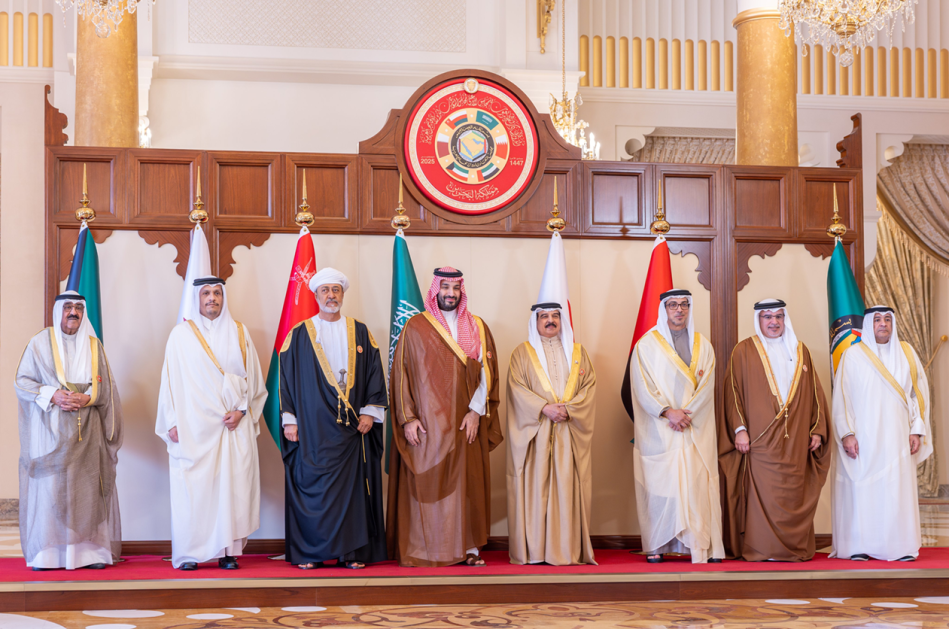
Gulf leaders, at the 46th session of the GCC Supreme Council, reaffirmed the importance of respecting the sovereignty of GCC states and all countries in the region, rejecting any interference in their internal affairs, and condemning the use—or threat—of force. They stressed that the security and stability of GCC states are indivisible, and that any violation of the sovereignty of a member state constitutes a direct threat to the collective security of the Council.
The Al-Sakhir Declaration 2025 underscored the need to strengthen international cooperation to safeguard regional security, deepen political, security, and economic partnerships with friendly nations, international organizations, and economic blocs, and reinforce cooperation in sustainable development.
The declaration also highlighted the importance of combating all forms of extremism, terrorism, hate speech, and incitement, confronting transnational organized crime, and supporting the joint maritime forces headquartered in Bahrain to enhance energy security, protect maritime navigation and international trade routes, and work toward making the Middle East free of nuclear weapons and weapons of mass destruction, thereby reducing arms races and bolstering regional stability.
Welcoming the Outcomes of Sharm El-Sheikh
In pursuit of a just, comprehensive, and lasting peace in the Middle East, and in support of diplomatic resolutions to regional and international conflicts, the leaders welcomed the outcomes of the Sharm El-Sheikh Peace Summit, affirming their support for regional and international efforts to ensure full compliance with the agreement to end the war in Gaza.
They stressed the importance of facilitating humanitarian aid delivery, reconstruction, and all efforts aimed at establishing an independent Palestinian state with full sovereignty on the June 4, 1967 borders and with East Jerusalem as its capital, in accordance with the two-state solution, the Arab Peace Initiative, and international legitimacy—reflecting the aspirations of the Palestinian people and the peoples of the region for peace and security.
Bahrain… A Key Security Partner
The leaders expressed their support for Bahrain in representing the Arab Group as a non-permanent member of the United Nations Security Council for the next two years, expressing confidence in its ability to advance the aspirations of the GCC and Arab countries. They affirmed Bahrain’s role as an active partner in promoting international peace and security, prioritizing dialogue, and strengthening the values of tolerance, coexistence, and human fraternity.
Achievements in Joint Gulf Cooperation
The leaders welcomed the progress made within the GCC framework, including an integrated defense and security architecture, balanced diplomatic positions, and sustainable economic and development projects—all reflecting the political cohesion of GCC states and their unified stance toward regional and international issues.
They emphasized their determination to continue advancing coordination and integration across political, security, economic, and social fields, with the goal of achieving the long-sought unity of the GCC, thereby reinforcing security, peace, and prosperity in the region and the world.
Solidarity and Strategic Integration
The Al-Sakhir Declaration 2025 called for developing institutional cooperation mechanisms to expand horizons of fraternal solidarity and strategic integration, ensuring sustainable security and prosperity for GCC states and their peoples. It emphasized the commitment to building a more just and prosperous world, grounded in the principles that ensure a brighter future for the region.
Advancing the Gulf Common Market
Economically, the leaders stressed the importance of completing the requirements of the Gulf Common Market and the customs union, promoting trade and tourism, and encouraging investment in strategic projects—particularly in infrastructure, energy, transport, communications, water, and food security.
Digital Infrastructure Integration
The summit highlighted the importance of enhancing digital infrastructure integration, facilitating e-commerce, and supporting the development of shared digital payment systems and cloud services—aimed at achieving full economic citizenship and supporting comprehensive sustainable development.
Knowledge Integration & Technological Cooperation
The leaders emphasized strengthening cooperation in technology, artificial intelligence, and cybersecurity within a unified Gulf strategy that promotes knowledge integration, digital transformation, cybercrime prevention, and a safe digital environment. They also stressed empowering youth and women in development efforts and enhancing the role of think tanks in shaping future-oriented public policies.
Environmental Responsibility & Sustainability
The summit reaffirmed the GCC’s commitment to environmental protection, climate action, reducing carbon emissions, expanding clean and renewable energy projects, and preserving natural and marine resources—aligned with regional and global initiatives to achieve net-zero emissions and the Sustainable Development Goals.
GCC–Italy Partnership
The leaders expressed their appreciation for the participation of Italian Prime Minister Giorgia Meloni in the joint discussions, which focused on strengthening longstanding ties. Both sides agreed to establish a joint action plan to elevate relations to a comprehensive strategic partnership, reflecting the GCC’s openness to building broad partnerships with friendly nations.