



The Orbit Ignites… The World Enters the Era of Conflict Above the Clouds
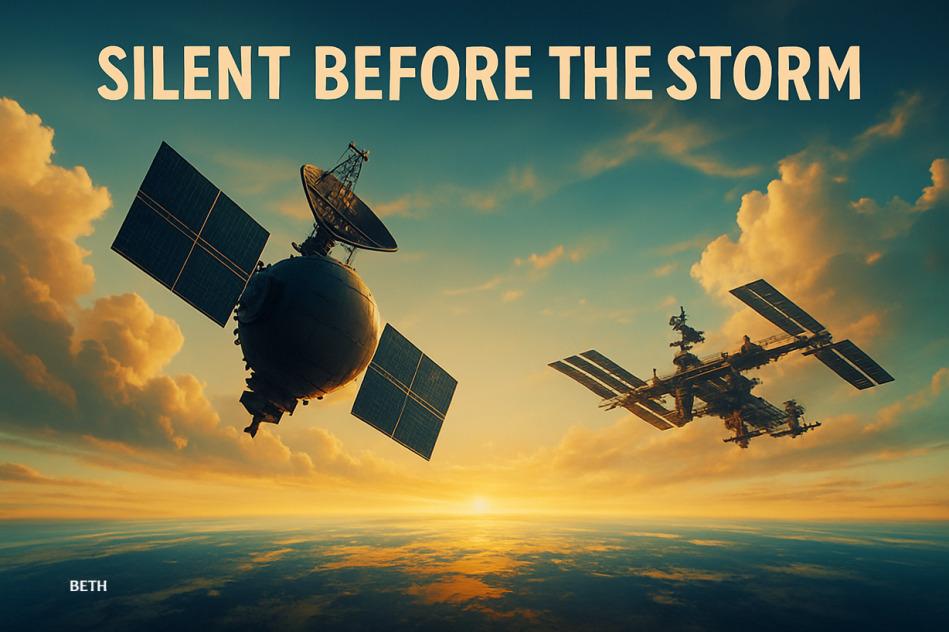

Strategic Analysis – Strategic Media Department | BETH Press
Introduction
The space race was never merely a technological pursuit;
It has always been a race for influence.
But today, something far more dangerous is unfolding:
A shift of global conflict from Earth to the Low Earth Orbit (LEO) — the most strategic geopolitical zone of the future.
Washington has officially accused Moscow of deploying a “satellite killer” in LEO.
This is not a passing headline —
It is the beginning of a new chapter in global power competitions.
──────────────────────────
1. What Exactly Happened?
The United States announced that Russia launched a satellite into LEO capable of:
Approaching other satellites
Disrupting them
Or destroying them through directed systems or controlled collisions
This is the first time Washington publicly issues such a direct accusation, which means:
✔ Escalation to a higher level of confrontation
✔ Transition from information warfare to space warfare
✔ Recognition of satellites as legitimate military targets
For context…
LEO (300–1200 km altitude) is home to most:
Internet satellites
GPS systems
Earth-observation platforms
Intelligence and reconnaissance satellites
AI-enabled orbital systems
Defense-related satellites
Critical global communication networks
In other words:
Whoever controls LEO controls the digital backbone of the world.
──────────────────────────
2. Why Is This the Most Dangerous Escalation Since the Cold War?
Because LEO today is the foundation of both civilian and military life.
Any attack on it would immediately trigger:
1) Global communications paralysis
Disrupting satellite internet = economic and cyber paralysis.
2) Disruption of navigation and aviation
GPS is the heart of global navigation.
3) Destabilizing defense systems
All missile-defense networks rely on space-based infrastructure.
4) Threats to AI ecosystems
LEO has become the “server of the world” for distributed AI networks.
5) Risk of a “Kessler catastrophe”
A single collision could create thousands of debris fragments, destroying any satellite in their path — a domino effect.
And because controlling this orbit grants a nation the power to “switch off the world” with one move, the defining question becomes:
Who will own the sky?
──────────────────────────
3. Why Is BETH Involved?
Because BETH has long positioned “LEO Race” as an analytical framework linking:
✔ Artificial intelligence
✔ Space and orbital sovereignty
✔ Cybersecurity
✔ Global economic power
✔ Great-power competition
And because BETH believes:
The wars of the future will be decided in space before they are decided on the ground.
This event is precisely where the future intersects with geopolitics — the core of BETH’s strategic mission.
──────────────────────────
4. What Does This Mean for Saudi Arabia?
1) Stronger Saudi Cybersecurity Through Independent Satellites
Saudi Arabia needs a sovereign satellite network capable of protecting:
Data
Communications
Command and control systems
Essential national services
Independent satellites = reduced vulnerability to geopolitical instability.
2) Strategic Space Partnerships
Saudi Arabia can build multi-directional alliances with:
The United States (technology and defense integration)
Europe (space security)
China (communications and AI infrastructure)
Diversification = strategic autonomy.
3) Massive Investment Opportunities in Satellite Internet
A sector expected to reach $1 trillion within a decade.
Saudi Arabia can be:
✔ A major market
✔ A co-developer
✔ A regional operating hub
4) Building Data Centers “Above Crises”
Data centers partially reliant on LEO will be:
Faster
More secure
Less politically vulnerable
Ideal for AI operations
This aligns perfectly with Saudi Vision 2030’s digital transformation strategy.
5) Reinforcing Saudi Technological Sovereignty
Saudi Arabia is no longer a passive recipient of global technology —
It seeks to shape the region’s digital and orbital architecture.
The larger meaning:
Saudi Arabia is not on the sidelines of the future…
It is becoming an independent, influential, and rising force in the new orbital domain.
──────────────────────────
5. Where Is the World Heading?
Three major near-term scenarios are emerging:
1) A Full-Scale Space Arms Race
Russia – the United States – China
All moving rapidly toward offensive and defensive satellite systems.
2) The Birth of a New “Space NATO”
Just as NATO emerged on Earth,
A unified orbital-defense alliance may soon emerge to protect LEO assets.
3) Tech Giants Becoming De-Facto Space Powers
SpaceX
Amazon
OneWeb
China Sat
These companies now function as “armies without armies” — wielding global influence through infrastructure rather than soldiers.
Space is no longer solely a government domain.
It has become an economic battlefield shaped by private power.
──────────────────────────
BETH Summary
The world is officially entering the era of conflict above the clouds.
LEO is no longer merely an orbit —
It is a domain of power.
And the major powers are moving rapidly into a quiet yet civilization-shaping confrontation that could disable the modern world in minutes.
Saudi Arabia, with its vision and strategic intelligence, is not a spectator.
It stands in the center of the moment —
Building, preparing, and shaping its own path in the orbital future.
And this leads us to the defining questions:
Will the future belong to those who own the land…
or to those who own the sky?
And is Saudi Arabia preparing for the role it deserves in the race for the orbit?
This analysis marks the beginning of the story…
The rest is being written now.