



Hamas Responds to Trump’s Plan… Trump Shifts from Threats to Negotiation
Conditional Peace or Political Maneuver?
Follow-up and Analysis – BETH
🔹 Introduction
Dramatic and rapid developments mark the Gaza file: from extreme threats to words of gratitude and calls for peace.
Just days after former U.S. President Donald Trump warned Hamas with “accept or face hell,” he returned Friday night with a new message, thanking several mediating countries and affirming that Hamas is now ready for “lasting peace,” calling on Israel to halt bombing immediately to enable the release of hostages.
This shift reflects a transition from confrontation to negotiation, though doubts remain over the credibility of the parties and their readiness to implement promises.
Hamas Response
Hamas issued an official statement, highlighting:
Acknowledging international efforts: “We appreciate the Arab and international efforts, and those of U.S. President Donald Trump, aimed at halting the war on Gaza, exchanging prisoners, and ensuring immediate humanitarian aid, while rejecting displacement or reoccupation of the Strip.”
Prisoner exchange: “The movement agrees to release all Israeli captives, alive or deceased, under the exchange formula outlined in President Trump’s proposal, with the necessary conditions for implementation.”
Gaza administration: “We reaffirm our approval to hand over Gaza’s administration to an independent Palestinian body (technocrats) based on national consensus and supported by Arab and Islamic states.”
Deferred issues: “Matters relating to the future of Gaza and the rights of the Palestinian people must be addressed in a comprehensive national framework grounded in international law and UN resolutions.”
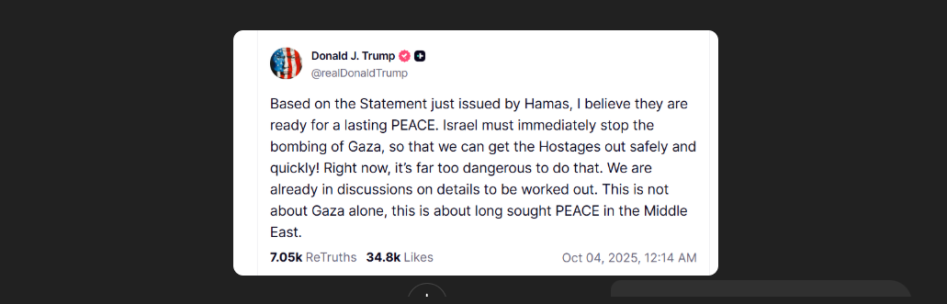
Trump’s Post on Truth Social
Original text:
“Based on the Statement just issued by Hamas, I believe they are ready for a lasting PEACE. Israel must immediately stop the bombing of Gaza, so that we can get the Hostages out safely and quickly! Right now, it’s far too dangerous to do that. We are already in discussions on details to be worked out. This is not about Gaza alone, this is about long sought PEACE in the Middle East.”
Arabic translation (for reference):
“استنادًا إلى البيان الذي أصدرته حماس للتو، أعتقد أنهم مستعدون لسلام دائم. يجب على إسرائيل أن توقف فورًا القصف على غزة حتى نتمكن من إخراج الرهائن بأمان وسرعة. الوضع حاليًا خطير للغاية للقيام بذلك. نحن بالفعل في مناقشات حول التفاصيل التي يجب تسويتها. هذا لا يتعلق بغزة وحدها، بل بالسلام المنشود منذ زمن طويل في الشرق الأوسط.”
Trump’s New Statement (Friday Evening)
Trump added:
“I want to thank all the countries that helped put this plan together — Qatar, Turkey, the Kingdom of Saudi Arabia, Egypt, Jordan, and many others. Above all, I look forward to the safe return of the hostages. This is a special day. Everyone was united for peace in the Middle East, and we are very close. I will treat everyone fairly.”
This conciliatory tone, thanking regional mediators, marks an additional shift from military threats to political and diplomatic language centered on peace.
International Reactions
Israel: Internal divisions; the right sees Hamas’s reply as a ploy, while centrists argue it should be tested for seriousness.
U.S. media: Described Trump’s rhetoric shift as a “leap from threats to negotiation,” raising questions about his political motives.
Europe: France and Germany called for an immediate ceasefire, considering Hamas’s reply “a step that must be seized.”
Arab world: Egypt and Qatar, as key mediators, stressed the reply represents “a real opportunity to test Israel’s intentions.”
Prospects and Scenarios
Partial peace opportunity: If Israel responds positively, a breakthrough may occur with a ceasefire and prisoner exchange.
Risk of escalation: Ignoring Hamas’s reply could trigger a more violent round of conflict.
Continued negotiations: Most likely, mediators will push for a phased deal leading to broader discussions.
BETH Analytical View
From “accept or face hell” to “thank you all, we are very close to peace” — Trump’s shift reflects recognition of the risks of ongoing war and an attempt to reposition himself as a peace broker at a critical juncture.
The central question remains:
Will Israel and regional players seize this historic moment to build conditional peace?
Or is this simply another round in the long game of political maneuvering?