


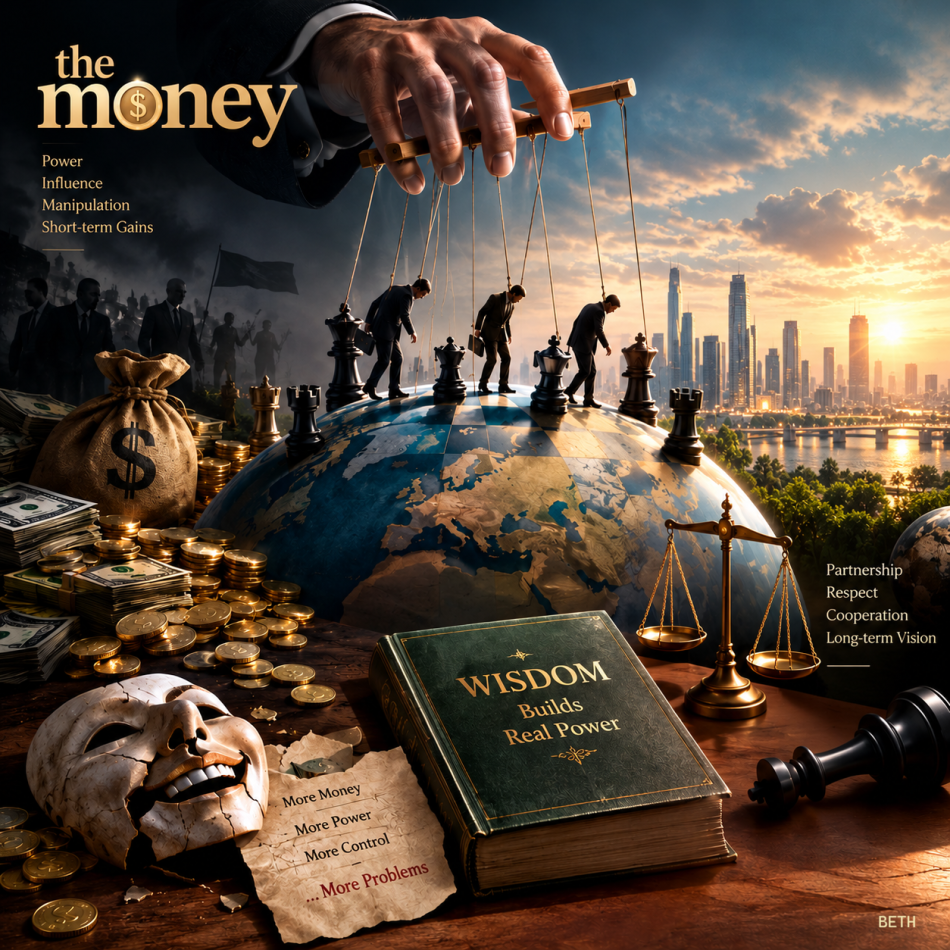
We Do Not Seek Opponents to Defeat.. We Seek Truths That Are Difficult to Defeat

By Abdullah Al-Omairah
In an age of polarization, it has become easy to choose an opponent.
Easy to gather evidence against them.
And easy to build an audience that applauds you because you attack someone they already dislike.
But is that journalism?
Many media institutions around the world do not begin with a question.
They begin with an answer.
They decide first whom they like.
Whom they dislike.
Whom they support.
And whom they oppose.
Then they begin searching for evidence to prove what they had already decided in advance.
At that point, journalism ceases to be a search for truth and becomes a search for ammunition.
The Problem Is Not Information
The world today does not suffer from a shortage of information.
It suffers from an excess of narratives.
Every side has its experts.
Its media outlets.
Its statistics.
Its images.
Its witnesses.
Its analysts.
And sometimes, even its own version of the facts.
Therefore, the question is no longer:
Who possesses the information?
But rather:
Who possesses the ability to distinguish between truth and narrative?
When the Agenda Becomes More Important Than the Truth
In many cases, the news is not hidden.
It is simply presented from a single angle.
The truth is not denied.
Only selected parts of it are shown.
This makes misinformation even more dangerous.
Because it does not rely on outright lies.
It relies on incomplete truth.
And incomplete truth can sometimes be more misleading than a complete lie.
The Journalist and the Radar
A true journalist is not like a lawyer.
Nor like a politician.
Nor like an activist.
Their mission is neither to defend one side nor to attack another.
Their mission is to understand the scene.
And to uncover the truth, including the truth that is not visible at first glance, regardless of whether others admire it or reject it.
A journalist is more like a radar.
Detecting scattered signals.
Connecting them together.
And searching for the meaning hidden behind them.
That is why a journalist does not ask only:
What happened?
But also:
What does this event reveal?
And:
What truth is it trying to conceal?
Truth Does Not Need to Shout
One of the easiest things in media is to raise your voice.
One of the hardest is to present a truth that your opponents cannot dismantle.
Noise may attract attention.
But coherent truth is what endures.
For that reason, the strength of media is not measured by the number of people who applaud it.
It is measured by the number of truths that withstand scrutiny.
Some people accuse me of contradicting my own principles of truth-telling, particularly when I publish news, report on projects, or highlight achievements related to Saudi Arabia.
Here, an essential principle of journalism must be emphasized:
Reporting the truth does not mean offering praise for the sake of praise.
Nor does it mean seeking criticism for the sake of criticism.
A journalist is not required to minimize the truth when it is positive.
Nor exaggerate it when it is negative.
The journalist's duty is to report it as it is.
When I write about Saudi Arabia, I am not engaging in flattery.
I am reporting what I see as reality, facts, projects, and tangible results.
In fact, I can say with confidence that much of what is written represents only a small fraction of what has actually been achieved on the ground.
And for those who doubt that, the solution is not to argue with the text, but to see the reality for themselves.
At the same time, I have never hesitated to offer observations or criticism whenever I believed it was necessary, whether directly or indirectly, through monitoring, analysis, and comparison.
True criticism is not hostility.
Just as genuine praise is not flattery.
Both lose their value when they drift away from the truth.
At its core, journalism is neither the art of praise nor the art of attack.
It is the art of approaching the truth and presenting it to people as it is, even when it contradicts what some may wish to hear.
Likewise, striving to improve projects, correct shortcomings, and identify areas that need development is not an attack on success.
It is part of the continuous pursuit of something better.
Truth does not become flattery simply because it is positive.
Nor does it become hostility simply because it is critical.
It remains the truth, regardless of how people react to it.
BETH's Opportunity
Perhaps the greatest mistake a new media institution can make is turning itself into a party in every battle.
But the real opportunity lies elsewhere:
To become a reference point for truth.
The role of media is not to love one side and hate another.
Nor to engage in daily conflicts.
Its role is to seek the truth that, if widely understood, could change many positions and perceptions.
Conclusion
After many years of following news, politics, and conflicts, one conviction has become clearer than ever:
It is not difficult to find an opponent.
And it is not difficult to gather an audience that hates what you hate.
What is difficult—and what truly matters—is to search for the truth.
The whole truth.
The truth even when you do not like it.
The truth even when it contradicts what you once believed.
And that is why:
We do not seek opponents to defeat.. We seek truths that are difficult to defeat.
BETH (B Press) – All rights reserved