


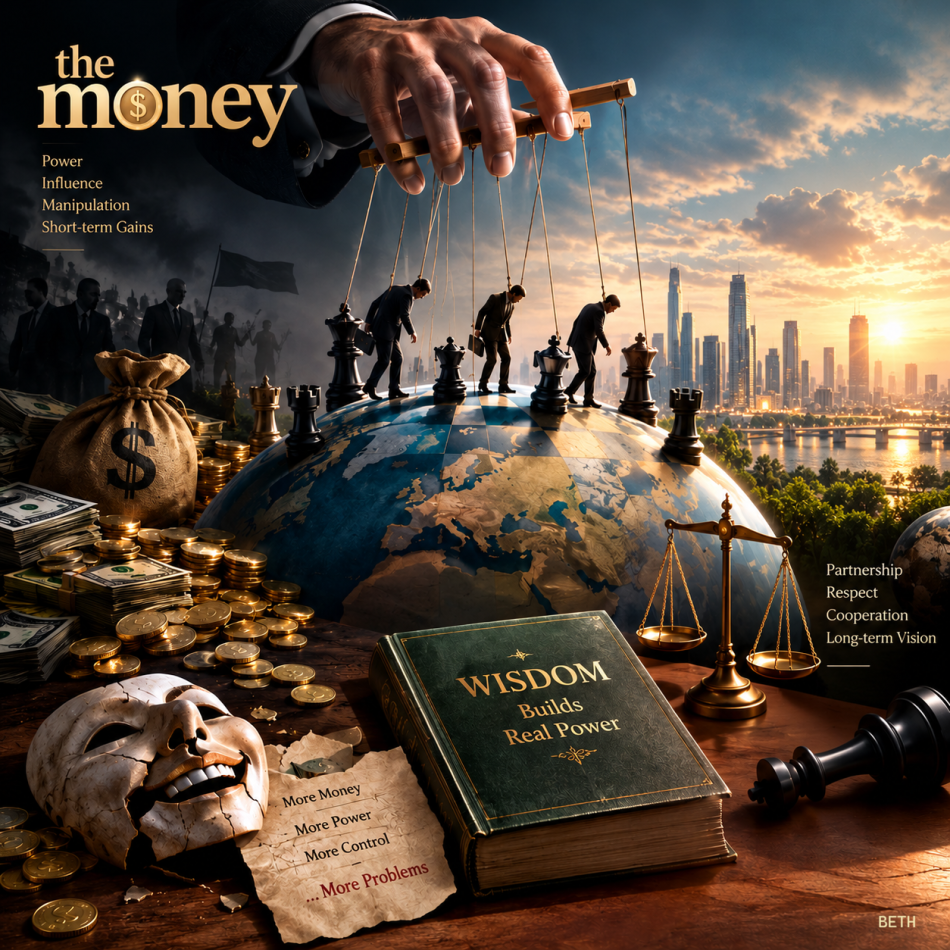
Who Explains the Meaning?
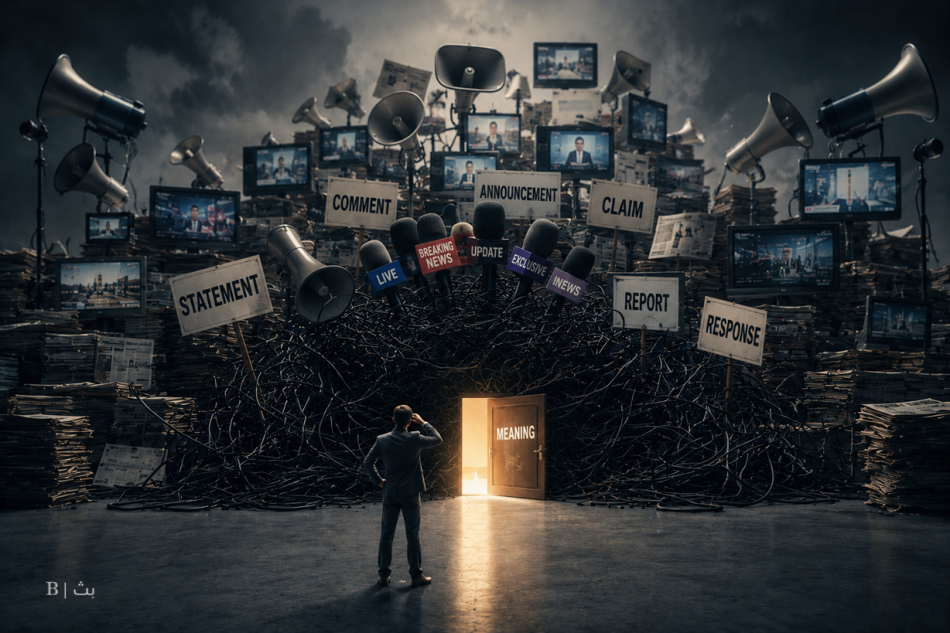
Politicians Speak in Riddles .. and the Media Repeats Them Without Decoding
By: Abdullah Al-Omairah
Every day, millions of people wake up to dozens of political statements.
A president speaks.
A minister comments.
An official spokesperson makes a statement.
Companies, institutions, and government agencies all promote their own narratives and priorities.
Then news agencies move into action, while television networks, websites, and digital platforms rapidly circulate the words they consider important. Meanwhile, stories of greater significance sometimes disappear beneath the noise of competing statements and endless distractions.
Within moments, the news has reached the entire world.
Yet a simple question is rarely asked:
Did people actually understand what was said?
Or did they merely hear the words?
The News That Does Not Explain Itself
In traditional media, a very old idea became deeply rooted:
The journalist's job is to report what was said.
Then move on to the next story.
As if the mission ends there.
But reality is different.
News does not always explain itself.
And a political statement is not necessarily a direct message.
In many cases, it may be:
A signal.
A pressure tactic.
A maneuver.
Or a coded message directed at several audiences simultaneously.
For this reason, transmitting words alone does not necessarily mean transmitting meaning.
Politicians Do Not Speak the Way People Think
A common misconception is that politicians simply say exactly what they mean.
Reality is far more complex.
Politicians usually do not speak in order to explain.
They speak in order to manage.
They manage a crisis.
A negotiation.
An ally.
An adversary.
Public opinion.
And sometimes, they manage time itself.
That is why a single sentence can carry multiple messages.
A message to the domestic audience.
A message abroad.
A message to allies.
A message to rivals.
A message to financial markets.
A message to negotiators behind closed doors.
All contained within ten carefully chosen words.
The Silent News
Here lies a problem that might be called:
The Silent News.
News that conveys the words...
But not their meaning.
The report may be accurate.
Precise.
And fully verified.
Yet the audience leaves it exactly as they entered it.
Without understanding why it was said.
Why it was said now.
Or what it truly means.
What Does This Statement Mean?
Imagine a head of state saying:
"All options remain on the table."
Traditional media reports the sentence.
Then moves on to the next story.
But an analytical mind pauses and asks:
Is this a threat?
A negotiating message?
An attempt to reassure the domestic audience?
A deterrent signal to an opponent?
Or simply an effort to raise the stakes in ongoing negotiations?
This is where real journalism begins.
The Great Gap
The problem may not be a shortage of information.
It may be an excess of it.
Modern people live in an ocean of news.
But that does not mean they live in an ocean of understanding.
This has created a strange paradox:
The more information available...
The less understanding there sometimes is.
Because news now travels faster than our ability to interpret it.
Who Really Drives the Media?
Years ago, the question was:
Does politics drive the media?
Or does the media drive politics?
But reality suggests that the question itself may be flawed.
Politicians send messages.
The media transmits them.
The person who truly makes the difference is the one who understands the meaning before repeating the words.
That person may be a journalist.
An analyst.
A researcher.
Or simply a reader capable of connecting the dots.
The real value no longer lies in obtaining information.
It lies in understanding it.
Perhaps the greatest media crisis of our time is not fake news.
It is misunderstood news.
Fake news can eventually be exposed.
But news presented without context or explanation can mislead people even when it is entirely accurate.
At that point, the media ceases to be a tool of understanding...
And becomes little more than a transmitter of signals that many people do not fully comprehend.
What Comes Next?
In the age of artificial intelligence and smartphones, transmitting news has become easier than ever.
Machines can now do it in seconds.
But machines do not understand meaning.
They do not ask:
Why?
For whom?
And to what end?
That is where the true value of journalism begins.
Perhaps the modern role of the media is no longer simply to tell people:
What happened?
That information is now available to everyone.
The harder and more important task is to answer:
What does it mean?
And this is where the distinction emerges between a news carrier...
And a builder of understanding.
Everyone hears the words.
But meaning is what creates awareness.
Perhaps the greatest danger facing any society is not being deprived of news.
It is living amid thousands of headlines...
Without understanding what they are actually trying to say.
Those who believe journalism's role ends with reporting the news are like those who believe a doctor's job ends with reading test results, without explaining them or warning of the risks they reveal.