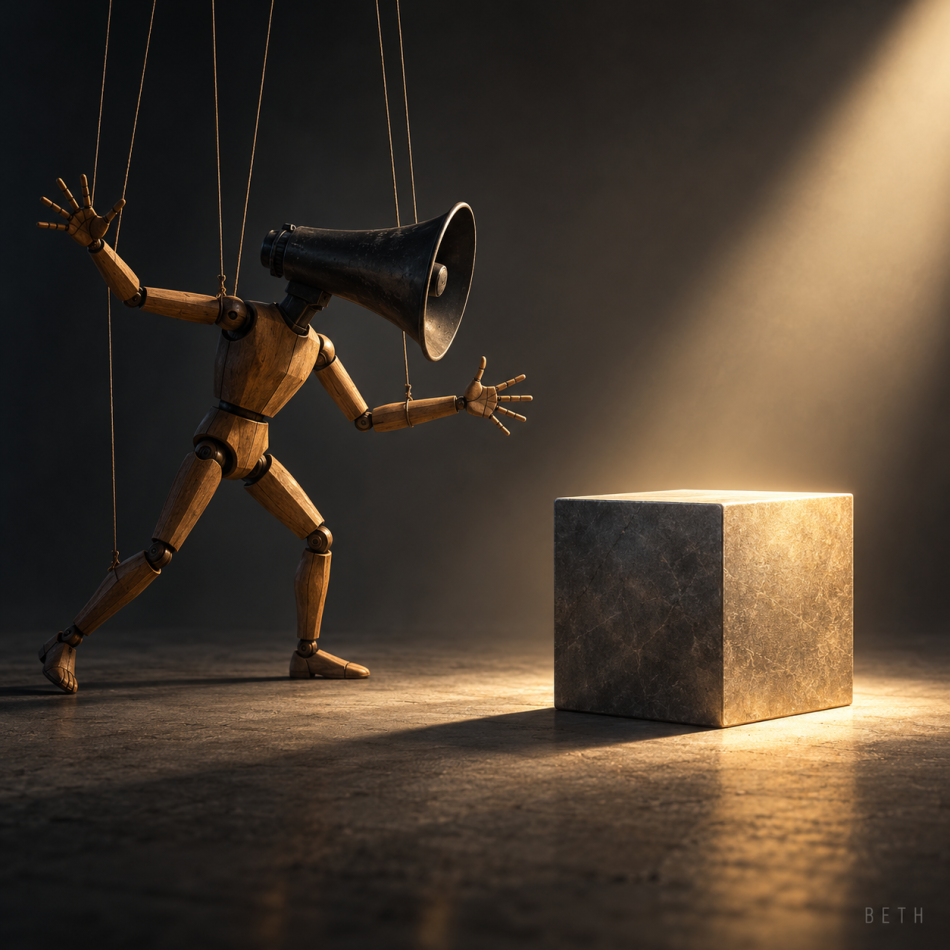



Who Really Runs the World?
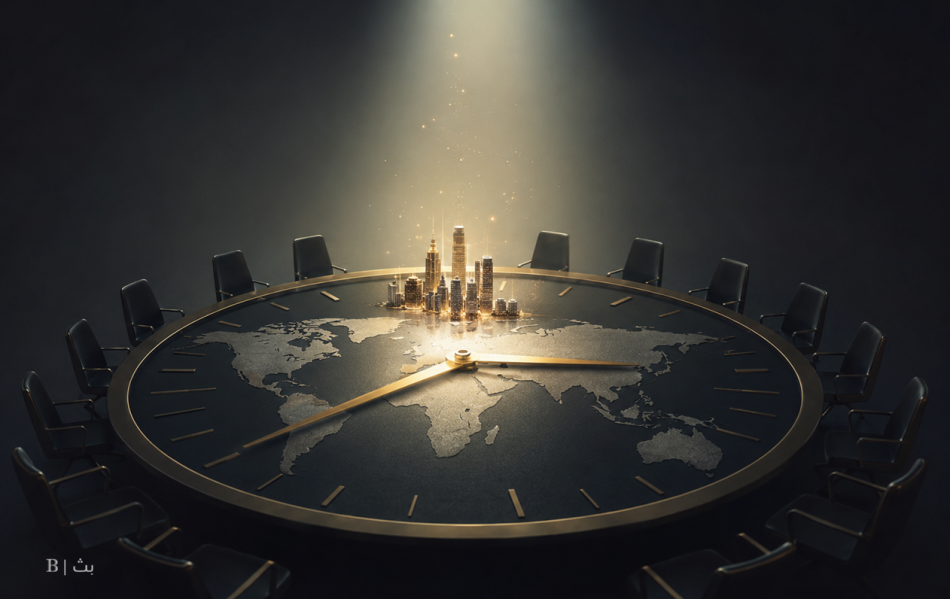
What If Politicians Disappeared for a Week?
Analysis & Commentary
Strategic Media Department – BETH Agency | B
Based on:
What would happen if all politicians around the world suddenly disappeared for a week?
The question may sound provocative, even unsettling.
Yet the most likely answer is: not much would stop immediately.
Airplanes would continue flying.
Electricity would continue flowing.
Ports would remain operational.
Banks would not freeze simply because a minister failed to appear on television.
Because the world is not sustained by speeches alone, nor managed solely through cameras and press conferences.
Behind the visible stage exists another layer that carries much of the real weight of daily life: institutions, experts, advisers, engineers, operators, supply chains, control rooms, and systems that work quietly in the background.
The Front Stage and the Engine Room
In politics, as in theater, some people stand under the spotlight while others manage the lights, sound, curtains, and the entire performance behind the scenes.
The public sees:
The president.
The minister.
The member of parliament.
The official spokesperson.
But most people rarely see:
The adviser.
The specialist.
The planning team.
The crisis manager.
The executive official.
The operations center.
The engineer who keeps the network running.
The expert who prevents the system from failing.
That is why a politician may disappear for days while the system continues to function.
But if those responsible for electricity, ports, airports, finance, data, food, and healthcare suddenly vanished, the world would quickly discover that real power does not always lie in visibility, but in the ability to keep life moving.
Do Politicians Govern Alone?
Politicians define direction.
Institutions make that direction executable.
Politicians announce decisions.
Advisers evaluate options.
Administrations implement policies.
Agencies assess risks.
Economies absorb costs.
Citizens live with the consequences.
The real question, therefore, is not:
Who appears on the evening news?
But rather:
Who has the ability to turn decisions into reality?
This is where an important paradox emerges:
Many of the people who shape daily life remain largely unknown to the public, even though their influence reaches millions.
Sometimes Ordinary Citizens See What Analysts Miss
An ordinary citizen might say:
"Life would not stop if politicians disappeared. There are advisers, teams, institutions, and professionals handling countless details that the public never sees."
The observation may sound simple, yet it reflects a growing recognition that modern states do not rely on a single individual but on complex systems of expertise, institutions, and operational structures.
This raises a deeper question:
Does a state's strength reside solely in its political leadership?
Or does it also depend on the quality of the institutions, experts, and systems that support decision-making and execution?
In strong states, institutions are part of the solution.
In weaker states, excessive dependence on individuals can become part of the problem.
Who Really Runs the World?
The modern world is not governed by a single person.
Nor by a single government.
Nor by a single leader.
Instead, it is shaped by interconnected systems.
Those who control energy.
Those who manage food.
Those who oversee data.
Those who operate ports.
Those who manufacture semiconductors.
Those who protect financial networks.
Those who can either disrupt or sustain the flow of critical resources.
The world has gradually moved from an era defined by control of territory to an era defined by control of flows:
The flow of energy.
The flow of food.
The flow of information.
The flow of money.
The flow of goods.
The flow of trust.
And those who control these flows often wield influence equal to, or greater than, those who appear before the cameras.
When Institutions Become Stronger Than Individuals
Strong nations are not measured solely by the strength of their leaders.
They are measured by the strength of their institutions when leaders change.
Mature states continue functioning efficiently despite political transitions.
Fragile states struggle when too much depends on a single individual, a narrow circle, or a particular personality.
This is the difference between a country that possesses governance and one that merely possesses a visible leadership structure.
One endures.
The other falters.
Questions Without End
The United States offers a fascinating example of these questions.
Who truly governs America?
The President?
Congress?
Military and security institutions?
Think tanks, advisers, and experts?
Or major corporations that shape technology, economics, and media?
Two deeper questions emerge.
What would happen if a president suddenly disappeared?
Would the state stop functioning?
The American experience suggests otherwise.
Its system was designed around overlapping institutions, balanced powers, and thousands of professionals who continue managing daily operations regardless of political change.
The second question is even more complex:
How did the United States build such extensive global influence?
Through military power alone?
Through its economy and alliances?
Through universities, corporations, technology, and media?
Or through an extensive network of institutions, partnerships, relationships, and shared interests that extend far beyond its borders?
Perhaps the answer lies in the fact that modern influence is rarely built through a single instrument.
Major powers rely on integrated ecosystems that combine knowledge, economics, technology, alliances, and institutions.
The real question may therefore not be:
Who governs America?
But rather:
How did America build a system capable of projecting influence far beyond its geography?
Turning the Question Upside Down
Perhaps the question deserves to be reversed.
What if a less powerful state could influence a more powerful one?
History offers many examples suggesting that influence is not measured by size alone, and that strategic intelligence can sometimes achieve what raw power cannot.
This may help explain how certain countries—often not counted among the traditional giants—can occasionally leverage strategic intelligence to exert influence beyond what their size or resources might suggest.
The same phenomenon can be seen in corporations and think tanks that extend their reach far beyond the limits of their formal resources.
The question then becomes not:
Who is stronger?
But:
Who better understands the rules of the game, the available tools, and the art of building influence beyond apparent size?
Reflection
The world might survive for days without politicians.
It would struggle to survive for long without institutions.
Individuals attract attention.
Institutions sustain continuity when the spotlight moves elsewhere.
The strength of nations is therefore not measured solely by who makes decisions, but by their ability to continue functioning when decision-makers change.
In the modern age, true power lies not merely in possessing authority, but in possessing the ability to keep the world running.
BETH (بث B) – All rights reserved