


Day 92: Between the Signature and the Gunpowder
Monitoring & Analysis
Strategic Media Department – BETH Agency | B
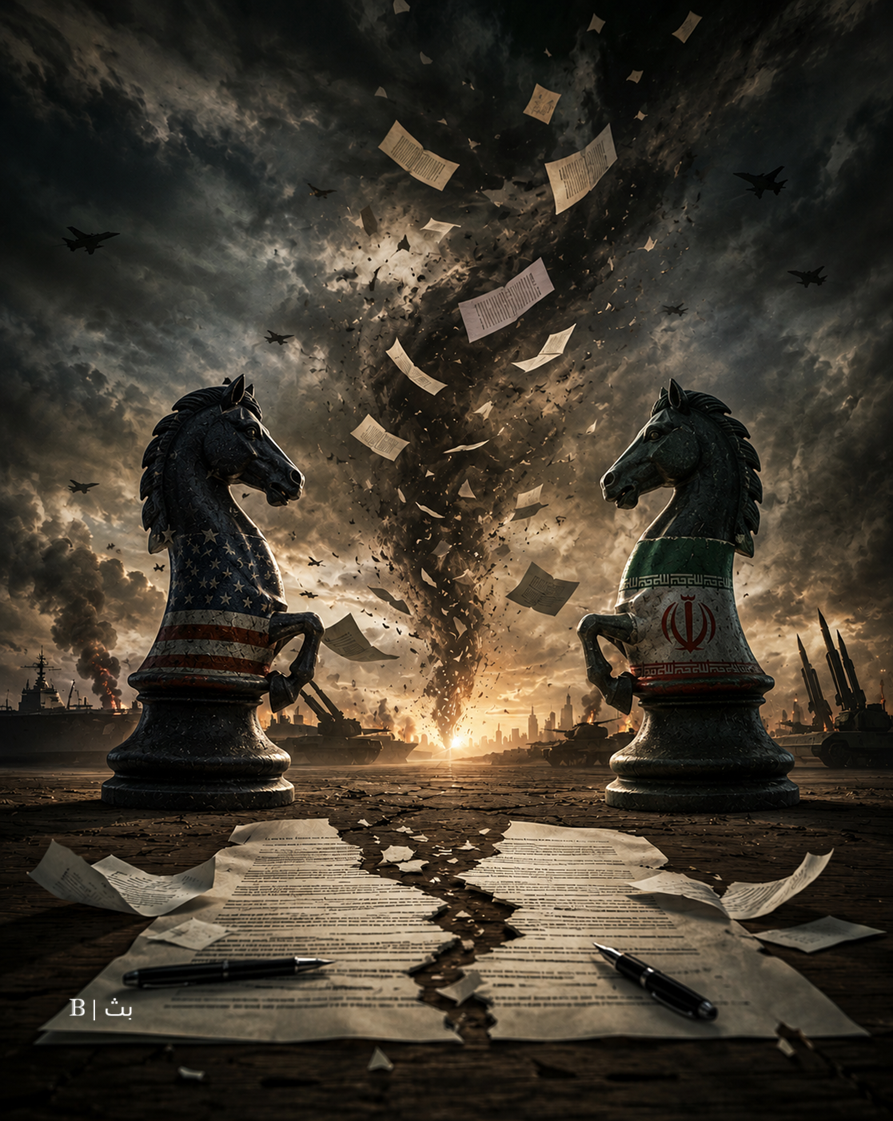
Conflicting signals continue to emerge in the course of the U.S.–Iran confrontation, with optimistic statements about a potential agreement contrasted by political and military rhetoric that reflects the persistent trust gap between the two sides.
While U.S. President Donald Trump speaks of the possibility of reaching an agreement within the coming week, leaks from within the Iranian negotiating team indicate that Tehran has yet to make a final decision, and that the American proposal remains under review amid deep doubts regarding Washington’s commitment to any future agreement.
At the same time, voices within Iran’s military establishment continue to emphasize that the confrontation is not over and that war could return at any moment if Washington persists in what Tehran views as demands for “surrender.”
Overview
U.S. President Donald Trump stated that he believes an agreement with Iran could be reached within the next week, including an extension of the ceasefire and the reopening of the Strait of Hormuz, stressing that negotiations remain active and are moving quickly.
Trump’s remarks came despite Iranian reports suggesting that indirect exchanges of messages between Tehran and Washington through intermediaries had been suspended, indicating that disagreements over the final terms of an agreement remain unresolved.
Meanwhile, media leaks citing a source close to the Iranian negotiating team said that Tehran has not yet responded to the final U.S. proposal and that discussions are still ongoing within Iran’s decision-making circles.
The source explained that Iran is approaching the proposal with extreme caution due to what it describes as a history of American non-compliance, as well as the broader lack of trust between the two sides.
At the same time, Iranian military officials escalated their rhetoric. Major General Mohammad Jafar Asadi, Deputy Commander of the Khatam al-Anbiya Central Headquarters, stated that Iran would never accept what he described as “surrender,” warning that a return to war remains a possibility if current U.S. pressure continues.
BETH Analysis
At this stage, the primary obstacle does not appear to lie in the terms of the agreement itself, but rather in a larger question:
Do the two sides trust each other enough to implement whatever they agree upon?
The United States seeks guarantees that would prevent Iran from returning to policies Washington considers destabilizing.
Iran, meanwhile, seeks guarantees that would prevent the United States from withdrawing from an agreement or changing the rules later.
As a result, the negotiations appear to be focused more on the future than on the present.
This helps explain the apparent contradiction between Trump’s optimism, the caution of Iranian negotiators, and the escalation in military rhetoric.
Each side is addressing its domestic audience as much as it is addressing the other party.
Reflection
Amid all this noise, three questions remain older than this war itself:
Why Do Wars Begin?
Because politics sometimes fails to resolve disputes before they evolve into conflict.
Because some parties believe force can achieve what negotiations could not.
And because miscalculation leads each side to believe that the other will back down first.
Why Do Wars Take So Long to End?
Because starting a war is a decision.
Ending it is a far more complex process.
After casualties mount, rhetoric escalates, and losses accumulate, retreat often becomes more difficult than continuing the fight itself.
That is why many wars end only after all sides realize that the cost of continuing has become greater than the cost of compromise.
Why Does Everyone Win in Statements but Lose on the Ground?
Because statements are written with words.
Wars are written with blood, economics, and time.
In official statements, everyone claims victory.
On the ground, however, cities suffer, development stalls, investments retreat, and ordinary people pay the highest price.
That is why the truth most belligerents discover too late remains unchanged:
The best war is the one that never begins.
BETH (بث B) – All rights reserved