


Why We Don't Write Like Others

Notes on Understanding Journalism Before Practicing It
By Abdullah Alomeirah
After more than four decades in journalism, I have come to realize that the biggest problem in today's media is not a shortage of news.
The world is overflowing with information.
Screens never stop.
Websites compete relentlessly.
Smartphones bombard people with alerts every minute.
Yet despite this endless flood of information, one simple question still seeks an answer:
Have people become better at understanding what is happening around them?
In many cases, the answer is no.
And that is where the real challenge begins.
Journalism is not merely a race to reach the news first.
It is a race to understand it first, place it in the proper context, and see what does not appear in the first line of the story.
News Is Not Journalism
Many people assume that journalism is simply the act of reporting events.
That is partly true.
But if journalism were nothing more than transmitting information, machines and algorithms would already be the world's best journalists.
Machines can gather news faster than humans.
They can write faster.
They can publish faster.
Yet they cannot always ask the right question.
They cannot uncover the meaning hidden behind numbers, statements, and events.
Nor can they connect developments and identify the direction in which a story is moving before others recognize it.
News asks:
What happened?
Real journalism asks:
Why did it happen?
Why now?
Who benefits?
Who pays the price?
And what may happen next?
The Problem Is Not the News
Many media organizations compete to reach the story first.
That is natural.
But the more difficult competition is not reaching the news.
It is reaching a deeper understanding of it.
Thousands of people may read the same story.
Only a few will discover the idea hidden within it.
That is where the difference emerges between delivering information and creating understanding.
Beyond the Event
When we read about a war, what matters is not merely the number of missiles.
When we read an economic story, it is not only the size of the deal.
When we read a political story, it is not only what was said in front of the cameras.
What matters is what lies behind it all.
How decision-makers think.
How decisions are built.
How perceptions are shaped.
How influence is created.
And sometimes:
How a seemingly small event reveals a much larger reality.
Respecting the Intelligence of the Audience
One of the greatest mistakes in media is assuming that audiences do not understand.
As a result, some media outlets oversimplify.
Others exaggerate.
Some attempt to impose ready-made conclusions.
Experience has taught me something different.
People may vary in knowledge and expertise, but they possess a remarkable ability to distinguish between those who respect their intelligence and those who seek to exploit it.
The role of a journalist is not to think on behalf of people.
It is to help them think more clearly.
The Project Matters More Than the Person
One of the most important lessons I learned throughout my career is that focusing on individuals is far easier than focusing on ideas and achievements.
Praise is easy.
Applause is easy.
Creating heroes is easier than analyzing projects.
The value of media does not appear when it praises people.
It appears when it uncovers their achievements, explains what has been accomplished, and helps audiences understand how and why it was accomplished.
From Local to Global
Many believe that becoming global begins with writing in another language.
The reality is different.
Global relevance begins when you ask a question that matters to people everywhere.
In Riyadh.
In London.
In New York.
In Beijing.
And beyond.
When we ask:
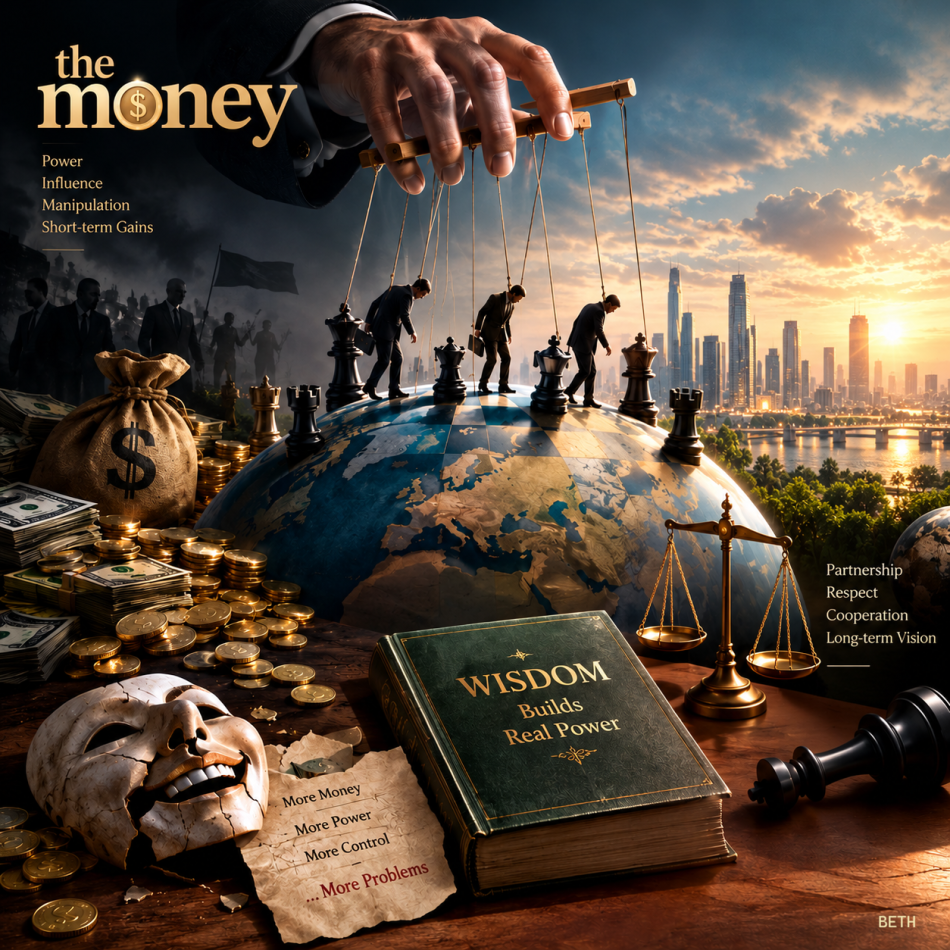
Who really runs the world?
Or:
How is trust built between nations?
Or:
Has food security become more important than oil?
We are no longer discussing local issues.
We are exploring questions that transcend borders.
Why Don’t We Write Like Everyone Else?
Because at BETH, we do not search for news alone.
We do not chase noise.
We do not pursue empty sensationalism.
We search for ideas.
For connections that others fail to see.
For patterns that repeat behind events.
For the thread that links politics, economics, media, society, and human behavior.
Our topics may sometimes appear unrelated.
Yet they often revolve around a single question:
How do we understand the world as it is, rather than as it is presented to us?
After many years in journalism, I no longer believe that the greatest thing a journalist can offer is the news itself.
News may live for hours.
A meaningful idea may remain alive in a reader’s mind for years.
That is why I do not see journalism merely as a profession of reporting.
I see it as a profession of understanding.
A profession of interpretation.
And a continuous search for what does not appear in the first line of a story.
Beyond the News
Yet news, however important, represents only one part of the broader media landscape.
Media does not begin with publishing information.
Nor does it end with analyzing it.
It extends to understanding audiences, measuring impact, shaping messages, creating content, managing perceptions, evaluating outcomes, and continuously reassessing the environment.
What appears on BETH’s platforms is only the visible part of the process.
Much of the work takes place behind the scenes through planning, monitoring, analysis, impact measurement, strategic development, and content creation in all its forms.
These activities are not intended solely for publication.
They are specialized media services that support government entities, companies, organizations, institutions, and various sectors that need to better understand their audiences, measure the impact of their messages, and build a more effective and influential media presence.
At BETH, we view news as a starting point, not a destination.
Our approach extends beyond publishing reports and headlines. It includes monitoring, analysis, impact assessment, message development, written and visual content creation, photography, video production, and communication solutions that serve institutions across different sectors.
Modern media is no longer simply about delivering information.
It has become an integrated process that combines understanding, analysis, and influence.
That is why we do not measure the value of media by the volume of content published.
We measure it by its ability to explain events, understand audiences, and transform knowledge into impact.
In its essence, media is not merely a story to be read.
It is an idea to be understood, a message to be delivered, and an impact to be measured.
Related Topic
BETH: Quiet Growth