



Riyadh Air Unveils Its First Airbus A321neo Aircraft
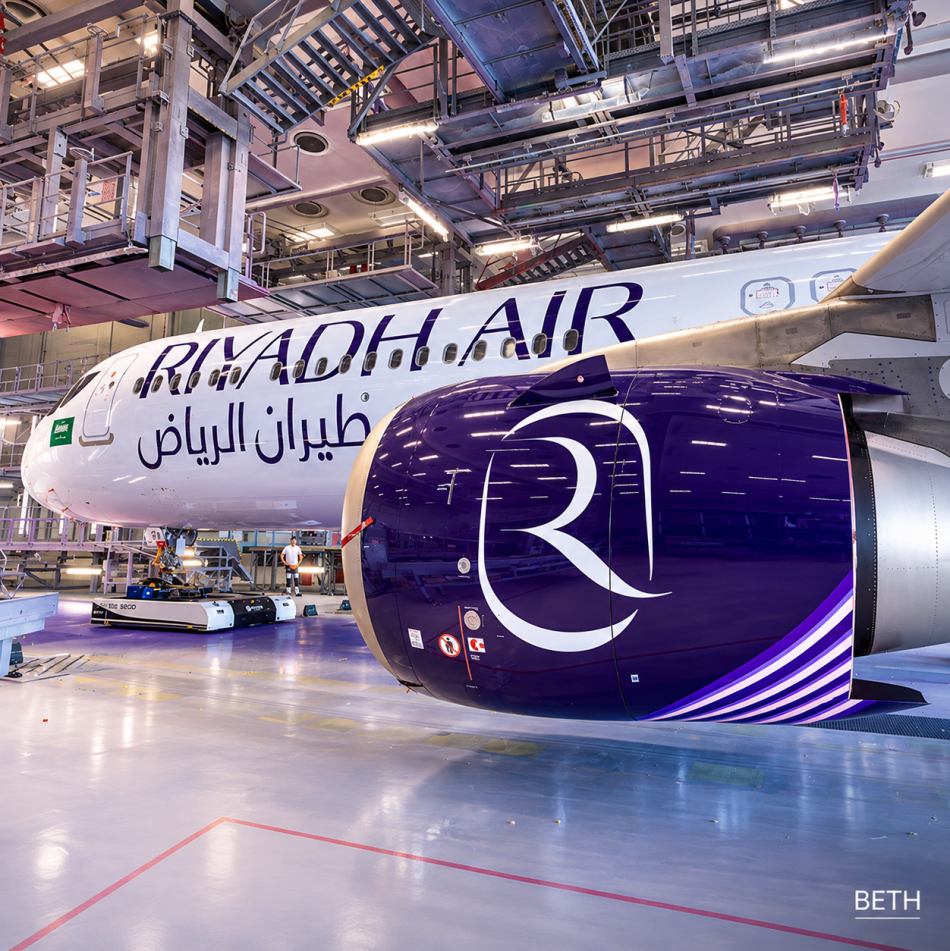
Saudi Arabia's new national carrier completes production of its first narrow-body aircraft in Germany, featuring a distinctive indigo and lavender livery, ahead of test flights and delivery, as part of its plans to connect Riyadh to more than 100 destinations worldwide by 2030.
Riyadh | BETH
November 13, 2026
Riyadh Air, Saudi Arabia's new national carrier, announced on Friday the completion of production of its first Airbus A321neo narrow-body aircraft, bearing the registration HZ-RXFA, following its emergence from Airbus's paint facility in Hamburg, Germany, as part of its fleet development and network expansion plans.
The aircraft features Riyadh Air's pearlescent livery in shades of indigo and lavender, with a design inspired by the curves of traditional Bedouin tents and Arabic calligraphy. Flowing feather-inspired patterns adorn the rear fuselage, while a dark frame surrounding the cockpit windows gives the aircraft a distinctive modern appearance.
The name "Riyadh Air" is displayed in both Arabic and English on the fuselage, reflecting the carrier's Saudi identity.
The aircraft is scheduled to undergo a series of test flights in the coming days before its delivery, entry into the airline's fleet and arrival in Riyadh, the carrier's operational hub.
Riyadh Air also plans to unveil details of the aircraft's cabin design, onboard travel experience and the destinations to be served by its narrow-body fleet in the coming weeks, as it works toward connecting the Saudi capital to more than 100 destinations worldwide by 2030.
BETH Analysis | From Fleet Development to Expanding Air Connectivity
The Airbus A321neo represents an important addition to Riyadh Air's expansion plans, enabling the airline to develop routes suited to regional and international markets while complementing the capabilities of wide-body aircraft.
The significance of this development lies in the fact that aviation expansion depends not only on the number of aircraft, but also on fleet diversity and the ability to serve different destinations with operational and economic efficiency.
As the aircraft moves closer to joining the fleet, the carrier takes another step toward building a network that supports Riyadh's position as a global aviation and travel hub, in line with Saudi Vision 2030.