
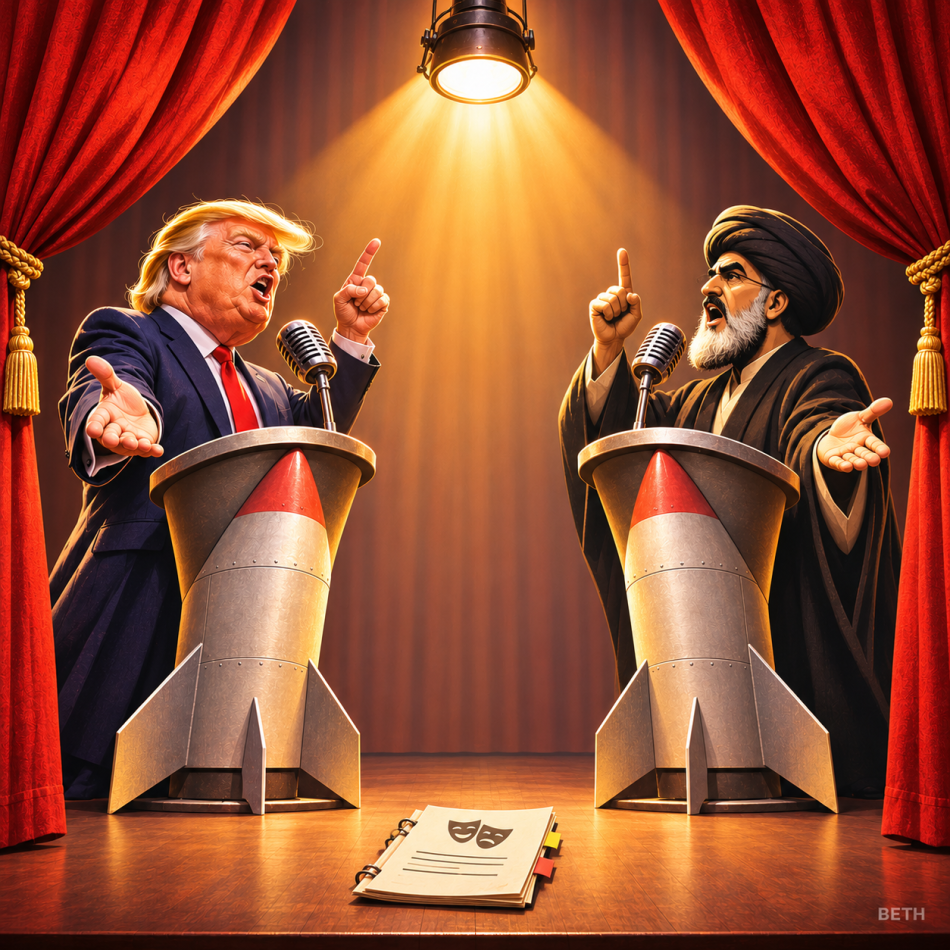


Terrorism in the Name of Religion: Who Plants the Seeds and Who Reaps the Harvest? | Report
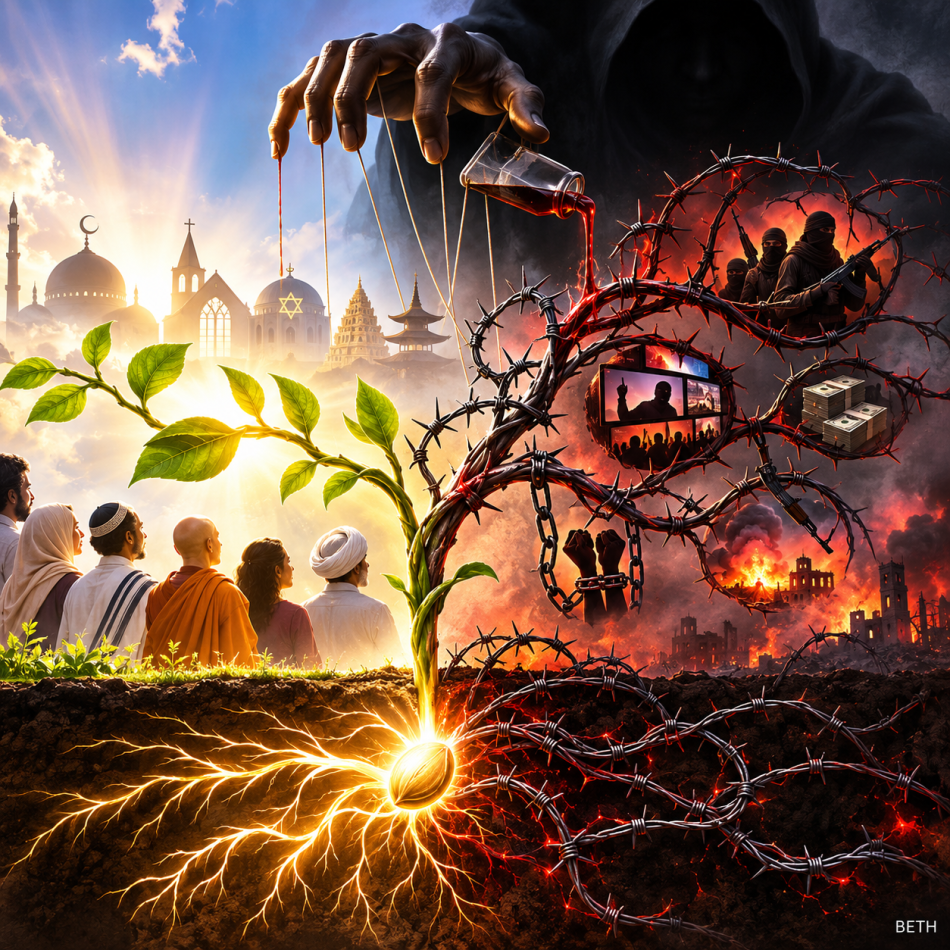
From the Muslim Brotherhood, Al-Qaeda and ISIS to the Ku Klux Klan, the Lord's Resistance Army and Aum Shinrikyo, beliefs and banners differ, but the methods of exploiting religion share striking similarities. Who creates extremism? Who finances it? Why do sacred beliefs become instruments of violence and control in the hands of certain organizations? And is the world approaching a new, more complex wave?
Prepared and Analyzed by | Strategic Media Management – BETH News Agency
Supervised by: Abdullah Al-Omairah
November 13, 2026
Terrorism committed in the name of religion has never been confined to a single faith or society, and not every organization that has raised religious slogans has genuinely sought to spread the faith it claims to represent.
Behind many of these groups lie overlapping ambitions for power, political conflicts, financial interests and, at times, the calculations of states that use armed organizations to achieve objectives that are difficult to pursue directly.
The question worth investigating is not merely why terrorists turn to religion, but how exploiting religion gives them an extraordinary ability to recruit followers, enforce obedience and justify killing.
The Muslim Brotherhood, Al-Qaeda and ISIS | How Do Ideas Spread?
The Muslim Brotherhood was founded in Egypt in 1928 and evolved throughout its history into a broad political and social movement. It went through periods involving clandestine organization and violence, while some of its factions later embraced political participation.
However, the ideas advanced by Sayyid Qutb, particularly the concepts of hakimiyyah (divine sovereignty), jahiliyyah (a state of ignorance of divine guidance) and confrontation with society, influenced subsequent jihadist movements, even though these movements differed with the Muslim Brotherhood itself.
Ayman al-Zawahiri emerged from Egyptian Islamic Jihad, which merged with Al-Qaeda in 2001. ISIS, meanwhile, originated from Al-Qaeda in Iraq before breaking away and evolving into an even more extremist organization.
This is where the danger lies: an idea may move beyond its original framework, only to be reinterpreted and developed by another organization until it becomes a project of violence.
Therefore, an ideological connection does not necessarily imply a unified organizational leadership. Nevertheless, it warrants examining the impact of ideas when they are transformed into justifications for declaring others unbelievers and legitimizing bloodshed.
Terrorism Does Not Carry a Single Banner
International experiences provide different examples of the exploitation of religion:
Al-Qaeda, ISIS, Al-Shabaab, Boko Haram and Jama'at Nusrat al-Islam wal-Muslimin (JNIM): Organizations that have used extremist religious interpretations to justify killing, control communities and impose their authority.
Hezbollah, the Houthi militia and armed groups linked to Iran: Examples in which religious rhetoric intersects with military and political influence, alongside documented Iranian support involving weapons, funding and training for several of these groups.
The Ku Klux Klan (KKK) in the United States: A racist movement that used Christian symbols and concepts to justify white supremacy and carry out terrorism against Black Americans and other minorities.
The Lord's Resistance Army in Uganda: An armed organization that exploited Christian interpretations and claims of divine authorization, committing crimes that included abducting and recruiting children.
Aum Shinrikyo in Japan: A group with a mixture of religious beliefs that carried out the sarin gas attack on the Tokyo subway in 1995, demonstrating that the exploitation of faith to justify violence is not confined to the Abrahamic religions.
These organizations do not represent their religions or societies. Rather, they demonstrate how religious symbols can be turned into instruments of oppression when appropriated by extremist leaders.
Terrorism Is the Responsibility of Its Perpetrators, Not Religions
It is illogical to attribute terrorism to a religion merely because a terrorist organization has exploited its name or symbols to justify its crimes, labeling it Islamic terrorism, Christian terrorism or any similar designation.
Terrorism is a crime committed by individuals and organizations, not a doctrine representing all followers of a religion.
The same principle applies to states. Not every regime that describes itself as an "Islamic Republic" represents Islam or reflects its teachings through its policies and practices.
If a state commits acts of terrorism or supports armed organizations engaged in terrorism, its responsibility must be determined by its actions, policies and evidence of involvement, not by the religious designation it adopts.
Names do not confer legitimacy, slogans do not erase crimes, and religions must not be held responsible for those who exploit them to advance their interests.
Sufism in Egypt | Is a New Cycle of Politicizing Religion Beginning?
Historically, some Sufi orders have not remained detached from politics. They have participated in political conflicts and alliances, and their social and religious networks have been used to support political forces and governments.
Their political presence in Egypt expanded following the events of 2011, extending to the establishment of political parties and support for candidates in elections.
Yet today's forward-looking question goes beyond those experiences:
Could some Sufi orders evolve from paths of worship and spiritual education into networks of political mobilization seeking influence and power, before becoming vulnerable to infiltration and exploitation in conflicts that could escalate into violence and terrorism?
The exploitation of religion may begin with steps that appear legitimate: expanding social influence, strengthening loyalty to leaders and building mass support bases, followed by a gradual transition from spiritual authority to political obedience.
This does not mean that Sufism is a terrorist organization or that political participation inevitably leads to violence.
However, Egypt's experience with the politicization of religious movements makes it necessary to monitor the point at which religious loyalty turns into rigid, closed organizational discipline, political disagreement becomes incitement, and social influence is transformed into an instrument of control.
The danger that warrants monitoring is not Sufism as a belief or spiritual practice, but the possibility of exploiting some of its networks and transforming them into instruments of an extremist political project, whether originating from within those networks or pursued by outside forces seeking to use them for political or security objectives.
This danger is not exclusive to Sufism. It can apply to any religious group that becomes a closed network based on absolute obedience, lacks accountability and grants its leaders authority extending beyond religious activity.
The forward-looking question remains: Are signs of such a transformation emerging in Egypt, and who might benefit from it? Or can religious institutions and the state prevent spiritual activity from being drawn into projects of polarization and violence?
Who Plants the Seeds? Who Nurtures Them?
The development of an extremist organization often passes through overlapping stages:
The ideological seed: A discourse that claims a monopoly on truth, portrays opponents as enemies and grants its leadership the authority to interpret religion and determine who deserves punishment.
Organizational nurturing: Recruitment and mobilization networks that exploit grievances, identity and belonging, transforming individual anger into collective commitment.
Financing and protection: Resources that may come from donations, illicit economic activity, extortion and smuggling, and sometimes from external actors seeking to exploit the organization.
Reaping the harvest: Securing political gains, military influence or control over territory and resources, while civilians and states bear the cost of violence.
However, not every terrorist organization is created by a state, and not every extremist discourse inevitably leads to terrorism.
Establishing responsibility requires evidence of financial, organizational and operational links, rather than relying solely on ideological similarities.
Why Is the Danger Not Detected Before It Grows?
Terrorism does not emerge suddenly. It is often preceded by ideological, organizational and financial warning signs. Yet some states ignore them, underestimate their seriousness or fail to connect the information available to their institutions.
More dangerously, governments may contribute to nurturing the seeds of extremism, either deliberately, by exploiting religious groups in political and regional conflicts, or unintentionally, by providing extremist organizations with funding, legitimacy and influence under the assumption that they can contain them or benefit from their activities.
Such groups may subsequently turn against their supporters or evolve into cross-border threats.
Here lies the paradox: some states do not fail to detect the danger; rather, they misjudge the moment when an instrument serving their interests turns into a threat to their own security.
Effective prevention therefore begins with identifying funding sources, monitoring incitement and recruitment, holding supporters accountable and taking early legal action before violence occurs, without confusing legitimate religious observance with extremism.
Why Religion Specifically?
Because a group claiming exclusive authority to interpret religion can attempt to transform political disagreement into a sacred obligation, organizational obedience into a religious duty, and death in pursuit of its objectives into a promise of salvation.
For its followers, questioning the leader may consequently become equivalent to questioning the faith itself.
However, research shows that religious ideas alone do not drive individuals to join extremist organizations. Poverty, injustice, revenge and the search for protection or belonging also play influential roles.
Religion, when exploited, provides violence with a false moral justification, but it does not, by itself, explain why violence begins or persists.
When Does an Environment Become Fertile Ground for Extremism?
The deviation from religion and religious observance toward the political exploitation of religion may begin when societies are drawn into a confrontation between rational, logical thinking on one side and superstition, deception, sorcery and charlatanism on the other, weakening critical thinking and paving the way for the exploitation of beliefs.
Among the most dangerous warning signs are the suppression of independent thought, preoccupation with superstitions, and the presentation of supernatural claims and fraudulent spiritual practices as substitutes for knowledge, while granting certain leaders authority that cannot be questioned or criticized.
When such practices spread and become accompanied by blind obedience, incitement and claims to possess the exclusive truth, the environment may become more susceptible to the cultivation of extremism and the exploitation of religion in dangerous political or organizational projects.
The first seed is not always an explicit call to violence. It may begin by disabling critical thought, followed by control over awareness, ultimately leading to the manipulation of behavior and loyalty.
BETH Analysis | The Next Wave of Terrorism: Will the Name Change While the Methods Remain?
Historical experience indicates that defeating an armed organization does not necessarily eliminate the environment that produced it.
Some networks may shift from direct armed activity to social influence or digital recruitment, while new organizations may emerge with different rhetoric, exploiting the same grievances.
From this perspective, strategic foresight does not mean declaring that a particular religious group will become "the next ISIS."
Rather, it means monitoring the indicators that precede a transition to violence: claims of exclusive possession of the truth, incitement to hatred, dehumanization of others, clandestine recruitment, military training, unidentified funding and connections to external actors.
Confronting this threat requires more than eliminating armed operatives. It also demands protecting religious education from politicization, safeguarding societies against superstition and charlatanism, monitoring illicit financing, addressing grievances exploited by extremist groups and ensuring that all organizations are subject to the law without criminalizing beliefs or their followers.
Ultimately, the most dangerous aspect of terrorism committed in the name of religion is not only the killing of innocent people, but also the attempt to convince societies that crime is an act of worship and that the interests of an organization or its sponsoring state represent divine will.
The question that must be asked before every new wave of extremism is this: Who controls the group's message, who finances its activities, and who benefits when words turn into bullets?