



Microsoft Outage Exposes the Fragility of Global Digital Dependence
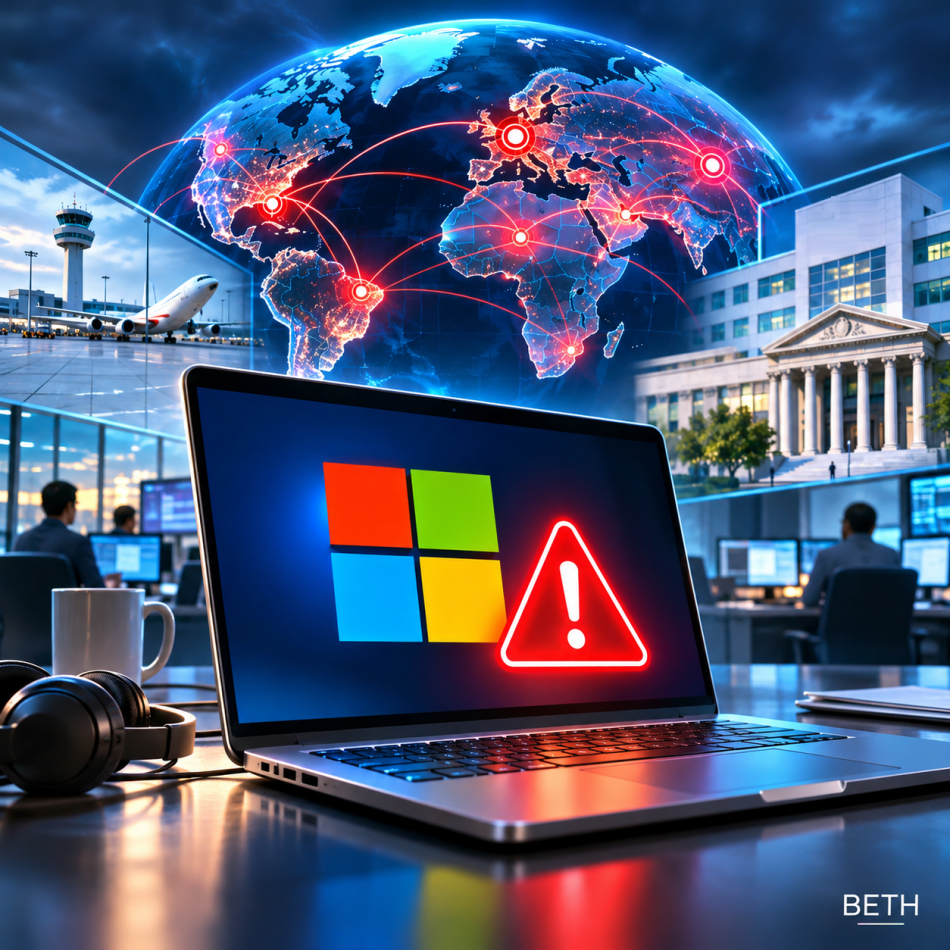
A technical failure disrupts email, government and healthcare services across several countries, affecting the operations of major institutions and companies. Microsoft begins gradually restoring services as questions mount over digital infrastructure security and business continuity plans.
Riyadh | BETH
November 13, 2026
The world experienced widespread disruption to Microsoft 365 services, beginning on the evening of Thursday, November 12, and continuing into Friday, affecting email, workplace applications and communications across government, healthcare and educational institutions, as well as companies in several countries.
Downdetector recorded approximately 130,000 reports of problems with Outlook at the peak of the outage, although this figure does not represent the total number of people affected worldwide.
How Did the Outage Occur?
Microsoft explained that preliminary investigations identified unusual pressure on the processes responsible for establishing secure connections between servers, causing some servers to stop responding and resulting in a loss of operational capacity.
The problem coincided with changes to network configurations and connection routing. However, the company has not yet determined the definitive root cause and confirmed that there was no evidence of malicious cyber activity behind the incident.
How Is Microsoft Addressing the Problem?
The company began redistributing network traffic to alternative servers, restarting affected systems and implementing fixes to authentication and routing configurations.
It also gradually restored services to some servers after testing their stability and extended the retention period for delayed email messages to 48 hours to minimize message loss.
The latest updates indicated a gradual improvement in stability, although Microsoft had not yet announced the complete restoration of all services.
What Is the Extent of the Damage?
The disruption affected Outlook email services and some functions of Teams, Copilot and SharePoint, while other features continued operating.
In the United Kingdom, communications at hospitals, clinics, pharmacies, schools and police departments were affected, forcing some healthcare providers to advise patients to use telephone services instead of email.
Disruptions also extended to government agencies and businesses in Australia, Japan and other Asian countries. Communications at some airlines were affected, although flights were not suspended.
No reliable estimate of the total global financial losses has yet been released.
How Far Could the Impact Extend?
The consequences go beyond the failure of a software application. They include delays in decisions, transactions, correspondence and services that depend on the affected systems.
Some repercussions may continue even after services are restored, owing to backlogs of messages and requests and the need to review transactions that were not completed during the outage.
How Can Future Disruptions Be Prevented?
The priority for institutions and governments is to diversify communication channels, maintain independent backups, regularly test business continuity plans and provide alternative channels for essential services.
The incident also highlights the need to improve system update testing, ensure that technical changes can be rolled back quickly and distribute workloads across independent operating centers.
These measures cannot guarantee the prevention of every outage, but they can limit the scale of disruptions and reduce their spread.
BETH Analysis | When Dependence Becomes a Source of Risk
The crisis reveals a paradox of digital transformation: the more interconnected services become, the greater the possibility that a failure in one system will spread across multiple institutions and sectors.
The problem does not lie in the use of cloud technologies themselves, but in concentrating essential services with a single provider without effective operational alternatives.
The incident poses a significant challenge for countries expanding digital government services and artificial intelligence: investments in technology must be matched by comparable investments in resilience, security and service continuity.
Ultimately, successful digital transformation is not measured by how quickly services operate when everything is functioning normally, but by the ability of institutions to continue fulfilling their responsibilities when those services fail.
Prepared and Analyzed by | Strategic Media Management – BETH News Agency