

Mecca Alliance Activates Joint Defense
Saudi Arabia, Pakistan and Türkiye decide to move immediately to the practical implementation of joint defense commitments, provide the agreed forces and military capabilities, and accelerate their deployment in the Kingdom; first Secretary-General appointed
RIYADH | BETH
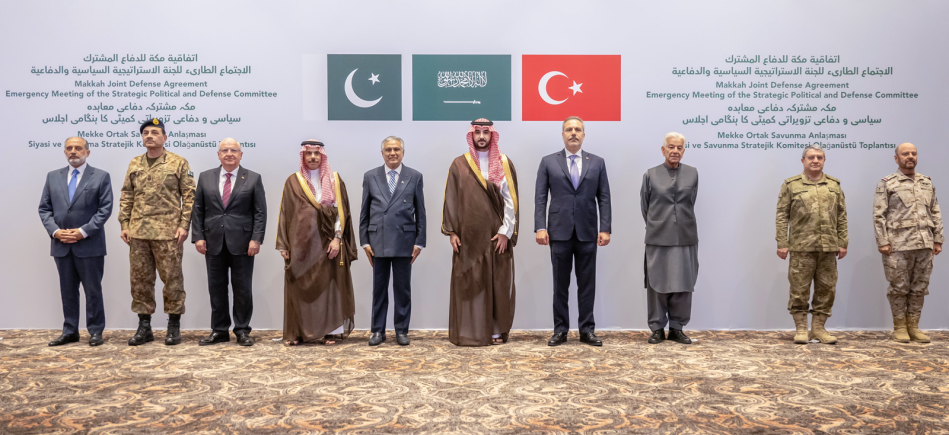
Saudi Defense Minister Prince Khalid bin Salman said, following the emergency meeting of the Political and Defense Strategic Committee of the Mecca Defense Alliance, that the Alliance’s member states stand in solidarity and as one in confronting the attacks that targeted the Kingdom and the holy sites.
He said the committee agreed to activate collective deterrence against these attacks and against all those behind them within the framework of the Mecca Defense Alliance.
The Defense Minister’s statement coincided with a joint statement by Saudi Arabia, Pakistan and Türkiye that marks the most significant practical step taken by the Alliance since its establishment. The three countries decided to move immediately to the practical implementation of their joint defense commitments and to take the necessary measures to provide the agreed forces and military capabilities and accelerate their deployment in the Kingdom.
The committee also appointed retired Lieutenant General Nauman Mahmood of Pakistan as the first Secretary-General of the Mecca Defense Alliance for a three-year term.
Full Text of the Joint Statement
Joint Statement Issued by the Emergency Meeting of the Political and Defense Strategic Committee of the Mecca Defense Alliance
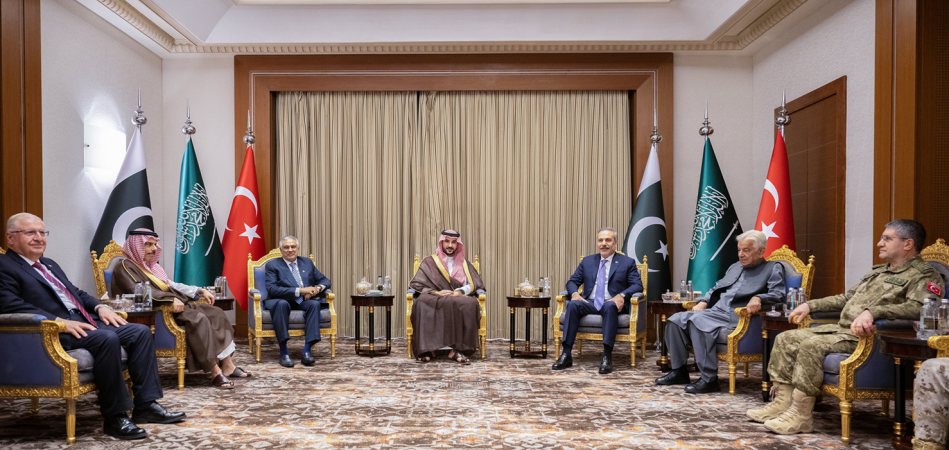
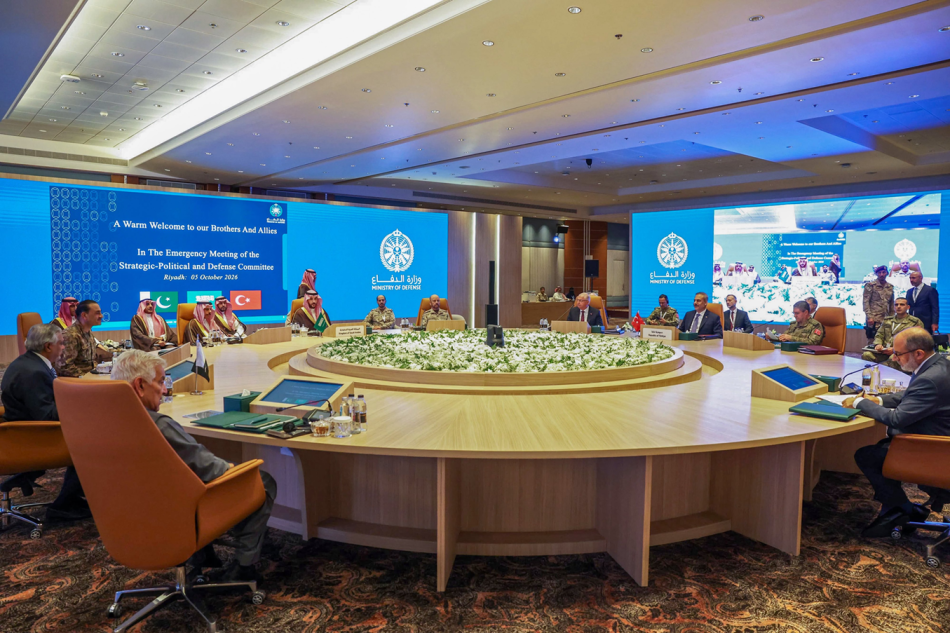
The Kingdom of Saudi Arabia, the Islamic Republic of Pakistan and the Republic of Türkiye held an emergency meeting in Riyadh today of the Political and Defense Strategic Committee of the Mecca Defense Alliance to discuss security developments and the threats facing the Kingdom of Saudi Arabia.
As part of the institutional development of the Mecca Defense Alliance, the committee decided to appoint His Excellency retired Lieutenant General Nauman Mahmood of the Islamic Republic of Pakistan as the Alliance’s first Secretary-General for a three-year term.
The member states welcomed His Excellency, wishing him success in carrying out his duties and expressing confidence in his contribution to the development of the Alliance and the achievement of its objectives.
The member states strongly condemned the attempted targeting of Makkah and Madinah, as well as the continued attacks against cities and civilian and economic facilities in the Kingdom, reaffirming their categorical rejection of any attack or threat to the Kingdom’s security and territorial integrity.
The Islamic Republic of Pakistan and the Republic of Türkiye praised the vigilance and readiness of the Saudi Armed Forces, as well as the professionalism and high level of competence they have demonstrated in confronting the threats and attacks facing the Kingdom and in protecting its security and territorial integrity.
The committee reviewed the outcomes of the political and military consultations that preceded the meeting and approved the recommendations submitted to it, affirming that the Mecca Defense Alliance embodies a firm commitment to joint defense and a unified position in confronting threats.
The committee decided to move immediately to the practical implementation of joint defense commitments and to take the necessary measures to provide the agreed forces and military capabilities and accelerate their deployment in the Kingdom, in accordance with the approved arrangements and the national legislation of the member states, in a manner that enhances readiness, military integration and the collective capacity to confront and counter threats.
The member states affirmed that the security of each member state is an integral part of the collective security of the three countries, and that translating the Mecca Joint Defense Agreement into practical measures demonstrates the credibility of the commitment to joint defense, strengthens the effectiveness of deterrence, and confirms the unity of the three countries and their determination to defend their security, sovereignty and territorial integrity in accordance with the provisions of the agreement.
Saudi Position
At the same time, the Saudi Ministry of Foreign Affairs condemned the continued Houthi attacks on civilians and civilian and economic targets in the Kingdom, including attempts to target Makkah and Madinah, as well as Riyadh, Abha, Khamis Mushait, Jazan, Najran, Taif and Yanbu, in addition to attacks on Saudi vessels in the Red Sea and the Bab al-Mandab Strait.
The Kingdom reaffirmed its inherent right to defend its territory, resources and sovereignty, and to protect the safety of its citizens and residents, while taking all necessary measures in accordance with international law.
Saudi Arabia also renewed its full political and military support for Yemen’s Presidential Leadership Council, the Yemeni government and the Yemeni people in ending the coup and restoring state institutions. It also called on the international community, particularly the permanent members of the UN Security Council, to implement the relevant Council resolutions and provide full support to the Yemeni government in confronting the Houthi threat to Yemen, the region and the world.
BETH Analysis
Today’s developments mark the first clear transition by the Mecca Alliance from a political framework to the practical implementation of joint military defense.
The most significant element is not the declaration of solidarity itself, but the explicit reference to providing forces and military capabilities and accelerating their deployment inside the Kingdom. This indicates that the concept of joint defense is beginning to take the form of field arrangements capable of implementation.
The appointment of the Alliance’s first Secretary-General also gives it a permanent institutional structure at the same time as it faces its first major security test.
The attacks on Saudi Arabia are therefore moving from the scope of a national confrontation into a Saudi-Pakistani-Turkish collective defense framework, a shift that goes beyond responding to the current attacks and points to the formation of a new deterrence equation in the region.