



Al-Mashaer Train.. The Smart Artery of Hajj
Mina | B | بث
Dhul Hijjah 06, 1447 AH — May 23, 2026
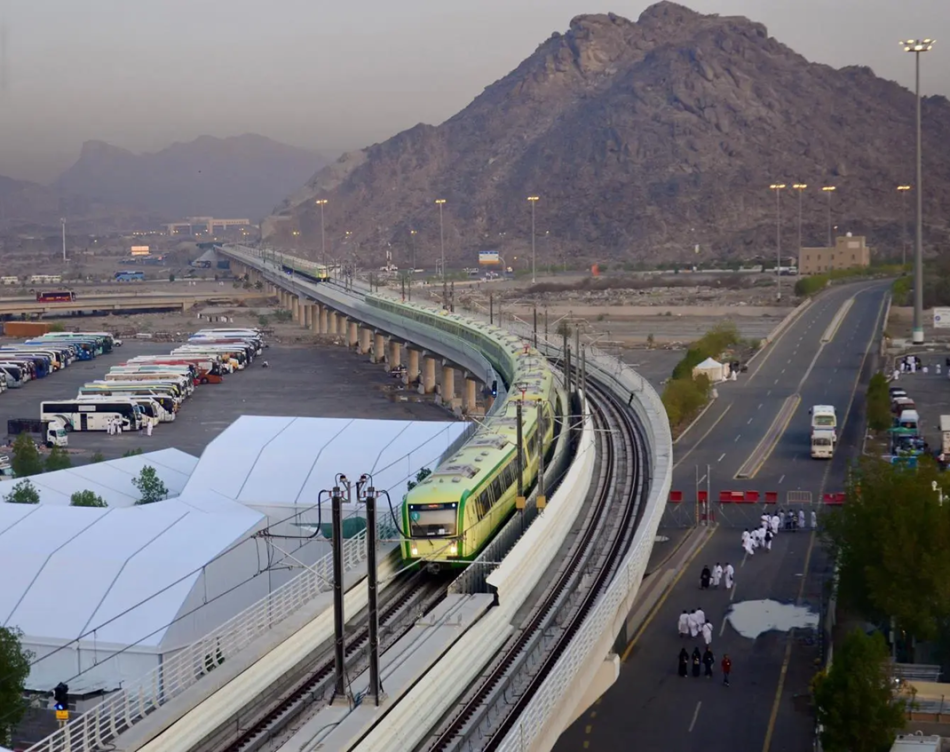
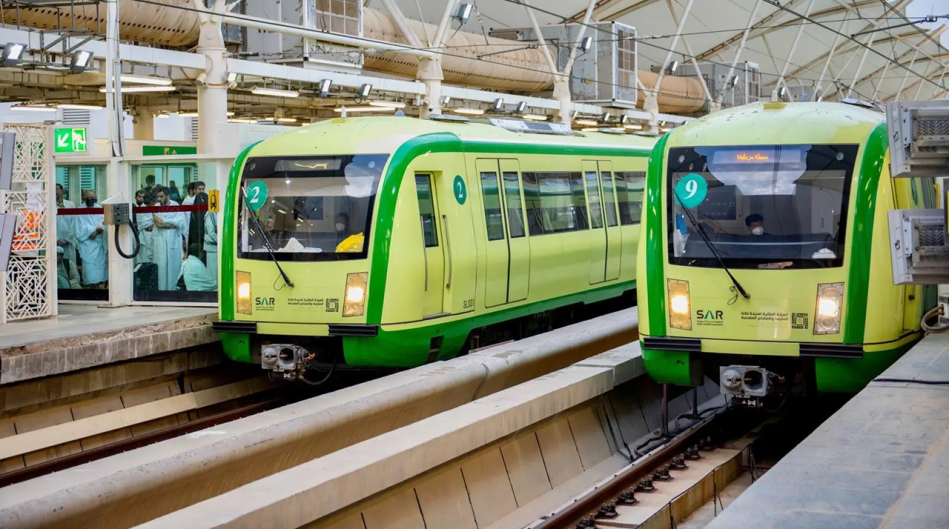
Saudi Arabia Railways continues its operational preparations for the 1447 AH Hajj season through an integrated plan aimed at transporting more than two million passengers via the Al-Mashaer Al-Mugaddassah Metro, one of the most significant modern transportation projects within the holy sites and a central pillar in managing pilgrim movement during Hajj.
The Brief
The project reflects the scale of development achieved by Saudi Arabia’s transportation system through a smart and secure mobility network linking:
Mina,
Muzdalifah,
and Arafat,
with the goal of facilitating pilgrim movement, reducing travel times, and easing traffic congestion during peak periods.
The railway extends across 18 kilometers and includes nine stations distributed throughout the holy sites, reaching Jamarat Station. The train operates at speeds of up to 80 kilometers per hour, while the journey between Arafat and Mina takes approximately 20 minutes.
The fleet consists of 17 trains, each capable of carrying up to 3,000 passengers, while the overall capacity reaches nearly 72,000 passengers per hour, making it one of the world’s highest-density and most efficient transportation systems.
Station designs were developed to facilitate crowd movement through:
separating waiting areas from boarding zones,
separating arrival and departure flows,
and providing bridges, ramps, and escalators to serve the elderly and people with disabilities.
The train has also significantly reduced bus traffic within the holy sites by eliminating nearly 50,000 bus trips, contributing to:
reduced congestion,
improved traffic flow,
and enhanced environmental sustainability through reliance on clean electric energy.
Operations are managed through a central control center operating on a highly coordinated shuttle system linked to the stages of pilgrim movement between the holy sites, ensuring maximum safety and operational efficiency.
B Analysis
What is happening with Al-Mashaer Train cannot simply be viewed as a transportation project.
It represents an advanced Saudi model in:
crowd management,
smart operations,
and high-density logistical coordination.
The world struggles to manage large-scale gatherings for limited periods of time.
But Hajj involves millions of people moving simultaneously within a confined geographical area carrying immense religious and human sensitivity.
This is where Saudi Arabia’s accumulated expertise becomes evident.
Al-Mashaer Train does not merely transport pilgrims.
It carries:
the entire rhythm of Hajj itself.
Every minute of delay may create enormous human pressure.
Every minor disruption can evolve into a complex crisis.
This is why the system depends on:
advanced simulations,
real-time analysis,
phased operations,
and highly precise management of human flows.
The project also reflects Saudi Arabia’s transformation from:
traditional seasonal management,
to:
building smart systems driven by technology, data, and proactive planning.
Over recent years, Hajj has become one of the world’s largest models for:
complex field management,
smart mobility,
and large-scale crowd and crisis management.
As the Day of Arafat approaches, Al-Mashaer Train appears almost like:
a massive electronic artery,
regulating the movement of millions during one of the greatest spiritual journeys on Earth.