



ho Ignites Them?
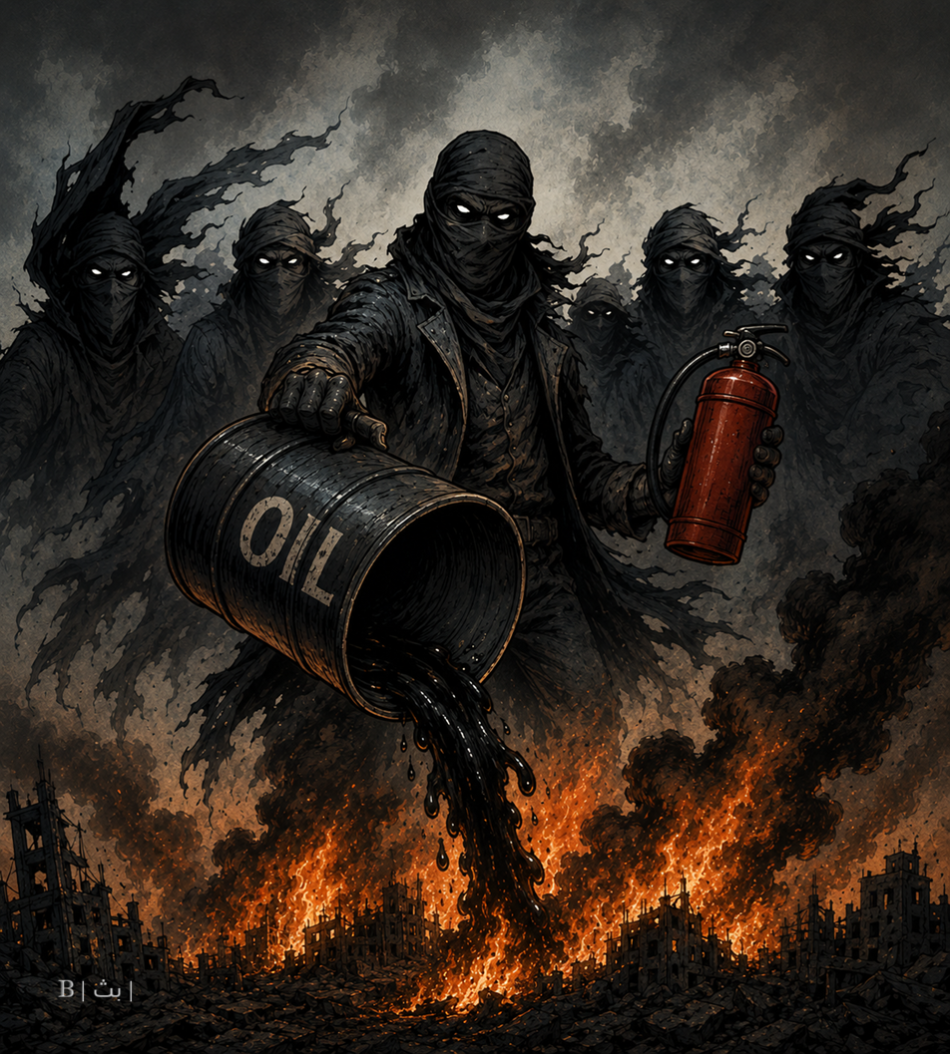
The Dark Irony..
Written by: Abdullah Al-Omairah
Igniting wars is far easier than extinguishing them.
That is why the world may sometimes need only:
a reckless person,
an angry leader,
an extremist,
or an arms dealer
for the fire to begin.
But extinguishing it may require rare minds.
Wars do not always begin because of power alone; sometimes they begin because of:
ignorance,
arrogance,
miscalculation,
hatred,
and the interests of those who live off chaos.
That is why some wars appear faster than the ability of reason to stop them.
It is often said:
Building a civilization is difficult, but not impossible.
Destruction, however, is much easier.
When you want to build a city,
an economy,
a university,
or a peace project,
you need:
a brilliant engineer,
skilled workers,
a long time,
patience,
and minds that know what they are doing.
But when you want destruction, it may require only:
an ignorant man carrying an axe.
Perhaps this is why wars spread so easily.
Destruction by nature is faster than construction, and the decision to ignite a fire is easier than the decision to control it after it spreads.
The problem is that the modern world has become filled with what could be called:
“the black market of destroyers.”
Arms dealers,
agitators,
extremists,
those who profit from chaos,
and media outlets that gain more from fire than from peace.
Some speak about:
freedom,
security,
or protecting people,
while in reality they are pouring fuel onto the flames.
That is why some scenes in today’s world resemble an absurd image:
people carrying fire extinguishers in one hand,
and barrels of fuel in the other.
From here, tragedy sometimes turns into something resembling:
“the darkest irony.”
But the most dangerous part is that starting a war does not always require a brilliant mind.
Preventing it,
stopping it,
or building a real peace afterward,
requires:
wise and powerful people.
Wars do not only reveal who possesses weapons; they also reveal:
who possesses wisdom.
Destruction can be carried out by an ignorant man holding an axe.
But building civilizations,
protecting nations,
and extinguishing fires before they spread,
are tasks achieved only by:
the wise and the strong.
I was reminded of a humorous story that perfectly captures the difference between:
starting a fire
and putting it out.
A young man graduated and joined the civil defense force, then returned to his family in the desert, where:
campfires,
coffee,
and honoring guests
are part of the culture.
One of his relatives asked him in front of everyone:
“Where do you work?”
He replied:
“In civil defense.”
They asked:
“What does civil defense do?”
He answered:
“We put out fires.”
They all replied at once:
“Shame on you, boy.. Your father lights fires for guests, and you put them out?!”
Different meanings sometimes create humor.
Of course, there is a vast difference between:
a fire lit for generosity and to ease hunger,
and a fire ignited by the arrogance of excess for the sake of destruction.
Yet today, the world seems to be living both meanings at once:
people igniting fires in the name of interests,
while others try to extinguish them with oil and a little water.
In the end, no raging fire lasts forever; unless Satan alone rules the Earth.
Human beings were created by God:
to worship,
to build the Earth,
not to turn it into ashes.
History tells us that every power which violated God’s law on Earth eventually met a painful end, no matter how powerful it became; then came:
new nations,
new civilizations,
and generations that rebuilt what wars and arrogance had destroyed.
Conclusion
There is no trust in:
those whose principles are built on destruction,
whose doctrine is chaos,
and whose politics depend on igniting wars.
Nor in those around whom wars revolve, who spread the flames to those around them, yet do not know how to extinguish them.
Nor in those who speak about peace and helping to put out the fire, while hiding a matchbox in their hands.
Nor in those who export weapons to kill human beings, while always positioning themselves near the world’s weakest and most fragile hotspots.
All of them, if they truly understood:
crisis management,
ending wars,
and peaceful diplomatic solutions,
their countries would not be burning,
their societies would not be suffering,
and they would not have created so many enemies.