



The Wolf Came .. and So Did His Cub”
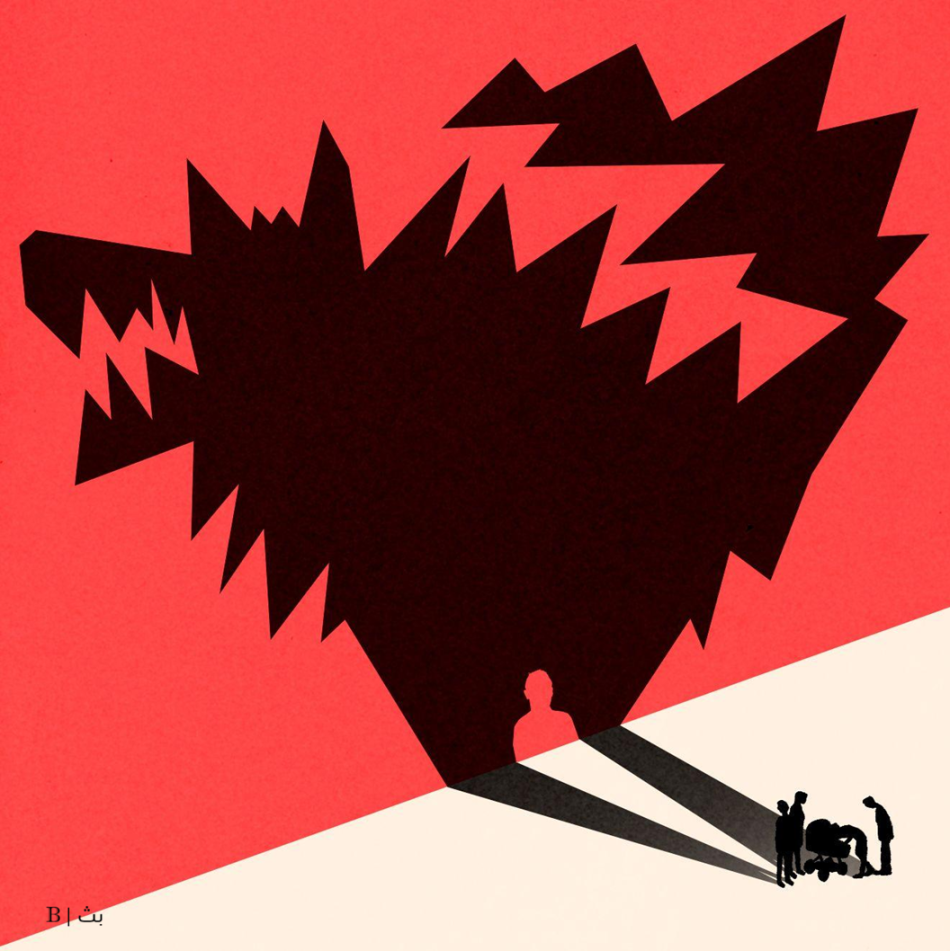
When Threats Turn Into Material for Public Mockery
Written by: Abdullah Al-Omairah
In politics,
as in life,
not every threat is frightening.
Some threats,
when repeated too often without action,
gradually lose their weight,
until they become — in the eyes of people —
nothing more than:
familiar noise.
And here,
popular culture sometimes intervenes
to summarize the entire scene in a single phrase.
A man in his seventies
summed up — through the wisdom of long years — the ongoing exchanges between:
the United States,
Iran,
and the endless mutual threats,
with a simple yet profound folk saying:
“The wolf came… and so did his cub.”
I reflected on his words.
At first, I laughed.
Then I thought again… for a long time.
How could an old folk saying
explain so perfectly:
showmanship,
deterrence,
psychological pressure,
and repeated threats,
better than dozens of political analyses?
When Threats Lose Their Value
In the Arab popular mindset,
a man is not measured by how much he speaks,
but by:
his steadiness,
his wisdom,
and his ability to prove his words through actions.
That is why,
when someone repeatedly threatens
yet nothing happens,
people begin responding with quiet sarcasm.
Historically, Arabs admire:
the clear-minded man,
the steady man,
the man whose words carry weight,
not the man who makes endless noise.
And so, the proverb implicitly says:
If “the wolf” arrives…
then his “cub” arrives repeating the same sound,
without decisiveness,
fear gradually transforms into:
familiarity.
From the Street .. to International Politics
Strangely enough,
this popular philosophy sometimes applies even to:
major world powers themselves.
Take for example:
the United States,
Iran,
and Israel.
Statements,
threats,
deadlines,
warnings,
talk of major strikes,
then:
delays,
negotiations,
backchannel messages,
and complex calculations.
Until part of the public began treating the scene as:
a war of statements more than a war of decisions.
And here lies the danger of:
excessive threats.
Because threats — when not managed intelligently — may weaken the image of their owner instead of strengthening it.
Wisdom .. Not Power Alone
History does not respect only the strongest,
but also:
the wisest.
That is why some nations possess:
weapons,
money,
and influence,
yet fail at:
managing crises,
building stable peace,
or transforming power into long-term gains.
Russia is a clear example.
A great power,
yet still trapped in:
the Ukraine war,
the exhaustion of Europe,
and confrontation with the West,
without a genuine ability to create:
a smarter and more stable model.
Not because Russia is weak…
But because possessing power is one thing,
while possessing strategic wisdom is another.
The same can sometimes be said about:
Israel,
France,
and many nations that possess tools of influence,
yet often fail at:
earning the respect of peoples,
or building a stable moral image.
Popular Culture .. Smarter Than Many Think
Elites sometimes underestimate folk sayings
and dismiss them as:
simple words.
But the truth is that societies store inside their proverbs:
experience,
wars,
deception,
and deep understanding of human nature.
That is why
a single folk phrase
can sometimes summarize
what lengthy political reports fail to explain.
“The wolf came… and so did his cub”
is not merely a joke.
It is a precise description of:
repeated threats that lose their effect
when they are not supported by:
action,
wisdom,
or decisiveness.
The Most Dangerous Aspect of Modern Politics
Some leaders today have begun confusing:
crisis management,
with media theater.
So there is an excess of:
warnings,
showmanship,
and speeches,
while:
wisdom,
vision,
and understanding the long-term effect of words,
continue to fade.
And in the end,
people do not remember:
who shouted the loudest.
But rather:
who remained most balanced,
most truthful in word,
and deepest in wisdom.
Conclusion
People may fear power,
but they do not respect noise for long.
And when threats are repeated without visible results,
fear gradually turns into:
popular mockery.
At that point,
people no longer need think tanks
or complex political analyses.
An old folk saying becomes enough:
“The wolf came… and so did his cub.”
Excessive threats are not a sign of manhood,
and endless provocations are not a sign of prestige.
True prestige lies in silence,
strength lies in action,
and wisdom lies in managing crises:
with skill,
patience,
firmness,
and few words.
And when real wars begin,
the noise stops,
until the objective is achieved,
or peace and security return.