



Saudi Arabia Expands Mediterranean Partnerships
Riyadh | B | بث
May 15, 2026
Saudi Arabia continued its European diplomatic outreach through consecutive visits by Foreign Minister Faisal bin Farhan Al Saud to Spain and Greece, as part of efforts to strengthen strategic partnerships and expand political, economic, and security cooperation amid rising regional tensions linked to maritime security and energy flows.
The Brief
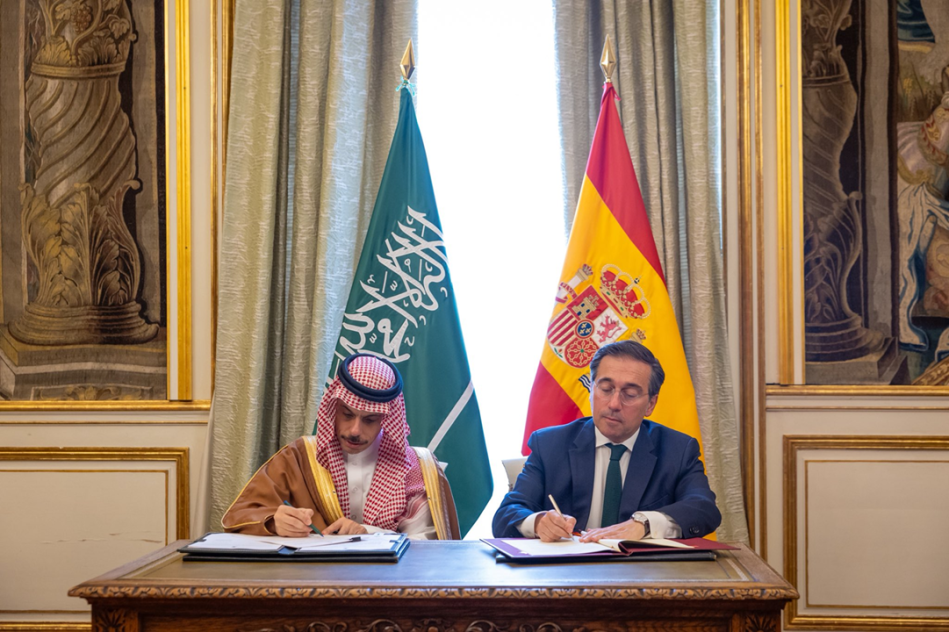
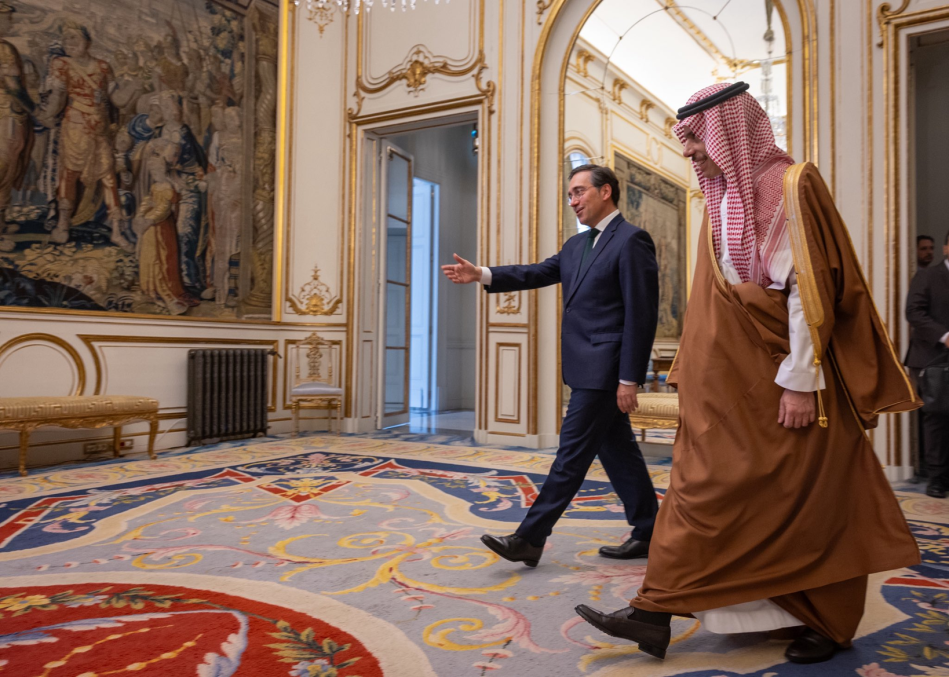
In Madrid, the Saudi foreign minister met with Spanish Foreign Minister José Manuel Albares, where both sides discussed ways to deepen bilateral relations and elevate them to the level of a “strategic partnership.”
The visit concluded with the signing of a memorandum of understanding establishing the Saudi–Spanish Strategic Partnership Council, alongside an agreement on mutual visa exemption requirements for holders of diplomatic, special, and service passports.
The two sides also discussed regional and international developments, emphasizing the importance of sustaining ceasefires in Gaza, Iran, and Lebanon, while stressing the need to ensure security and freedom of navigation in the Strait of Hormuz through diplomatic solutions and de-escalation efforts.
Spain reaffirmed its solidarity with Saudi Arabia, the Gulf states, and Jordan regarding attacks targeting the region, while the Saudi side praised Madrid’s position supporting de-escalation and the two-state solution.
In Athens, Prince Faisal bin Farhan arrived on an official visit to the Hellenic Republic, where he is scheduled to meet Greek Foreign Minister Giorgos Gerapetritis to discuss bilateral relations and hold a meeting of the political committee stemming from the Saudi–Greek Strategic Partnership Council.
B | بث Analysis
Saudi Arabia’s diplomatic movement toward Southern Europe is not merely a conventional diplomatic engagement…
It reflects part of a broader effort to build a network of partnerships connecting:
politics,
energy,
maritime security,
investment,
and regional balance.
The repeated focus on the Strait of Hormuz,
freedom of navigation,
and regional escalation
reveals that the security of the Mediterranean and the Gulf has become more interconnected than ever before.
The Saudi moves also reflect the Kingdom’s continued approach of building international influence through:
balanced diplomacy,
quiet partnerships,
and expanding cooperation with influential European powers,
at a time when global alliances and strategic interests are being rapidly reshaped.