



Day 73: Hormuz Under Pressure
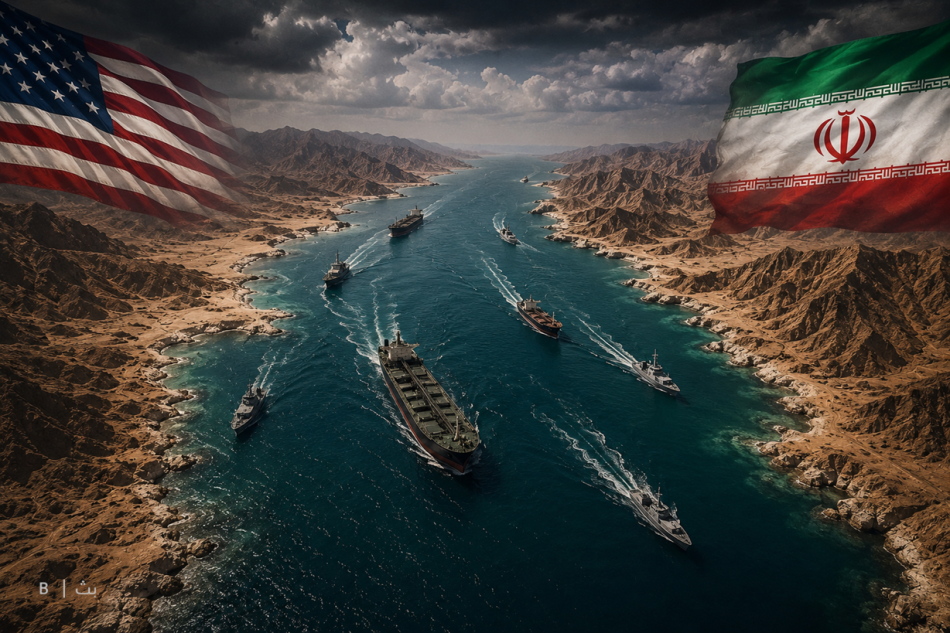
Follow-up & Analysis | B | بث
The U.S.–Iran crisis has entered a more sensitive phase, as American maritime pressure on Iranian oil exports continues alongside dual-track messages from Washington combining “open diplomacy” with a “ready military option.”
In this context, U.S. Vice President JD Vance stated that President Donald Trump’s administration is maintaining active diplomatic efforts to prevent Iran from acquiring a nuclear weapon, while stressing that all options remain on the table if current negotiations fail.
At the same time, Secretary of State Marco Rubio called on China to play a more active role in pressuring Tehran, arguing that stability in the Strait of Hormuz directly serves Beijing’s economic and strategic interests.
The Brief
Current indicators suggest that Washington’s pressure strategy is no longer focused solely on direct military threats, but increasingly on a “slow economic squeeze” aimed at disrupting Iran’s ability to export oil normally.
With the U.S. maritime blockade continuing since April 13, European satellite imagery showed no oil tankers docked near Kharg Island on several days in May, reinforcing estimates of reduced export activity and oil storage facilities nearing critical capacity.
Meanwhile, the Iranian military indirectly acknowledged using the Strait of Hormuz as a political and strategic leverage tool to secure gains in negotiations — a sign that Tehran still views the waterway as one of its most powerful geopolitical assets.
B | بث Analysis
The current confrontation is no longer just about missiles or fighter jets…
It is becoming a war of “economic rhythm.”
Washington appears to understand that a full-scale military confrontation could ignite both the region and the global economy. Instead, it seems to be pursuing a strategy of gradual exhaustion:
maritime pressure,
disrupted exports,
overflowing oil storage,
and time itself turned into a tool of attrition.
Iran, on the other hand, is trying to remind the world that it still holds the most dangerous card:
Hormuz.
Yet the paradox is that using Hormuz as a weapon is no longer as simple as it once was.
Closing the strait today would not only pressure the West…
it would also hit China, Asia, global energy markets — and potentially Iran itself.
That is why Rubio’s message to Beijing appeared strategically calculated:
Washington is attempting to shift part of the pressure onto China, effectively saying:
“If you want energy flows to continue… then you must influence Tehran.”
The broader picture:
The United States does not appear eager for immediate military escalation.
Iran does not appear capable of a full retreat.
And the Strait of Hormuz is gradually transforming from a “threat card”…
into a test of everyone’s will.