



Day 72: The War That Changed Its Shape
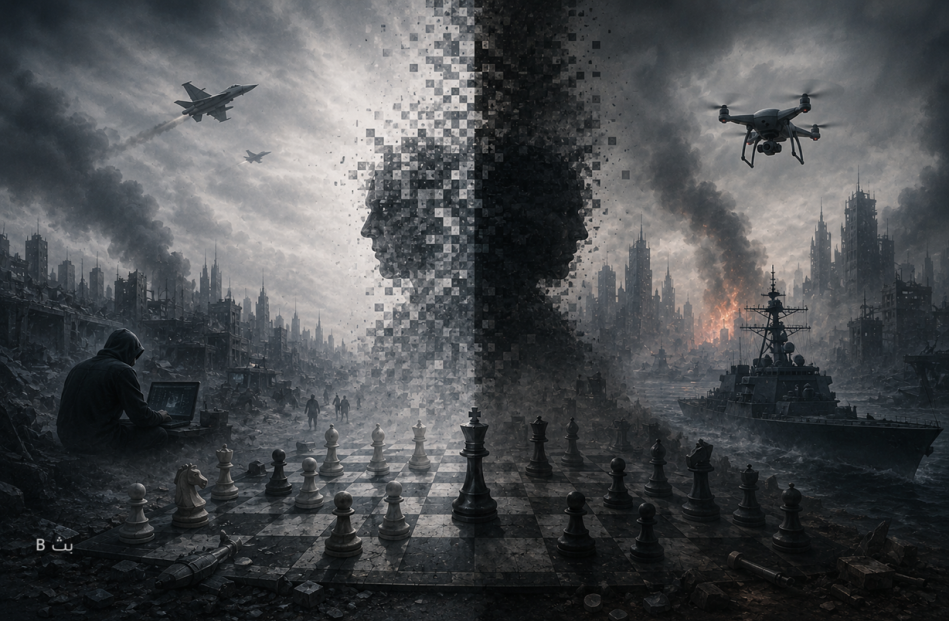
Follow-up & Analysis | B | BETH
After 72 days since the beginning of the U.S.–Iran confrontation, the main question is no longer:
“Who won?”
But rather:
“Did the war actually end at all?”
The current scene increasingly resembles a transition from direct warfare into a far more complex and ambiguous phase…
A psychological war,
An economic war,
A media war,
An intelligence war,
Moving in the shadows more than in the open.
The Situation
Day 72 witnessed a clear escalation in Iranian rhetoric following sharp criticism directed by Iran’s Foreign Ministry toward the United States and Israel, after Tehran rejected the latest American proposal aimed at ending the war.
Iranian Foreign Ministry spokesman Esmaeil Baghaei described the conflict as a “battle between good and evil,” arguing that Washington and Tel Aviv launched the war while negotiations were still underway — an attempt to morally and politically redefine the conflict before the Iranian public and international opinion.
This kind of rhetoric should not be read merely as political escalation…
But also as an attempt to rebuild morale,
And transform the confrontation from a geopolitical dispute into a “battle of existence and identity.”
Alongside the political escalation, the series of earthquakes that struck eastern Tehran triggered a new wave of concern and speculation, especially with repeated small tremors occurring near sensitive fault lines surrounding the Iranian capital.
While experts continue to treat the matter as natural geological activity, social media platforms and online discussions have begun circulating theories linking the tremors to possible “artificial interventions” or undisclosed activities.
However, so far there is no credible scientific evidence supporting the theory of “man-made earthquakes,” despite the tense wartime atmosphere making any natural event vulnerable to politicization and interpretation.
BETH Analysis
The most dangerous aspect of Day 72 is not the statements alone…
But the nature of the phase itself.
The war appears to have lost its traditional shape,
But not its underlying motives.
The ceasefire exists…
But trust is absent.
Negotiations continue…
But threats have not stopped.
Markets are trying to stabilize…
But global anxiety remains deeply present.
And here emerges a more dangerous question:
Has the world entered a prolonged phase of “gray warfare”?
That is:
A war that is never fully resolved,
And never fully stopped,
But continues through psychological pressure, sanctions, media escalation, mutual threats, and the exhaustion of economies and energy systems.
Iran’s description of the conflict as a “battle between good and evil” also reflects a significant shift in Iranian political language.
When states begin using moralistic and ideological terminology in this way,
They are often attempting to raise the ceiling of public resilience,
And prepare domestic audiences for a longer-lasting crisis.
What Comes After Day 72?
The most likely scenario at this stage is neither full-scale war…
Nor complete peace.
But rather a prolonged phase of:
Pressure,
Testing,
And strategic repositioning.
Washington wants an agreement under the logic of strength,
While Tehran wants to avoid the image of surrender.
Between the two sides,
The world is trying to avoid the moment of major explosion,
Without yet succeeding in reaching genuine stability.
This is why the next question may no longer be:
“Will the war return?”
But rather:
“Did it ever really stop… or did it simply change its tools?”
BETH (بث B) – All rights reserved