


Heirs of Ages : Did the Ancient Tribes Disappear .. or Merely Change Their Names?
By: Abdullah Al-Omairah
When we read history, we often assume that the ancient tribes have vanished.
The Goths.
The Vandals.
The Franks.
The Gauls.
The empires that rose and fell.
The wars that consumed Europe for centuries.
All of this seems to belong to a distant past.
Yet an intriguing question remains:
Did those mindsets truly disappear?
Or are they still moving through history under new names, new borders, and more sophisticated tools?
The Memory That Never Dies
History is not transmitted through books alone.
It is passed on through ideas.
Through interests.
And through the way nations perceive power.
This is why modern Europe, despite its apparent unity, continues to experience competition among centers of influence and power.
Civilizations evolve.
But the instincts of dominance do not disappear easily.
The Invisible Genes
We are not speaking here about biological genes in the narrow scientific sense.
Rather, we are speaking of civilizational genes that pass from one generation to another through ideas, cultures, and ways of thinking.
Some nations inherit a spirit of adventure.
Others inherit a deep concern for security.
Some inherit a mindset of expansion.
Others inherit a mindset of construction and development.
Wars, therefore, are not always passed down through bloodlines.
They are often transmitted through the assumptions each generation holds about power, influence, and its role in the world.
Perhaps that is why names, borders, and political systems change, while certain behavioral patterns continue to reappear in new forms.
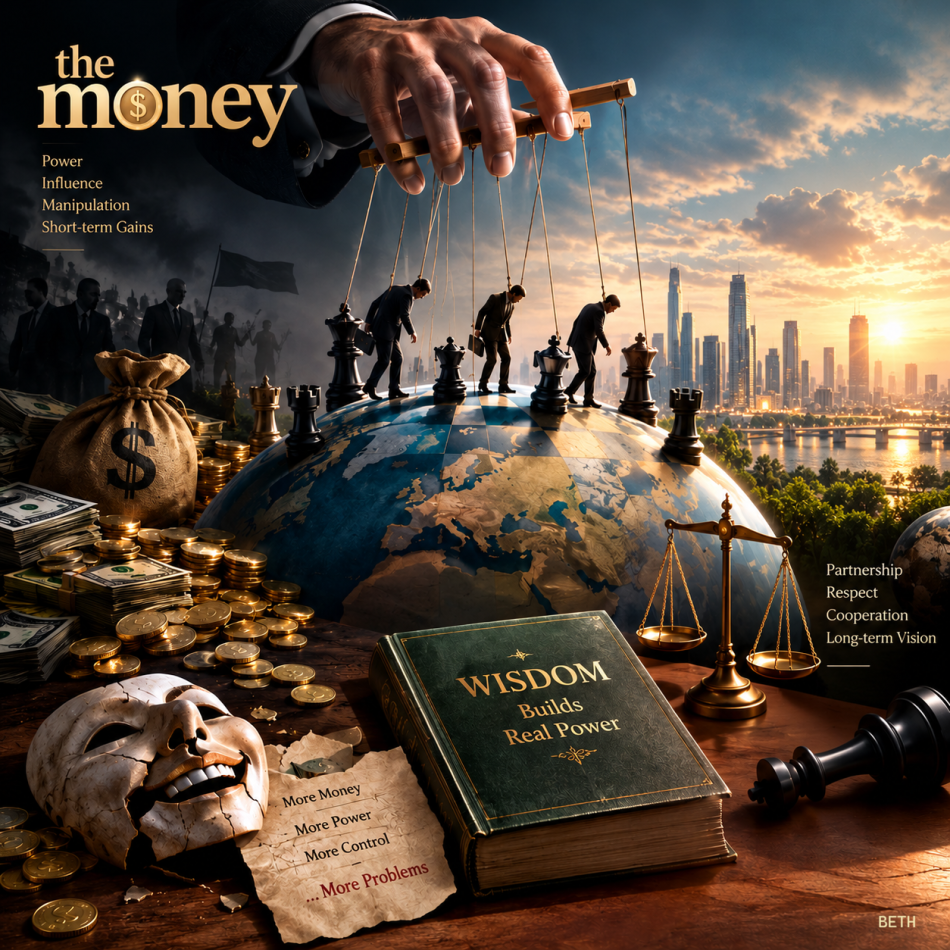
From the Sword to the Economy
In the past, armies advanced with swords and spears.
Today, power advances through:
- Economics.
- Technology.
- Media.
- Data.
- Supply chains.
Yet the underlying question often remains the same:
Who leads?
Who sets the rules?
The Greatest Achievements of the West
Despite its wars and rivalries, it is impossible to deny that Western civilization produced tools that transformed human life.
Industry.
Medicine.
Communications.
Transportation.
Modern technology.
Yet a question is rarely asked:
Is the value of a civilization measured by the tools it creates?
Or by the stability, prosperity, and security it provides for humanity?
The Interdependence That Built the Modern World
What if the Middle East did not possess its vast purchasing power?
What if Gulf energy resources were absent from the global economic equation?
Who would buy?
Who would consume?
Who would keep the wheels of the global economy turning?
The truth is that the modern world was not built by a single party.
It was built through a vast network of mutual interdependence between producers and consumers, between energy and industry, and between East and West.
For this reason, the notion of one side achieving lasting superiority over all others has become less realistic than ever.
Saudi Arabia: A Different Path
Here, a unique experience deserves attention.
Over recent decades, Saudi Arabia has not focused solely on acquiring the instruments of power.
It has focused on how to use them.
For development.
For stability.
For energy.
For technology.
For services.
For quality of life.
And most importantly, for people.
The question is therefore no longer:
Does Saudi Arabia possess the tools of excellence?
But rather:
How does it use them?
A Generation Building the Future
What stands out today is not oil.
Nor mega-projects.
It is the human being.
A new Saudi generation excelling in:
- Chemistry.
- Physics.
- Artificial Intelligence.
- Management.
- Operations.
- Engineering.
- Advanced technologies.
Supported by a stable nation and wise leadership that continues to move forward with determination and balance.
These are fields that, for decades, were considered the exclusive domain of other powers.
Yet the most important distinction is not the ability to achieve.
It is the purpose behind achievement.
While many nations spent centuries competing for dominance and influence, Saudi Arabia is directing knowledge and technology toward serving people, improving quality of life, and strengthening stability, security, and prosperity.
The Kingdom also places special importance on security as the foundation of stability and the guarantor of continued development and civilizational progress.
Development does not flourish amid chaos.
Innovation does not grow in unstable environments.
And civilizations do not advance unless societies feel secure and confident about the future.
This is where the real difference lies.
Where Is Saudi Arabia Heading?
Perhaps Saudi Arabia is not seeking to become a loud power.
Perhaps it seeks to become an influential one.
And there is a significant difference.
Loud power attracts attention.
Influential power changes reality.
One of the defining transformations of our era may be that the very concept of power is changing.
From dominance...
To partnership.
From conflict...
To creating stability.
From competing for influence...
To competing in quality of life, innovation, and achievement.
Final Scene
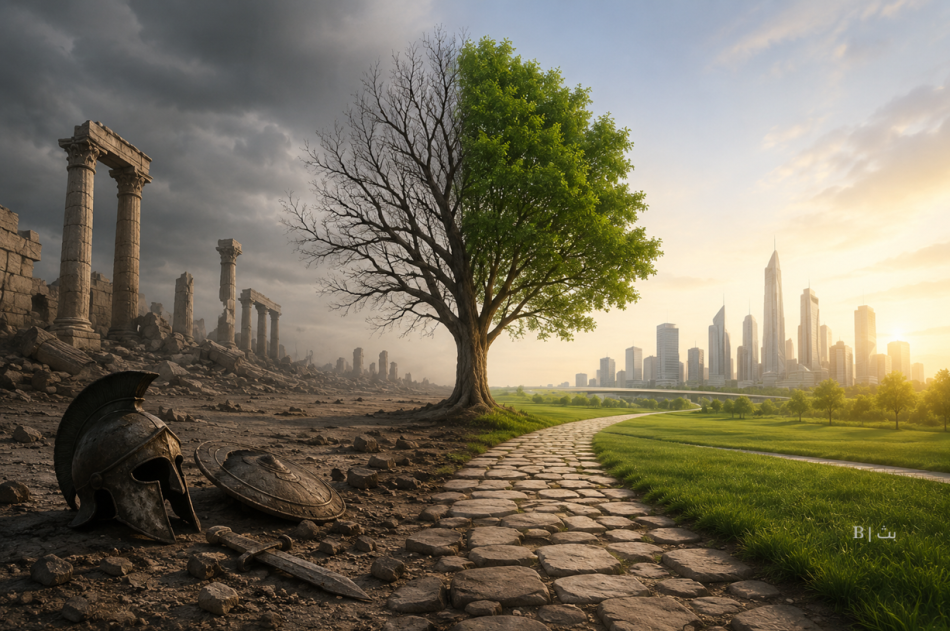
Perhaps the legacy of bygone ages has not disappeared entirely.
Some nations still view the world through the lens of rivalry and competition, seeking to expand influence and reshape balances of power.
But other nations have begun asking a different question:
What if power were used to build humanity instead of controlling it?
The future of nations may not depend on who possesses the largest armies.
It may depend on who possesses the clearest vision for what comes after power.
History may remember those who won wars.
But armies create influence only for a period of time, while civilizations create permanence in human memory.
History has repeatedly shown that many armies that once terrified the world disappeared, while the civilizations that elevated humanity endured.
Steel rusts, but ideas that serve humanity endure.
The future celebrates those who make human life more secure, prosperous, and stable.
A Journalistic Note on the Sidelines
While translating this article with colleagues in the Strategic Media Department at B News Agency, I paused at the article’s title, and an interesting discussion emerged about the meaning of the Arabic word “Al-Ghabirah” (bygone).
Does it simply refer to ancient ages?
Or does the word carry something more?
In Arabic, some words do not convey only their direct meaning; they also carry psychological and cultural associations that have accumulated over time.
The word “Al-Ghabirah” may refer to times that have passed and ended, yet for some readers it also evokes the image of dust settling over wars, conflicts, and mistakes that history has left behind.
Here lies one of the fascinating paradoxes of journalism:
A writer may sometimes search for the most beautiful expression.
A journalist, however, searches for the expression that conveys the idea with the least possible ambiguity.
Perhaps this is why the value of history does not lie merely in the fact that it has passed.
Rather, it lies in ensuring that the worst parts of it do not return to us under new names.
For some eras come to an end, yet some of their ideas continue searching for a way back.