



Aramco Hints at 12 Million Barrel Capacity
Riyadh | B | BETH
May 12, 2026
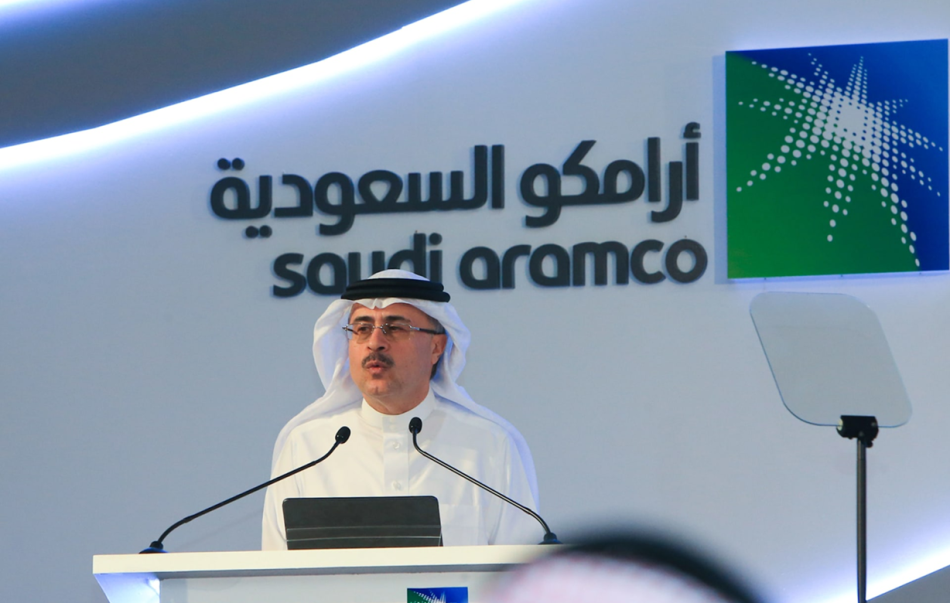
In what is being viewed as one of the most significant oil-related statements since the Strait of Hormuz crisis began, Saudi Aramco CEO Amin Nasser confirmed that the company can — if necessary — raise production to its maximum sustainable capacity of 12 million barrels per day within just three weeks.
Nasser’s remarks come at an extremely sensitive moment, amid ongoing disruptions linked to the Strait of Hormuz and growing global fears over supply shortages and rising energy prices.
He stated that the global oil market is losing nearly 100 million barrels per week due to continued shipping disruptions through the strait, noting that the world has already lost around one billion barrels over the past two months as a result of the current instability.
Nasser also explained that merely reopening the Strait of Hormuz would not immediately restore market stability, stressing that rebalancing the market could take months — and potentially extend into 2027 if disruptions continue for several more weeks.
He further pointed out that Saudi Aramco has relied heavily on the East–West pipeline linking Saudi Arabia’s Eastern Province to Yanbu on the Red Sea, with a capacity of approximately 7 million barrels per day, helping sustain export flows despite maritime tensions.
BETH Analysis
Amin Nasser’s statement should not be read merely as a technical oil-market comment.
It is also a strategic reassurance message directed at global markets.
When Aramco says it can raise production to 12 million barrels within three weeks, it is sending several messages simultaneously:
First:
Saudi Arabia still possesses the world’s largest flexible spare production capacity.
Second:
Riyadh is prepared to intervene rapidly if market stability requires it.
Third:
In times of major crises, the world still depends on Saudi Arabia’s operational and logistical capabilities to absorb global energy shocks.
But the statement also carries a deeper dimension:
Even with Aramco’s ability to increase production, the current crisis is not only about production itself.
It is about the geopolitical security of energy routes.
Oil may still be available,
But the more dangerous question is:
Can it safely reach global markets?
Here, the sensitivity of the Strait of Hormuz emerges once again — not merely as a maritime passage, but as a psychological and economic artery for the world.
Aramco therefore appears to be delivering a precise equation:
“We have the ability to produce… but market stability requires more than oil.”
Conclusion
Aramco’s latest statement reveals that the world is facing not only a pricing crisis —
But also a crisis of confidence in the stability of global energy flows.
At a time when fears are growing over a wider U.S.–Iran confrontation, Saudi Arabia is once again reinforcing its position as one of the world’s most important stabilizing forces in the global energy market.