



When Killing Becomes a Screen
Analytical Reading | BETH | B
Modern wars no longer resemble the wars humanity knew for decades.
The soldier no longer always sees his enemy face to face,
does not hear his screams,
does not come close to his blood,
and does not experience the moment of confrontation as it once existed in traditional wars.
Today…
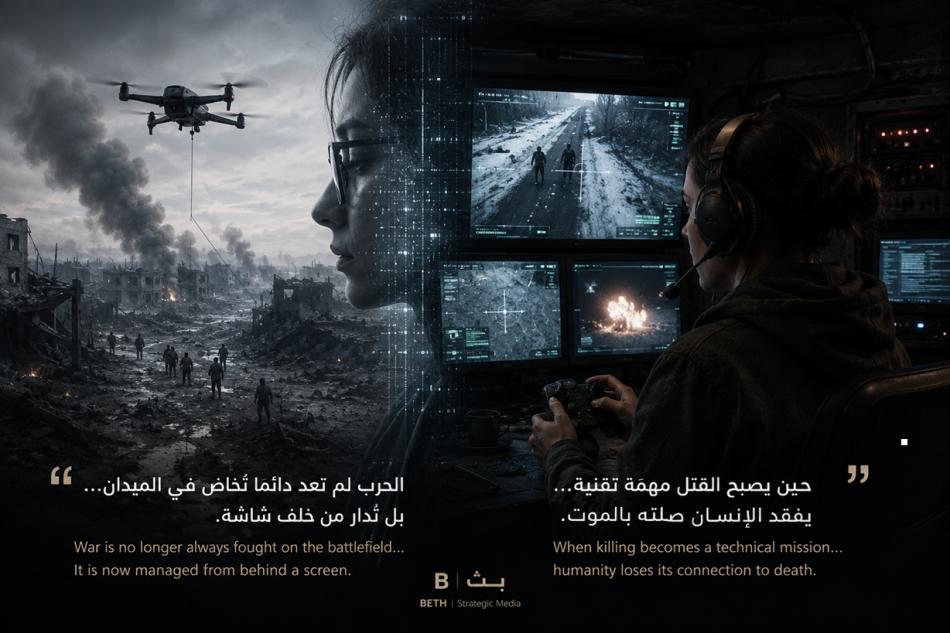
a person may sit inside a cold underground room,
in front of a screen,
moving a small control stick,
and then the lives of four people end with the movement of a finger.
What is shocking here is not only military development,
but the deep psychological transformation that has begun changing humanity’s relationship with war itself.
War Enters the Era of “Coldness”
In older wars,
combat carried direct fear,
human confrontation,
and a clash that made the soldier feel the weight of death.
But in modern digital wars,
the distance between the killer and the victim expands psychologically and humanly.
The screen reduces the shock.
Technology reshapes the feeling of the act itself.
And here the most dangerous question appears:
Is killing gradually transforming from a “tragic act” into a “technical task”?
From Human .. to Operator
The most dangerous thing modern wars reveal is not the drones themselves,
but the human being sitting behind them.
The real transformation happens inside the mind.
The soldier is no longer merely a fighter.
He becomes:
an operator,
an observer,
an analyst,
and a digital sniper.
He may drink coffee,
smoke,
or speak calmly,
while watching his targets through a small screen.
And here war begins reshaping personality itself.
It is no longer strange for some fighters to feel they live with two personalities:
one for daily life,
and another for war.
As if modern humanity has become capable of separating between:
“the human self”
and
“the digital combat self.”
Normalizing Killing
The danger lies not only in the number of wars,
but in how psychologically easy they become to practice.
When killing becomes:
distant,
silent,
fast,
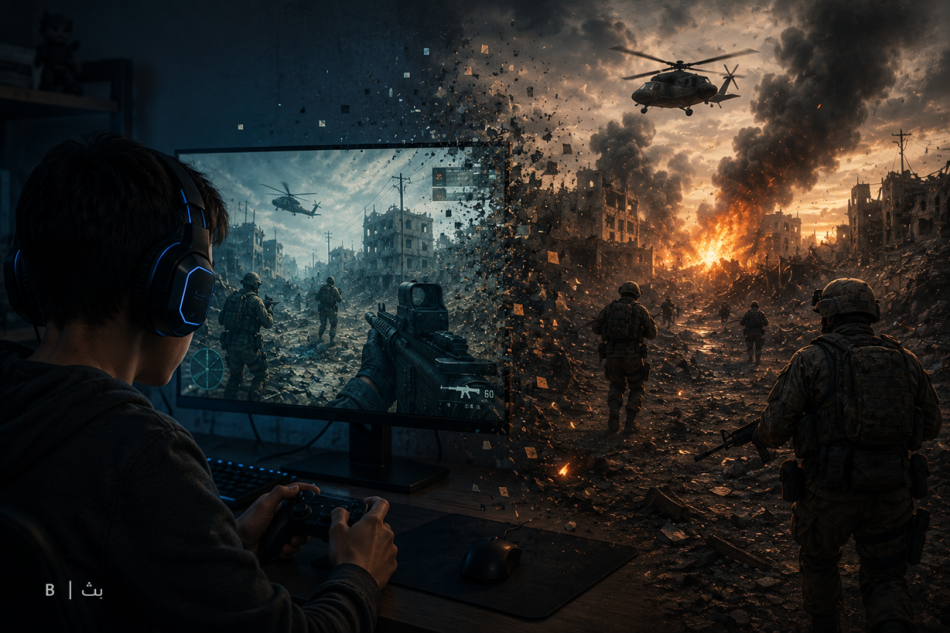
and visually similar to electronic games in some of its details,
the world gradually enters a new phase:
the normalization of remote killing.
Here, war becomes less shocking for the fighter,
more sustainable for states,
and more expandable without the immediate feeling of its human cost.
What Has Changed?
In the past,
war consumed the body directly.
Today,
it consumes awareness first.
Technology has not only changed the shape of battle.
It has changed:
the feeling of death,
empathy,
fear,
and the meaning of confrontation itself.
That is why future wars may appear calmer on the surface,
yet more dangerous to the human being from within.
Shadow Soldiers: The Privatization of Killing
The real danger may not only lie in drones or digital wars,
but in the moment when the “keys of war” are gradually handed over to:
shadow units,
proxy groups,
or hidden operators working behind screens and intelligent systems.
Here, war becomes more mysterious,
less connected to traditional armies,
and more capable of continuing without a clear declaration,
direct responsibility,
or even a real sense of the weight of blood and loss.
And in such wars,
the world may not always know:
Who is fighting?
Who is deciding?
And who is truly responsible?
The danger does not remain limited to enemies alone.
The powers that create instruments of war in the shadows may later discover that some of these tools no longer move entirely according to their will…
and that the magic may eventually turn against the magician himself.
After the War
The most dangerous question is not:
How will these wars end?
But rather:
What will humanity look like afterward?
When people become accustomed to:
surveillance,
targeting,
killing through screens,
and daily coexistence with images of destruction,
the world is no longer merely normalizing war.
It is reshaping the human being himself under the pressure of war.
And here,
the real challenge in the future may not only be stopping wars,
but protecting what remains of human feeling inside the age of digital warfare.
Conclusion
Perhaps the most dangerous thing about modern wars is not only drones or artificial intelligence.
It is the gradual adaptation of new generations to scenes of killing, pursuit, and explosions — whether through news broadcasts or through digital games that sometimes transform war into an interactive daily experience.
The problem is not in games themselves.
The problem begins when the psychological boundaries disappear between:
the game,
the war,
and the real human being behind the target.
At that point, the challenge becomes greater than merely stopping wars.
It becomes about protecting human sensitivity itself from adapting to violence,
so that death does not gradually become nothing more than another passing image on a screen.