



Saudi Ports Secure Supply
Rabigh | BETH
19 Shawwal 1447H | April 7, 2026
Introduction
Amid disruptions to supply chains in the region, Saudi Arabia is moving to enhance the readiness of its ports, led by King Abdullah Port in Rabigh, to ensure the uninterrupted flow of goods عبر the Red Sea and maintain the efficiency of trade movement at a sensitive time.
Presentation
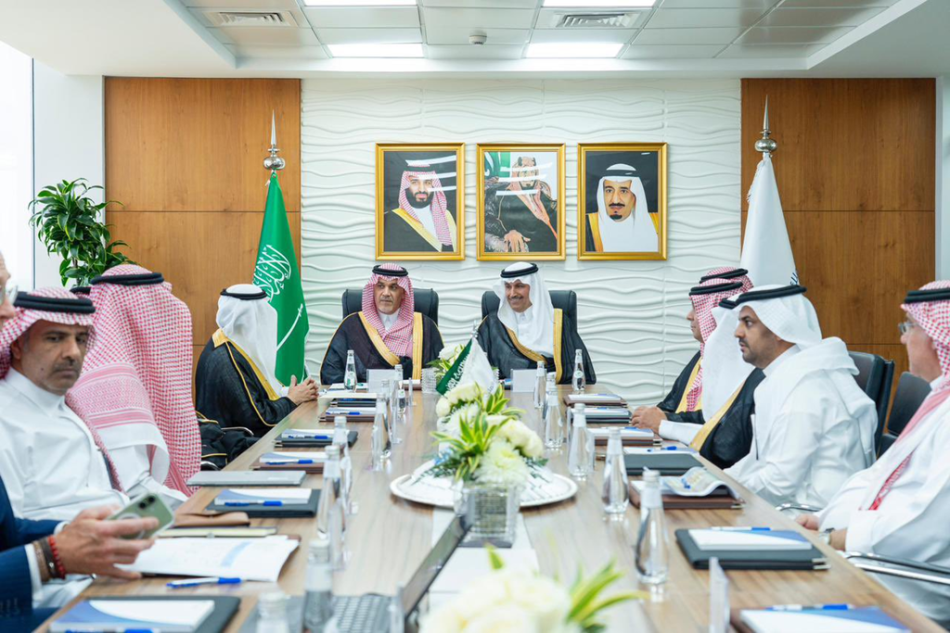
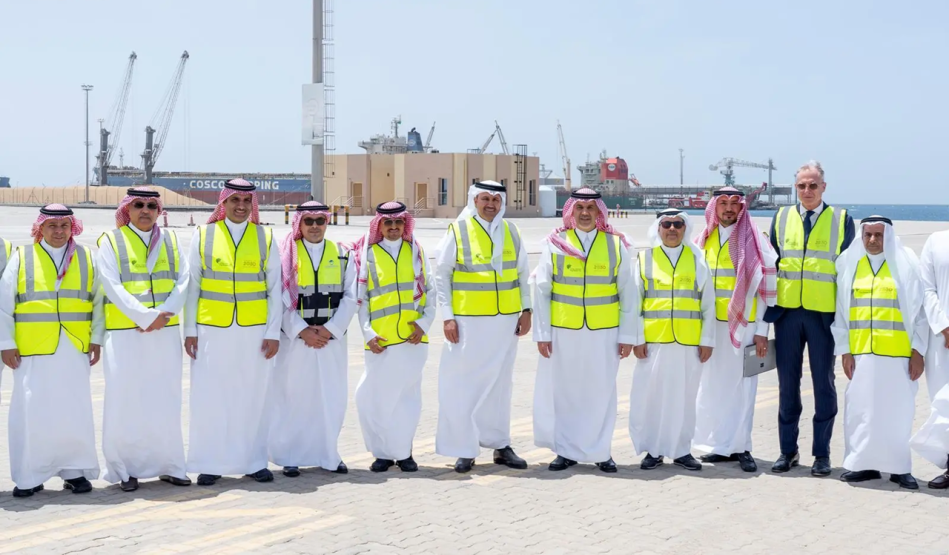
Within this direction, Minister of Transport and Logistics Services Saleh Al-Jasser, and Minister of Investment Khalid Al-Falih, inspected operational activities at King Abdullah Port on the Red Sea, to monitor the readiness of facilities and their ability to deal with accelerating developments.
It is one of six Saudi commercial ports on the Red Sea.
The visit focused on
container handling efficiency
readiness of berths and operational facilities
smooth flow of goods and supply chains
Mechanisms to enhance logistics efficiency were also reviewed, along with ensuring the port’s capacity to absorb the increase in global trade movement, particularly across the Red Sea.
King Abdullah Port is one of the major ports in the Kingdom. The port forms a strategic link between Asia, Europe, and Africa, benefiting from its location within King Abdullah Economic City, and serving industrial centers in Makkah, Madinah, Yanbu, and Rabigh.
The port also strengthens logistical connectivity with Gulf countries, supporting the flow of goods between Red Sea ports and Gulf markets, at a time when the need for stable and flexible trade routes is increasing.
The port represents an advanced model of public-private partnership, as it has been fully developed and operated under this model, which has enhanced its operational efficiency and global competitiveness.
Its annual capacity exceeds 20 million TEUs, with the ability to receive the largest container ships in the world, supported by advanced تجهيزات and deep berths reaching 18 meters.
BETH Analysis
The Saudi move here is not read as an operational procedure
but as a proactive management of the supply route.
Neutralizing the impact of the crisis
Instead of waiting for the effects of disruptions, readiness is enhanced to ensure uninterrupted flow.
The Red Sea as a strategic alternative
It shifts from a transit route to a محور for redistributing global trade in times of pressure.
Practical regional integration
Strengthening connectivity with the Gulf does not reflect theoretical cooperation, but an integrated supply system that responds efficiently to changing realities.
The scene goes beyond operating ports
to controlling the rhythm of supply.
When routes are disrupted
the value of ports that do not stop becomes evident.