



A Fighter Falls.. The Narrative Shakes
Monitoring & Analysis | BETH
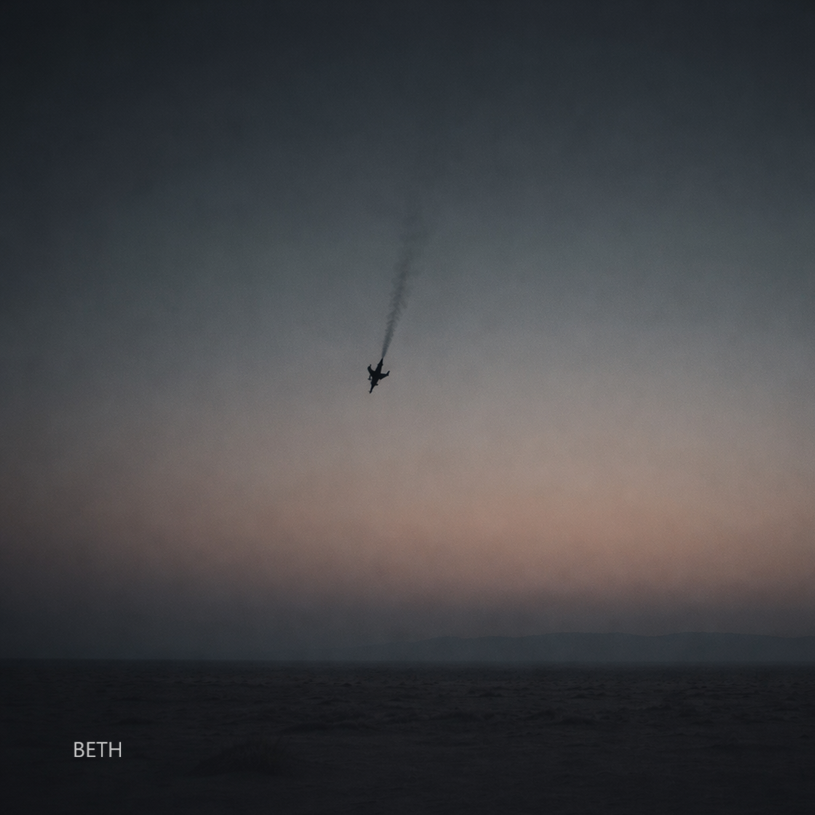
In a notable development within the theater of operations, available information indicates the crash of a U.S. F-15E fighter jet in southwestern Iran, with one crew member rescued and search operations ongoing for the other, amid conflicting accounts regarding the cause—whether technical failure or direct hostile engagement.
Overview
So far, there is no clear professional confirmation of two aircraft being lost. The most consistent information points to the crash of a single aircraft, placing many circulating headlines in the category of haste or exaggeration.
The most likely confirmed type is the F-15E Strike Eagle, a dual-seat strike fighter, which explains the reports of one crew member rescued and another still missing.
As for the location, reports indicate southwestern Iran, with references to areas within or around Khuzestan, without any conclusive evidence directly linking the crash to Khark Island, despite the region’s sensitivity and its connection to Iran’s energy lifelines.
Regarding the cause, three parallel narratives have emerged:
- Hostile fire engagement
- Technical malfunction or loss of control
- Cause still undetermined
This divergence reflects not only battlefield ambiguity, but also the sensitivity surrounding the disclosure of the full truth at this stage.
Meanwhile, Iranian narratives have surfaced claiming that “tribes” or local populations were involved in downing the aircraft—an account that lacks military logic, and instead reflects an attempt to symbolically involve society in the confrontation.
BETH Analysis
The incident is not merely a military loss…
but a test of the narrative.
When it is said that Iranian air defenses have been neutralized, yet a U.S. fighter jet falls inside Iran, the contradiction is not in the crash itself…
but in how air superiority has been presented to the public.
Air superiority does not mean the absence of risk,
but rather its reduction.
The sky may be operationally open…
but it is not fully secure.
As for the claim that “tribes” downed the aircraft, it represents a clear case of:
Symbolic internal mobilization
rather than a reflection of actual military capability.
On the other side, what stands out is the priority of rescue operations:
The allocation of significant search-and-rescue efforts for the second crew member indicates that the United States does not allow such incidents to turn into propaganda leverage. This also explains the likely temporary reduction of operational pressure over the crash site—without implying any halt to the broader military campaign.
And here lies the key point:
U.S. and Israeli operations continue across Iran,
targeting infrastructure linked to the Revolutionary Guard on a wide scale.
The loss of one aircraft—regardless of the cause—
does not compare to the scope of ongoing destruction.
Conclusion
This is not a turning point in the war…
but an incident that reveals:
Superiority does not eliminate risk,
and narratives sometimes require recalibration.
BETH Signature
The sky may be controlled…
but it is never fully secured.
Follow BETH Coverage
BETH Coverage – Day 34 of the war