



Saudi Cabinet Reviews Global Engagements, Advances Strategic Partnerships
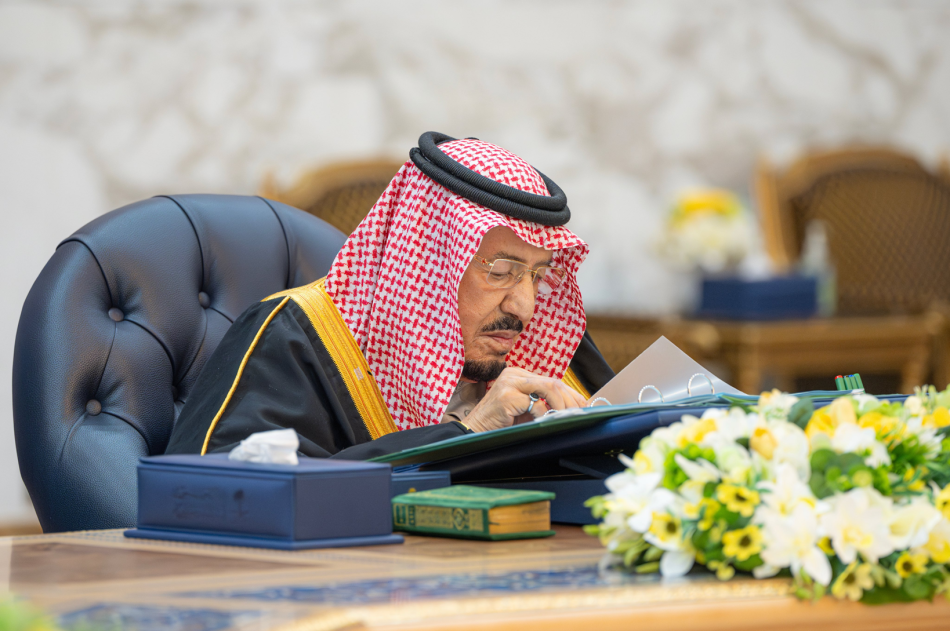
Riyadh | BETH – February 10, 2026
The Saudi Cabinet, chaired by Custodian of the Two Holy Mosques King Salman bin Abdulaziz Al Saud, reviewed the outcomes of high-level engagements held by Crown Prince and Prime Minister Mohammed bin Salman with the leaders of Russia, Türkiye and Germany, highlighting the positive results of these interactions and the shared intent to expand strategic, investment and development cooperation.
The Cabinet discussed regional developments, reaffirming Saudi Arabia’s commitment to regional security and stability, calling for full adherence to the ceasefire agreement in Gaza and progress toward a political horizon that enables the establishment of an independent Palestinian state. It also voiced support for the outcomes of the Global Coalition to Defeat ISIS meeting hosted by the Kingdom, underscoring the need for sustained international action against cross-border terrorism.
The Cabinet welcomed advances in Saudi-Syrian cooperation following the visit of a Saudi delegation to Damascus to launch strategic projects and contracts across aviation, telecommunications, water, industry and education—aimed at strengthening infrastructure and supporting economic recovery.
The Cabinet also commended the outcomes of the 5th AlUla Conference for Emerging Market Economies 2026, co-hosted with the International Monetary Fund, as a platform to promote international cooperation, economic and financial reforms, and inclusive, sustainable growth in emerging economies.
In addition, the Cabinet welcomed Saudi Arabia’s election to chair the Board of Directors of the Institute of Internal Auditors (2027–2028), reflecting the Kingdom’s growing role in advancing governance and institutional excellence at the international level.
Key Decisions | Executive Highlights
Authorized the Minister of Energy to negotiate and sign a framework agreement and a cooperation agreement with Jordan and Türkiye on the peaceful uses of nuclear and atomic energy.
Approved reciprocal visa waiver agreements for holders of diplomatic and official passports with Bosnia and Herzegovina and Mongolia.
Approved a cultural cooperation MoU with Uzbekistan.
Approved the Saudi–Qatar high-speed electric rail connectivity agreement.
Approved a health cooperation MoU with Syria.
Authorized technical and scientific geological cooperation with Yemen, and financial intelligence cooperation with the United Nations Office on Drugs and Crime (UNODC).
Approved the organizational framework for the Prince Mohammed bin Salman Global Center for Arabic Calligraphy.
Established a permanent committee to oversee the ban on asbestos.
Endorsed final accounts of several universities and approved a senior appointment at the Ministry of Energy.
BETH Insight | Strategic Reading
The Cabinet’s outcomes reflect a dual-track Saudi approach: expanding geopolitical partnerships while institutionalizing development diplomacy. The convergence of political engagement with project-based cooperation—across energy, transport, culture, health and governance—signals a shift from managing files to building enduring networks of interests and influence.