



From Intelligence to Authority: When Decision-Making Is Delegated to the Machine
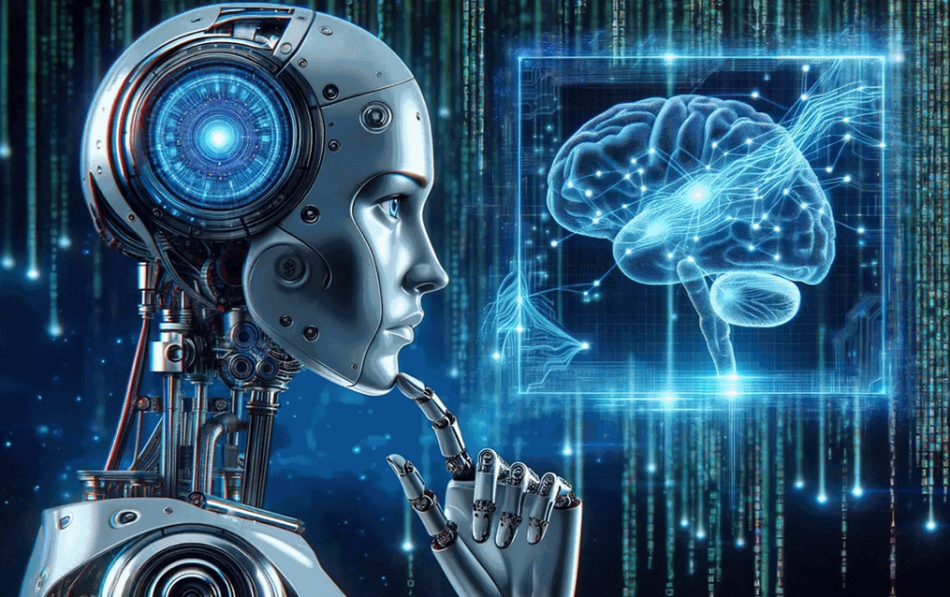
Prepared and Analyzed by | Strategic Media Department – BETH News Agency
Opening
The key question today is no longer:
Is artificial intelligence intelligent?
The real question is:
Who allowed it to decide?
What the world is witnessing is not merely a technological leap,
but a quiet transfer of power—
from humans to algorithms.
Artificial Intelligence Leaves the Assistant’s Seat
In its early stages, artificial intelligence was a support tool:
It analyzed
It suggested
It accelerated decisions
Today, the scene has changed.
It is no longer asked only, “What do you think?”
It is granted authority to:
Rank priorities
Define risks
Recommend options
Exclude alternatives without debate
Here begins the grey zone—
when decisions are no longer made in the name of humans,
but in the name of “accuracy.”
Who Owns the Algorithm Owns the Angle of Vision
An algorithm does not think.
It executes what has been embedded within it.
The danger is not in the code itself,
but in the assumptions planted inside it:
What is classified as a risk?
What is considered a priority?
What should be amplified—and what should be marginalized?
Artificial intelligence does not see the world as it is,
but as it was designed to see it.
Cold Decisions Without Human Context
The machine:
Reads data
Calculates probabilities
Favors the lowest-cost outcomes
But it does not understand:
Suppressed anger
Collective fear
Psychological shifts
Dignity
Symbolism
Here lies the paradox:
The most dangerous decisions in history were not mathematically wrong—
they were humanly blind.
When Speed Becomes the Enemy of Wisdom
Algorithms are marketed as:
Faster
More accurate
Less biased
But speed is not always a virtue.
Some decisions require:
Deliberate delay
Calculated silence
Reading between the lines
And machines do not wait.
Who Is Responsible When the Machine Fails?
The unresolved question remains:
Is the programmer accountable?
The owning entity?
Or the decision-maker who “trusted” the algorithm?
Within this vacuum, a new form of authority emerges—
power without a face,
and without clear accountability.
The BETH Perspective
We are not facing a rebellion of artificial intelligence,
but excessive human delegation.
The real danger is not that machines think,
but that humans stop thinking—
under the claim that machines are “more precise.”
Whoever Owns the Decision Owns the Power
Artificial intelligence does not make decisions.
It accelerates their execution,
polishes their logic,
and grants them an appearance of neutrality.
Real power lies not in the tool,
but in who determines:
What questions are asked
What is ignored
Which outcomes are deemed “logical”
The world is moving toward artificial intelligence,
but its direction is not shaped by algorithms alone—
it is shaped by the minds that write them,
the values that feed them,
the companies that hold their keys,
and the decision that presses start… or stop.
Here, the equation shifts:
Those who possess awareness use artificial intelligence.
Those who lack it hand over the keys to others—
then later ask:
How did the direction change without our decision?
Conclusion
The world has entered a new phase:
Artificial intelligence is no longer a technical tool,
but a player in decision-making,
a regulator of rhythm,
and an invisible architect of perception.
In this era:
Those with awareness use artificial intelligence.
Those without it surrender the keys.
History is not written by the fastest—
but by the most perceptive.