



Dismantling NCAR… A Climate Shock
BETH Agency – Monitoring & Analysis
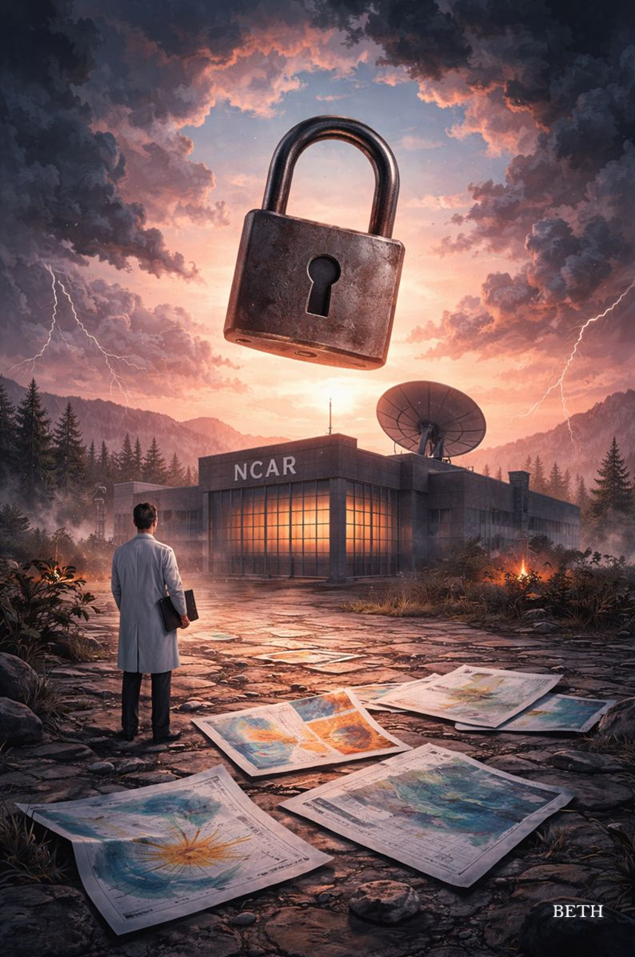
Washington | The U.S. administration is moving toward the dismantling/closure of the National Center for Atmospheric Research (NCAR)—a step that goes beyond an administrative decision to strike at the core of the scientific reference relied upon globally to understand climate, develop advanced weather models, and manage risk.
Why is this a major development?
1) Because NCAR is not an “ordinary” center
It is one of the most important U.S. pillars in:
Climate and extreme-weather modeling
Advanced scientific computing
Building monitoring and forecasting tools used by multiple entities inside and outside the United States
2) Because the decision places “science” in the political arena
When knowledge is managed as a political file, the issue is no longer data availability—but who controls its release and how it is used.
3) Because the impact extends beyond the U.S. to global markets
Any disruption to research continuity or independence affects:
Risk pricing (insurance)
Energy and investment decisions
Readiness to deal with natural disasters and severe weather
What does this step signal?
It is read as an indication of a redefinition of climate priorities in Washington:
Reducing the weight of independent research institutions
Pushing climate files toward a more politicized path
Redirecting funding, standards, and the language used to interpret risk
Possible scenarios
Scenario (1): Broad dismantling
Dismantling the institution or hollowing out its core functions, with limited transfer of “critical” activities that fails to preserve the scientific body.
Scenario (2): Conditional restructuring
Transforming the center into a new model with less independence and stronger alignment with political/executive priorities.
Scenario (3): Disruption or delay under pressure
Local and legislative objections may lead to scaling back the decision or partially freezing it.
Editorial conclusion (BETH)
When a scientific center is switched off, the story is not about climate alone.
The real question is: Who owns the “reference of risk”?
And who decides for the world what should be feared—and what may be ignored?
BETH Agency – Monitoring & Analysis