



The Arabian Gulf Moves Forward… While Iran Shouts
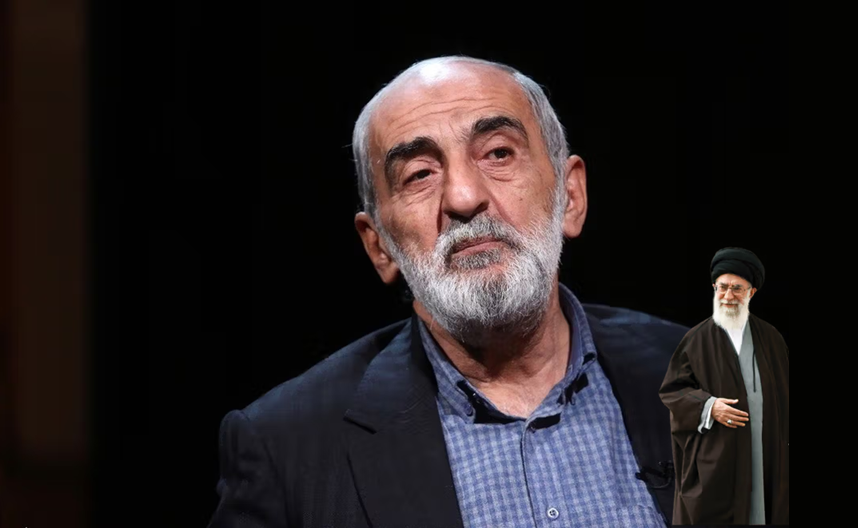
BETH Analysis: What Do Shariatmadari’s Remarks Really Reveal About Iran?
Khamenei Opens the Wrong Front: From “UAE Islands” to “Annexing Bahrain”… What Is Tehran Trying to Do?
Riyadh – BETH | Analysis & Insight
A Dangerous Message from the Iranian Regime
In an unprecedented escalation, Hossein Shariatmadari — editor-in-chief of Kayhan and the personal representative of Ali Khamenei — published a fierce attack on the Gulf Cooperation Council’s recent statement regarding the three UAE islands.
This time, however, he crossed all political boundaries by directly calling for the annexation of the Kingdom of Bahrain to Iran.
In his article titled “The Grave Piracy Error,” he wrote explicitly:
That the annexation of Bahrain to Iranian territory is “a definite right of Iran and the people of Bahrain.”
That “the main demand of the people of Bahrain” is to return to their “original homeland, Iran.”
Attacking the UAE, claiming its lands were “formerly known as the Pirate Coast.”
This is not a journalist’s opinion… but a political message from the innermost circle around the Supreme Leader.
That transforms the rhetoric from mere media posturing to exposing genuine strategic intentions.
Why Did Tehran Say This Now?
1) Internal Fear… and a Flight Forward
The Iranian regime is experiencing its weakest phase in 20 years:
Crippling inflation
Continuous protests
Power-center clashes
International pressure over the nuclear file
So it manufactures external crises to project the illusion of a “resilient regime.”
2) Testing Regional Reactions
Shariatmadari’s remarks are not random.
They are a trial balloon to measure Gulf and global responses.
3) A Misreading of the Era — and of the New Gulf
Iran still speaks with the tone of old empires…
while the Gulf speaks with the language of:
economy
technology
future
modern sovereignty
It is a 19th-century mindset, in a world racing toward 2030.
4) Ignoring the New Balance of Power
Today’s Gulf is not the Gulf of 40 years ago:
Joint defense frameworks
Strategic partnerships with the U.S., Europe, and Asia
Economies far surpassing Iran
A unified position on sovereignty
Any attempt to threaten any Gulf state has become political suicide.
This Is Not an Isolated Statement
These remarks intersect with:
Tehran’s rush into a “regional power contest” post-Gaza
Internal messaging that the regime still has “regional authority”
Confusion in Khamenei’s strategic circle after losing:
Iraq to international balancing
Lebanon to collapse
Syria to Russia
Yemen to the international coalition
So the regime searches for a new arena… choosing Bahrain and the UAE rhetorically.
Why Does Khamenei Appear as If He Lives in Another Age?
• A rigid ideological framework
Built on imperial nostalgia — not reality.
• A narrow inner circle producing illusions
Advisers telling the Supreme Leader what he wants to hear… not what he must hear.
• Isolation from global shifts
While the world is entering the era of digital sovereignty,
Tehran is still speaking of “provinces” and “annexation.”
• A confrontational mindset frozen in time
Khamenei’s circle still thinks in terms of:
expansion – militias – proxy wars – conflict zones.
While the region has moved to:
economy – development – partnerships – the future.
Conclusion
Shariatmadari’s statements are not a slip of the tongue — they are a test message.
But they reveal clearly:
Iran is betting on outdated rhetoric…
in a region that has transformed completely.
The Gulf today is too strong to be shaken and too smart to be provoked.
A Question That Must Be Asked
Do Khamenei and his inner circle truly understand what they are saying?
Or has the Iranian regime become controlled by a deep state tied to networks that trade in chaos and weapons?
Or are we witnessing a terrorist organization wrapped in the cloth of a state called “Iran”, acting with the logic of a militia rather than a sovereign nation?
Two Closing Observations
▫️ Iran — a wealthy nation with a people longing to live in peace — is today run by a reckless militia and cells tied to terrorist networks.
⬛ Iran is a historic country with a people who deserve stability, yet it remains hostage to a narrow ruling circle that approaches the region with the logic of risk and confrontation, not the logic of statehood and responsibility.