



World Diabetes Day… Are we witnessing the last generation to carry this disease?
The disease of the century… and the future of humanity
World Diabetes Day (14 November): Between a worrying reality and a medicine that is being reborn
📊 Prepared & Analyzed by: The Strategic Media Department – BETH Press
1) Diabetes… when an “individual condition” becomes a planetary crisis
Diabetes is no longer a medical issue treated quietly in clinics; it has become one of the biggest health and economic challenges of the 21st century.
According to WHO and the International Diabetes Federation, hundreds of millions live with the disease today — a number expected to rise sharply in the coming decades if global lifestyle patterns remain unchanged.
Behind every diabetes case lies:
A global food system built on sugar and cheap fats.
Cities that encourage sitting more than movement.
An economy where “bad food” is more profitable than “good health.”
Thus, World Diabetes Day is no longer a symbolic awareness event — but a repeated alarm reminding the world that the real battle is not with a disease… but with a lifestyle.
2) From old insulin shots to the smart pancreas… What has really changed?
The last few years witnessed three major shifts:
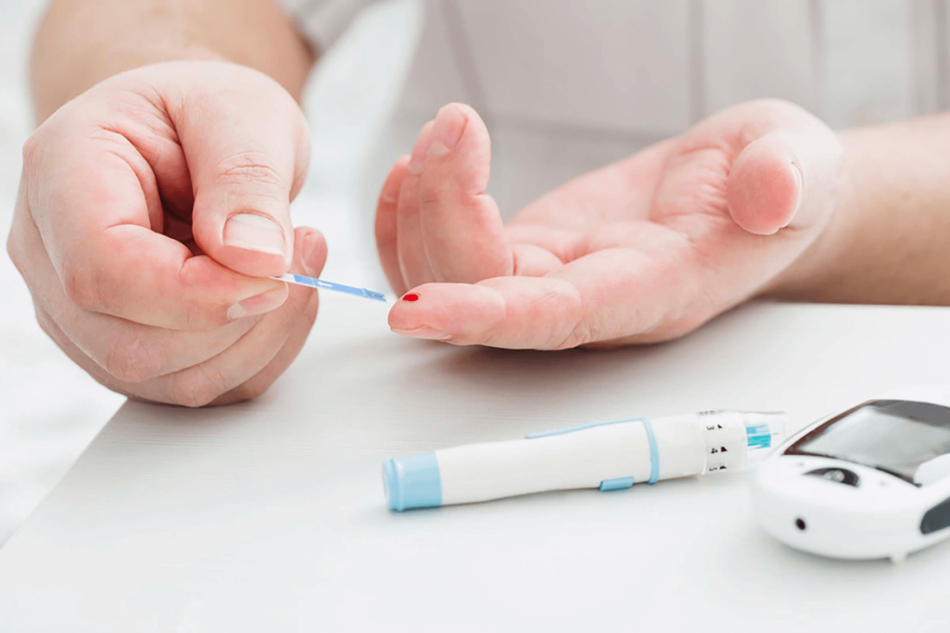
A) From intermittent “manual testing” to continuous smart monitoring
Continuous Glucose Monitoring (CGM) systems now:
Track sugar without finger-pricks
Send live readings to phones and smartwatches
Warn patients before dangerous spikes
Give doctors a moving “map of life,” not a single number
Diabetes has moved from a static paper chart… to a dynamic data ecosystem.
B) From multiple injections to semi-automated pumps
Modern insulin pumps now act like a “mechanical pancreas”:
A sensor reads sugar
A pump delivers insulin
An algorithm adjusts doses automatically
What was science fiction a decade ago… is standard care in advanced clinics today.
C) The drug revolution: when diabetes intersects with obesity
New appetite-regulating medications have reshaped the global conversation about:
Weight control
Food behavior
The link between obesity and type-2 diabetes
They are not magical cures… but they are rewriting the rules.
3) Artificial Intelligence enters the clinic before the operating room
The true revolution lies in the intelligence managing the data, not only the devices.
AI enables a shift from:
“Treat the disease when it appears”
to:
“Predict who will get it… when… and why.”
AI today allows:
Early prediction of diabetes years before onset
Personalized nutrition based on individual biological response
Digital assistants that analyze readings, adjust doses, and alert the patient and doctor
The classic “quick visit” to the doctor is being replaced by continuous digital supervision.
4) The future: Are we witnessing the last generation carrying insulin pens?
Researchers worldwide now ask a serious question:
Will today’s children be the last generation to experience diabetes as we know it?
The future may include:
Oral or inhaled insulin replacing injections
Fully automated artificial pancreas systems
Metabolic surgeries that alter glucose processing
Gene and cell therapies that correct the root cause, especially in type-1
But one truth remains unchanged:
Type-2 diabetes is a lifestyle disease before it is a pancreatic one.
Technology can help…
But humans must change faster than the disease.
5) The economics of diabetes: when illness becomes a global market
A vast global industry revolves around diabetes:
Pharmaceutical giants
Device manufacturers
Insurance networks
The “diet food” market
This reality raises a difficult question:
Is the world truly incentivized to reduce diabetes cases… or does a multi-billion-dollar industry depend on their continuation?
The issue is not conspiracy — but incentives.
6) Where can Saudi Arabia stand in this equation?
Aligned with Vision 2030, health has become a strategic pillar of quality of life and national productivity.
Saudi Arabia can lead by:
Developing national prevention programs
Harnessing AI for early detection
Creating a smart health-tech ecosystem
Forming partnerships between hospitals, universities, and technology companies
Thus, the Kingdom becomes not only a “treatment market” — but a producer of preventive health models.
7) BETH Conclusion: The real battle is not with sugar… but with lifestyle
On World Diabetes Day, BETH moves beyond traditional messages:
“Eat less sugar… exercise… test early…”
All true — but no longer enough.
The world needs:
A new global food philosophy
Cities built around movement
Schools that teach children about their bodies
Smart health media that empowers, not frightens
Diabetes is not fate…
It is a chain of human choices — personal and collective.
And in the age of AI, we may soon have a treatment for everything…
But the real question remains:
Will we change before our bodies force us to?
BETH Spark
The future of diabetes will not be decided in intensive care units…
but in kitchens, dining rooms, and daily human choices.
Short Comment (Answering the headline question)
Yes — we may truly be witnessing the last generation that carries diabetes in its traditional form, but only if the disease transforms from a threat into a condition managed intelligently.
Diabetes does not disappear — it adapts. And it can become a “tough companion” when managed wisely.
Key Numbers
589 million adults worldwide (ages 20–79) currently live with diabetes — 1 in every 9 adults.
Cases are expected to rise to 853 million by 2050.
Highest total cases: China, India, Pakistan.
Highest prevalence rates: Middle East & North Africa, including Kuwait and Egypt.
Final line
Because diabetes is a fierce companion — a partner in life, not an unbeatable enemy — hope remains:
With daily care, awareness, technology, and the will to change, every patient can live a full, productive, and joyful life.