


The Deferred Peace… When Wars Fail to Learn from History
Prepared and Analyzed by: Strategic Media Division – BETH Press
1️⃣ The Earth’s Memory… and Humanity’s Blindness
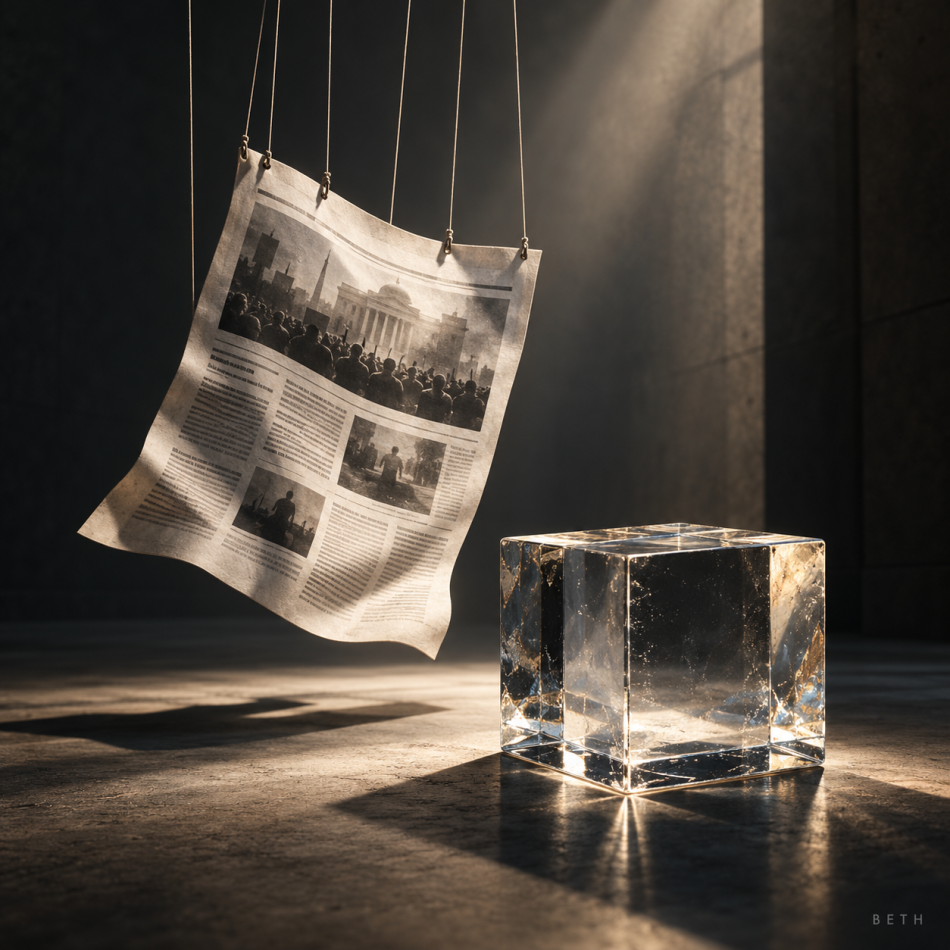
For thousands of years, wars have repeated like a collective exercise in forgetting.
Weapons evolve, yet the idea remains the same: power first, awareness later.
History seems written in the language of blood — reread endlessly but never understood.
From Troy to Gaza, from Vietnam to Kyiv, the question persists:
Has humanity truly evolved, or merely changed the form of its crimes?
2️⃣ The Illusion of Peace
Peace no longer means the absence of war — it’s merely a truce between two announcements.
Slogans rise in the name of humanity, while interests are managed beneath the table.
Today’s world may not be living through a Third World War of weapons,
but rather one fought through information, sanctions, and control of collective consciousness.
It is a peace maintained — not a peace born of conscience.
3️⃣ Lessons Unlearned
After every war, nations vow “never again,”
only to return, a decade or two later, to the same tragedy.
The League of Nations rose after the First World War — and fell.
The United Nations came after the Second — and aged.
Even the word “deterrence,” once meant to preserve peace,
has become a veil for stockpiling weapons capable of destroying the planet many times over.
4️⃣ Power vs. Wisdom
Power ends wars — but wisdom ends their causes.
Unless humanity grasps this equation, it will keep spinning within the same circle of fire.
Peace is not forged in conferences, but within the collective conscience of nations.
It is not written in treaties, but signed by minds that believe dignity is not to be traded for security.
5️⃣ Saudi Arabia… The Philosophy of Calm Strength
Amid a tense world, Riyadh has emerged as the capital of balanced awareness:
It does not shout to be heard — it acts to be seen.
It speaks the language of equilibrium, redefining power as the ability to restrain, not ignite.
Thus, peace transforms from a political slogan into a civilizational behavior.
🜂 Final Reflection
History may one day record that the 21st century
was not the era of inventing new weapons, but of rediscovering lost peace.
Yet after every war, one question remains:
Does humanity learn… or merely survive to repeat its mistakes in a more advanced form?
🜂 Image Explanation
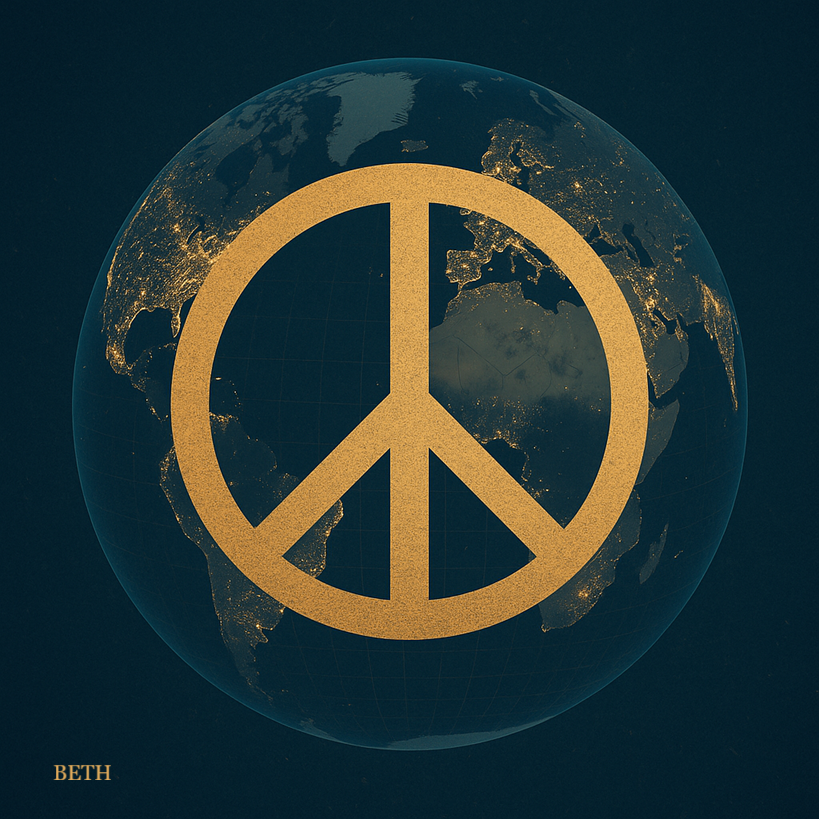
The Globe and the Two Symbols:
The symbol shown is known worldwide as the Peace Symbol (🕊️).
🔹 Historical Origin:
Designed in 1958 by British artist Gerald Holtom as the emblem for the Campaign for Nuclear Disarmament in the United Kingdom.
🔹 Symbolic Design:
It combines two semaphore signals for the letters N and D, representing Nuclear Disarmament.
The vertical line stands for N.
The downward diagonal lines stand for D.
The circle represents the Earth — or humanity as a whole.
🔹 Evolution of Meaning:
Over time, it became a global emblem of peace — adopted by movements opposing wars and advocating equality, human rights, and harmony among peoples.
🔸 Symbolically Here:
It represents the collective consciousness seeking balance and nonviolence — humanity’s enduring attempt to create inner and outer peace in a world where power meets conscience, and reason meets spirit.