



The Gaza Accord… Between the Light of Hope and the Shadow of Doubt
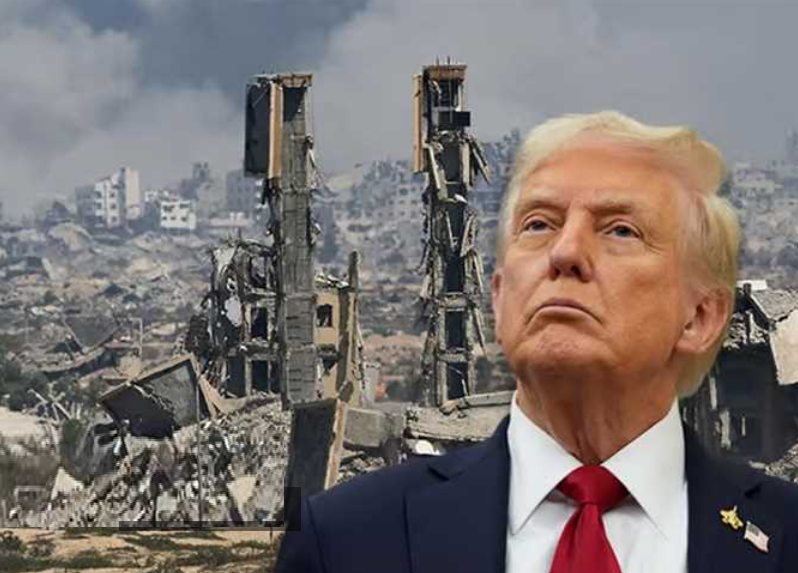
Will It Mark the Beginning of a Lasting Peace — or Just a Passing Cloud?
Riyadh – BETH | October 10, 2025
The region stands at a pivotal moment following the announcement of the Gaza ceasefire accord, brokered by U.S. President Donald Trump, with the participation of Arab, Islamic, and European nations.
The agreement represents the first phase of a multi-stage peace framework, aimed at halting the war, exchanging prisoners, and paving the way for a comprehensive and just peace in the Middle East.
While capitals across the world have welcomed the accord with cautious optimism, the real test lies in implementation — and whether the truce can evolve into a lasting settlement.
Saudi Arabia’s Position: Welcoming the Agreement with Measured Prudence
The Saudi Ministry of Foreign Affairs welcomed the agreement reached on Gaza and the launch of the first phase of President Trump’s proposal, designed to end hostilities and establish a pathway toward a comprehensive and just peace.
In its statement, the Kingdom expressed appreciation for President Trump’s active role and the mediation efforts of Qatar, Egypt, and Turkey, noting that this step marks a critical beginning to alleviate the humanitarian suffering of the Palestinian people in Gaza, ensure the complete withdrawal of Israeli forces, and restore security and stability — ultimately achieving the two-state solution based on the 1967 borders, with East Jerusalem as the capital of the Palestinian state.
The statement reaffirmed that a truly sustainable peace can only be achieved through United Nations resolutions, the Arab Peace Initiative, and collective international commitment to translate the agreement from a political document into tangible human reality.
The Paris Meeting: Diplomatic Alignment to Cement the Truce
In parallel, Saudi Foreign Minister Prince Faisal bin Farhan bin Abdullah joined several Arab, Islamic, and European foreign ministers in a high-level meeting in Paris, hosted by President Emmanuel Macron.
The meeting, attended by officials from the United States, Italy, Germany, Turkey, Egypt, the UAE, and the European Union, discussed the transitional arrangements in Gaza, mechanisms for international monitoring, reconstruction efforts, and guarantees for a complete Israeli withdrawal.
Participants emphasized the importance of coordinating international and regional efforts to implement the accord within a clear timeline, ensuring immediate humanitarian relief and paving the way for a political process leading to a permanent solution.
Prince Faisal stressed that Saudi Arabia views the agreement as “a necessary beginning to stop the bloodshed in Gaza and open the road toward lasting peace,” urging close follow-up to prevent the initiative from becoming “a temporary truce without substance.”
President Trump’s Role: Between Ambition and the Ultimate Test
President Donald Trump stands as the chief architect of the accord, having introduced a 20-point framework he calls “The New Middle East Peace Plan.”
By securing simultaneous commitments from Israel and Hamas for a mutual ceasefire and prisoner exchange, Trump scored his most significant diplomatic achievement since returning to the White House.
Yet the plan faces formidable challenges:
Questions remain about governance in post-war Gaza, disarmament, and international oversight mechanisms.
Israel’s internal divisions and the complexity of on-ground enforcement further complicate progress.
At the same time, Arab and European partners must transform political endorsement into practical support, funding reconstruction and ensuring compliance.
If Trump succeeds in converting the accord into durable peace, he may claim a historic legacy. But failure to uphold commitments could quickly reignite violence and dissolve the fragile trust built in recent weeks.
Possible Scenarios: Between Endurance and Ephemerality
Observers see diverging paths ahead for the Gaza accord.
For some, it is the first real step toward lasting peace; for others, merely a fragile cloud passing through turbulent skies.
In the optimistic scenario, sustained international and Arab engagement could turn the truce into a durable peace, encompassing full reconstruction of Gaza, the return of the Palestinian Authority, and the establishment of secure borders under joint international supervision.
Such an outcome would mark the first genuine peace in decades, reshaping the Middle East and reviving the Palestinians’ long-deferred hope of statehood.
A more cautious scenario envisions an incomplete or delayed implementation, where political friction stalls progress and the agreement remains a paper truce — reducing tension without resolving its causes.
The worst-case scenario warns of a gradual relapse into violence if commitments falter or enforcement weakens.
In that case, the fleeting cloud of hope could turn into a storm of renewed conflict, undoing the fragile gains of the past months.
Conclusion: Between the Possible and the Promised
The Middle East now stands at a crossroads:
Either this accord becomes the dawn of a new Arab-Israeli peace, anchored in fairness and collective resolve —
or it fades into a transient moment, remembered as another missed opportunity.
Through it all, the Saudi stance remains unwavering:
True peace is never imposed by force — it is built by reason, and preserved through justice.