


“Al-Basqat”… The Saudi Palm Tree in a Global Dialogue of Beauty and Memory
Dhahran – BETH | October 9, 2025
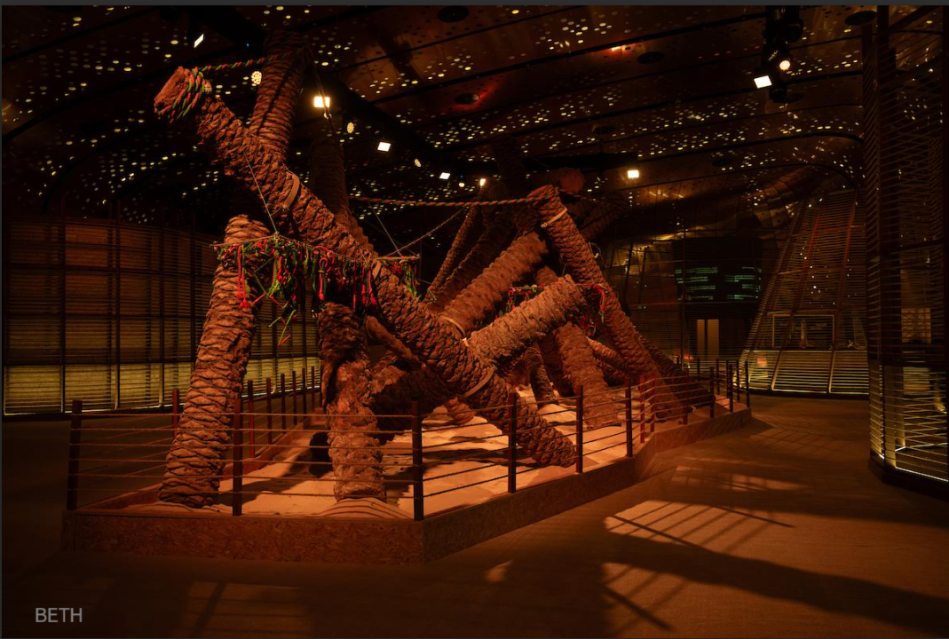
The King Abdulaziz Center for World Culture (Ithra) inaugurated the “Al-Basqat” exhibition this evening inside its Great Hall, celebrating the palm tree as a cultural and universal symbol deeply rooted in the collective memory of the Arabian Peninsula.
The exhibition coincides with the launch of the “Khous Initiative”, aligned with the Year of Saudi Crafts, aiming to reimagine the art of palm frond weaving through a contemporary and creative lens.
A Symbol of Land and Life
The palm tree has stood tall in the Arabian Peninsula for more than 6,000 years, embodying endurance, generosity, and beauty.
Today, Saudi Arabia is home to over 33 million palm trees, representing 27% of the world’s total, while Al-Ahsa Oasis, with its 2.5 million palms, remains the world’s largest palm oasis and a UNESCO World Heritage Site — a living testament to the nation’s natural and cultural legacy.
From Heritage to Participation
According to Farah Abu Shleih, Head of the Ithra Museum, the exhibition invites artisans, families, and young learners to reconnect with the ancient craft of palm weaving:
“Al-Basqat is more than an exhibition — it’s a collective journey that revives a craft, passing it from one hand to another, from one generation to the next.”
A Global Artistic Experience
The exhibition features 15 artworks by 25 artists from Saudi Arabia and beyond, curated by Samer Yamani and Razan Masri, in a visual exploration that bridges art, heritage, and memory.
Each installation transforms palm elements — wood, fiber, and rope — into an immersive environment resembling a traditional areesh (palm shelter), symbolizing both protection and continuity.
Six Zones of Creative Storytelling
The exhibition unfolds across six thematic zones:
The Oasis
The Roots
The Trunk
The Fronds
The Dates
The Experimental Lab and Interactive Workshops
It also includes a theater space screening the documentary “Sa’fa” by Mahmoud Kaabour, alongside panel discussions exploring the palm tree’s influence on architecture, cuisine, medicine, environment, and poetry.
Artists from Saudi Arabia, Tunisia, Mexico, Bahrain, Egypt, Morocco, Germany, and Spain contribute works ranging from sculptures and installations to multimedia art — weaving together threads of tradition and innovation.
In essence, Al-Basqat is not only an art exhibition —
it is a celebration of life and identity, where the palm tree becomes a global symbol of continuity, creativity, and cultural pride.