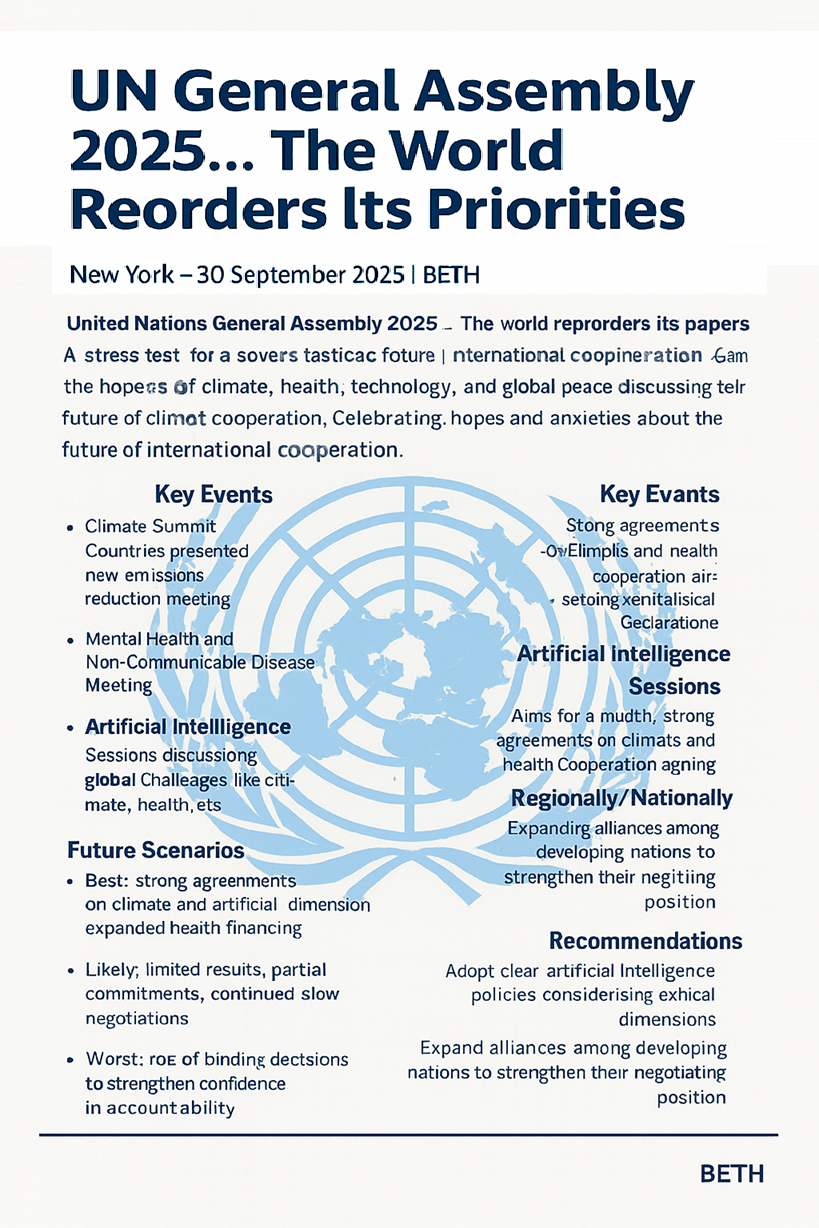



UN General Assembly 2025… The World Reorders Its Papers
New York – 30 September 2025 | BETH
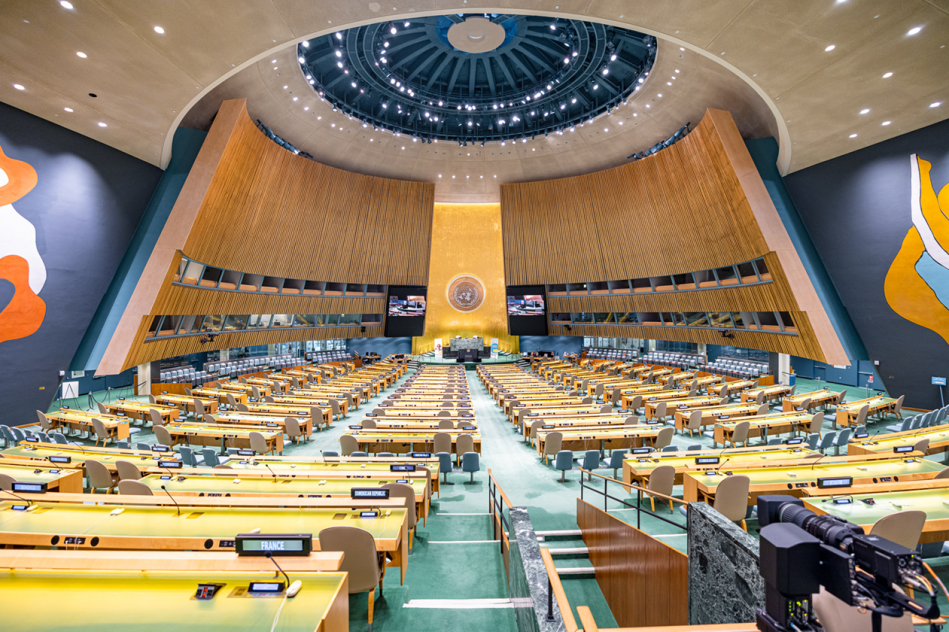
On the 80th anniversary of the United Nations, the High-Level Week of the General Assembly (22–30 September) convened amid unprecedented global challenges — from climate change to health crises, artificial intelligence, and geopolitical turbulence. Held under the theme: “Better together: 80 years and more for peace, development and human rights”, the event carried a mixture of hopes and anxieties regarding the future of international cooperation.
1. Key Events
Climate Summit: Several nations presented new commitments to reduce emissions.
Mental Health and Non-Communicable Diseases Meeting: Adoption of the fourth political declaration extending efforts to 2030.
Artificial Intelligence Sessions: Debates on global governance of emerging technologies.
General Debate: World leaders outlined their positions on security, development, and human rights.
2. Drivers
Mounting pressures: climate, wars, economic crises.
Renewed trust in the UN as an umbrella for multilateralism.
Need to coordinate global issues — climate, health, AI — that no single nation can handle alone.
Symbolism of the 80th anniversary: a moment to reflect on the organization’s path and future role.
3. Impacts and Outcomes
International
A new push for climate and health cooperation.
Potential emergence of new alliances reflecting shifting geopolitical alignments.
Testing the credibility of major powers in meeting their commitments.
Regional and National
Stimulating internal policies to align with international commitments.
Enabling developing nations to benefit from momentum on fair financing and sustainable development.
4. Future Scenarios
Best case: Strong agreements on climate and AI, expanded health funding.
Most likely: Limited outcomes, partial commitments, and slow negotiations.
Worst case: Absence of binding decisions, weakening trust in international multilateralism.
5. Recommendations
Adopt clear AI policies that consider ethical dimensions.
Activate monitoring mechanisms for climate and health financing.
Expand alliances among developing nations to strengthen their negotiating position.
Empower media and civil society to monitor and hold governments accountable.
Conclusion
The High-Level Week of the UN General Assembly 2025 was not just another diplomatic gathering, but a stress test for the future of international cooperation. The decisions that emerged from New York — whether ambitious or modest — will directly shape the future of climate, health, technology, and world peace. The world is indeed reordering its papers, but the open question remains: will this be enough to meet the challenges of the new century?
✍️ Prepared & Analyzed – Strategic Media Department | BETH News Agency