


Discovery of the Oldest Documented Architectural Settlement in Arabia – 11,300 Years Ago
Riyadh – BETH
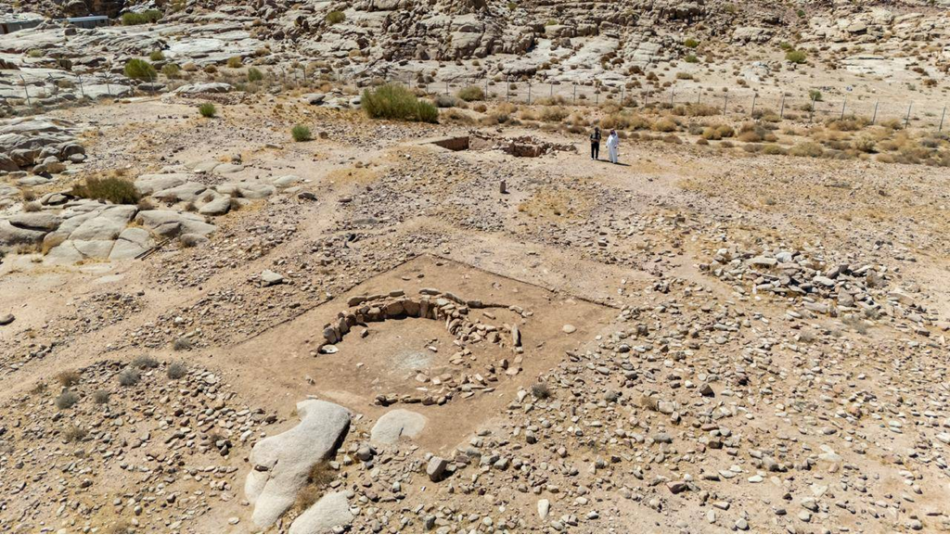
The Saudi Heritage Commission announced on Thursday the discovery of the oldest documented architectural human settlement in the Arabian Peninsula, located at the Masiyoon site in northwestern Tabuk.
According to the commission, the settlement dates back to a period between 10,300 – 11,300 years before present, opening new horizons for understanding the earliest phases of human stability in the region.
Commenting on the discovery via his official account on “X,” Prince Badr bin Abdullah bin Farhan, Saudi Minister of Culture, said:
“Colleagues at the Heritage Commission, in cooperation with our friends at the Japanese university, discovered in Masiyoon, northwest of Tabuk, the oldest known architectural human settlement in the Arabian Peninsula, dating back to the Neolithic period.”
A Deep-Rooted Civilization
Saudi Arabia is distinguished by its rich heritage spanning thousands of years, with historic landmarks such as Madain Saleh, AlUla, Diriyah, Qaryat al-Faw, and the rock inscriptions of Hail. This legacy reflects the depth of the civilizations that thrived on the Kingdom’s land—from ancient kingdoms to sites tied to Islam and historic trade routes.
Saudi Arabia… The Cradle of Human Civilization
The Arabian Peninsula holds a profound civilizational depth, with Saudi Arabia at its very heart.
Across its vast land, diverse civilizations once thrived—some born here, others passing through due to its strategic location linking East and West.
Prehistoric Civilizations (Stone Age)
Early Settlements: Such as the Masiyoon site in Tabuk (10,300 – 11,300 years ago), marking the first signs of human settlement.
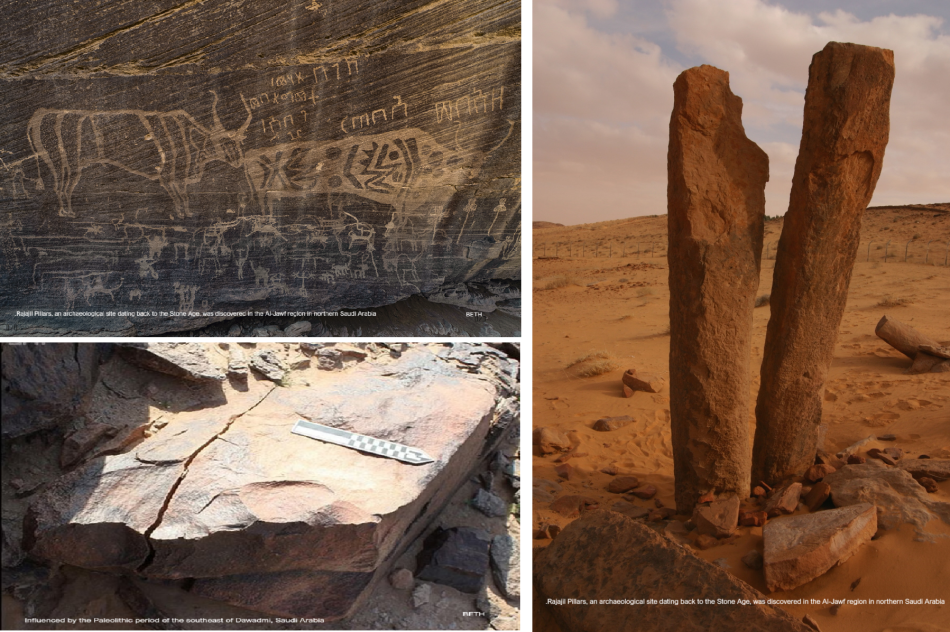
Rock Carvings and Inscriptions: Found in Hail, Al-Jawf, and Najran, depicting hunting scenes and daily life, reflecting early artistic expression.
Pre-Islamic Civilizations
South Arabian Kingdoms (mainly in Yemen but extending into southern Saudi Arabia):
Saba (8th century BCE).
Ma’in, Qataban, and Hadramawt.
Kingdom of Kindah: Based in Najd (4th–6th century CE), with significant political influence.
Kingdom of Lihyan (AlUla): Flourished between the 5th century BCE and 2nd century CE, tied to northern trade routes.
Kingdom of Dadan (AlUla): Preceded Lihyan, a major trade hub on the Incense Route.
Nabataean Kingdom: Controlled northwestern Arabia (Al-Hijr/Madain Saleh), stretching from Petra to AlUla (2nd century BCE – 1st century CE).
Jurhum Kingdom: In Mecca, linked to the story of Prophet Ishmael (peace be upon him) and Zamzam Well.
Kingdom of Qedar: In northern Arabia, with political and trade significance.
Himyarite Kingdom: Expanded at times into southwest Saudi Arabia (Najran).
Trade Routes and Civilizational Crossroads
Incense Route: Ran from southern Arabia through Saudi Arabia up to the Levant.
Maritime Silk Road: Red Sea ports such as Jeddah and Yanbu served as global trade gateways.
The Islamic Era (from the 7th century CE)
The First Islamic State: Emerged from Mecca and Medina, reshaping world history.
Umayyad and Abbasid Periods: With Mecca and Medina as global centers of religion and knowledge.
Local States: Including the First Saudi State (1727 CE), the Second Saudi State, and the modern Kingdom of Saudi Arabia (1932 CE).
Key Archaeological Sites
Madain Saleh (Al-Hijr) – Nabataean civilization.
AlUla (Dadan & Lihyan) – Northern Arabian kingdoms.
Qaryat al-Faw – Capital of Kindah.
Najran – Historic cultural and trade hub.
Diriyah – The heart of the First Saudi State.
Conclusion
The Arabian Peninsula was never an isolated desert but rather a stage for successive civilizations:
Civilizations born here (Dadan, Lihyan, Kindah).
Civilizations that passed through (Nabataeans, Sabaeans, Hadramawt).
The Islamic civilization that emerged and changed history.
And the modern Saudi state, which redefined the Arabian identity on the global stage.
Saudi Arabia… The Cradle of Human Civilization
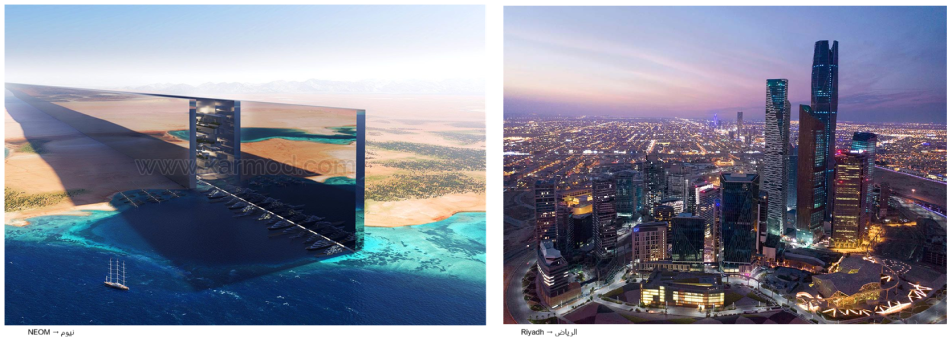
It is not merely a land that hosted humanity’s earliest beginnings, but today a platform returning with unprecedented future visions.
From relics spanning millennia to projects shaping tomorrow, the Kingdom blends the authenticity of the past with the boldness of the future—proving that civilization is not only inherited… it is continually built.
Harrat Khaybar… Volcanoes Bearing Witness to Human Settlement in Arabia
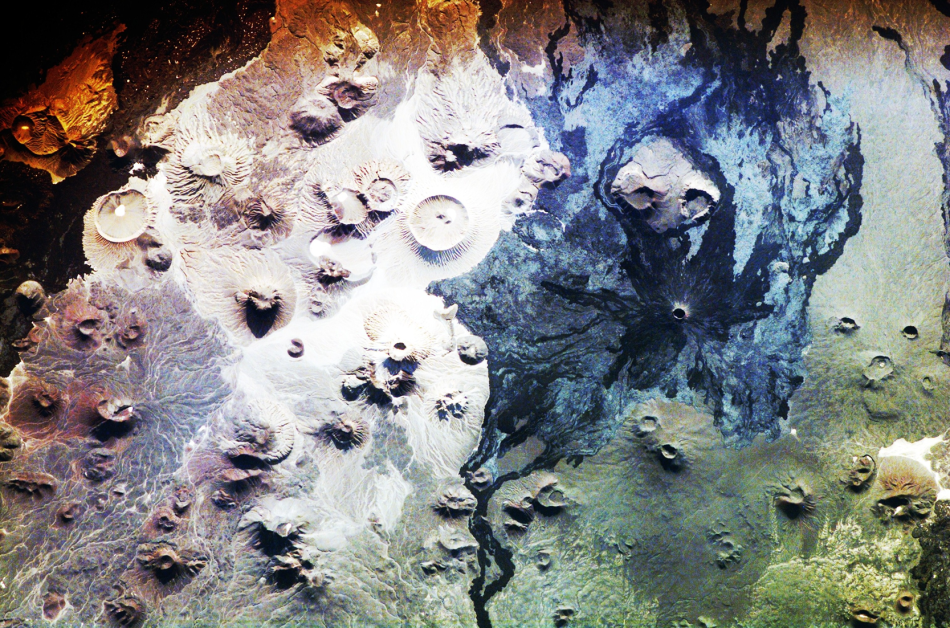
From aboard the International Space Station, astronauts captured a stunning image of Harrat Khaybar, northeast of Madinah, revealing one of the most remarkable geological landmarks of the Arabian Peninsula. This view reflects how a harsh volcanic landscape has shaped the ground where humans have settled for thousands of years.
Dormant Volcanoes… Living Memory
Harrat Khaybar stretches over 14,000 square kilometers, formed by successive eruptions over the past five million years, with the most recent one recorded between 600 and 700 A.D. — a time that coincided with the early Islamic era. This makes the field a silent witness to a transformative civilizational and religious turning point in Arabia.
Its landscape is a geological museum: Jabal al-Qidr with its textbook volcanic cone, Jabal Abyad with its viscous rhyolite lava dome, and Jabal Bayda’, a striking tuff cone born of lava and water interaction. These are not just geological features; they are markers of an environment that drew humans and inspired myths.
Man and the Volcano: Settlement and Adaptation
Despite the stark, barren scene today — with almost no vegetation under the hyper-arid climate — white deposits and tuff cones reveal that water once existed here. This indicates that the region was not always an unforgiving desert, but at times hosted wetter climates, oases, and surface water sources that encouraged human settlement.
Rock art and engravings discovered around the lava fields illustrate scenes of hunting and daily life, confirming that humans once lived in and around these volcanic terrains. Early communities likely chose such areas for their fertile volcanic soils when rains were abundant, and for the natural protection offered by volcanic cones.
From Environmental Memory to Civilizational Meaning
Reading Harrat Khaybar is not only a study of geology but also of humanity’s relationship with the land. Here, climate shifted between moisture and dryness, forcing humans to adapt, migrate, and return. This interplay explains why Arabia was the cradle of successive civilizations: a land of transformations — from desert to fertile ground, from flowing lava to inhabited landscapes.
Conclusion
Today, Harrat Khaybar may appear lifeless and silent, yet it remains a geological and human memory — a story of fire meeting water, desert giving way to fertility, and humans confronting nature. It is more than a dark mass of basalt; it is an open record that helps explain how settlement began in Arabia and how the land shaped humanity’s awareness and resilience.