


What Is Happening Now at the United Nations Regarding Palestine… A Global Peace Led by Saudi Arabia
Prepared and Analyzed by BETH
The International Event
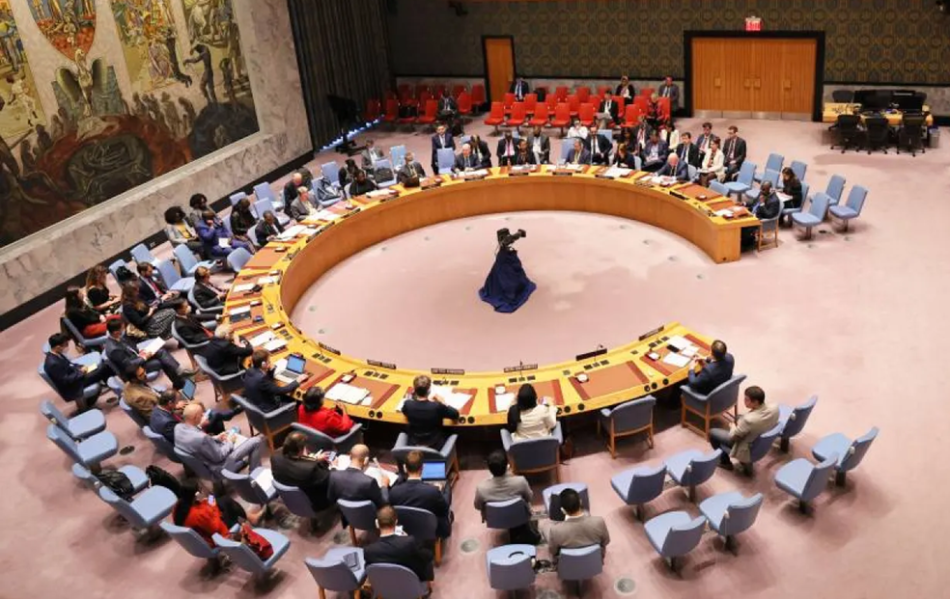
In New York, the United Nations headquarters is hosting a special summit called by Saudi Arabia and France to support the recognition of Palestine and reinforce the two-state solution.
The United Kingdom, Canada, Australia, and Portugal have officially announced their recognition of the State of Palestine.
The move comes amid mounting international anger over the war in Gaza and the ongoing humanitarian crisis.
Israel strongly rejected the step, describing it as a “reward for terrorism,” while Israeli opposition figures argued that the government bears diplomatic responsibility for widening the circle of isolation.
Saudi Arabia and France… A New Leadership for Peace
Saudi Arabia affirms through this summit that the Palestinian cause is part of its political and religious identity, and that it will not disappear from the world’s agenda.
France positions itself as a European power advocating a discourse of “balance” between recognizing Palestinian rights and ensuring Israel’s security.
The summit reflects the desire of both nations to shape a new diplomatic partnership carrying a clear message: “Peace is not a marginal option but a historical necessity.”
The United States… Between Observation and Shadow
The United States has so far not supported collective recognition, describing some of these steps as mere “symbolic gestures.”
There are no signs of direct coordination with the Trump administration, but Washington’s stance seems like active neutrality: observing and allowing some international momentum without exerting its full weight to block it.
This may be part of a strategy of indirect pressure: letting allies raise the olive branch while Washington continues to hold the stick.
Expanded Analysis
1. Timing and Significance
The recognition came just before the UN General Assembly meetings: a carefully calculated political message directed at Israel and the world.
Its coincidence with Trump’s visit to London raises a symbolic question: is this a choreographed distribution of roles between Washington and its allies, or the beginning of a genuine divergence in paths?
2. Objectives of Recognition
Direct pressure on Israel to change its military and political behavior.
Rebalancing against Washington, which remains firmly committed to unconditional support for Israel.
Responding to global public opinion, which has become increasingly impatient with double standards.
3. A Changing Equation?
Since 1948, the West has stood behind Israel as a unified bloc.
Today we are witnessing a crack in the Western wall, even if partial.
Recognition of Palestine may evolve into a new negotiating tool that redefines the role of Europe and the Commonwealth as mediators rather than mere extensions of U.S. policy.
4. Middle East Scenarios
A New Dawn: the region may enter a grand reconciliation phase where peace becomes the strategic choice.
Political Tactic: recognition is merely a pressure card to be used ahead of major negotiations or domestic elections.
The Old Game: what lies beneath the surface may be nothing more than Western interests cloaked in green leaves.
5. The Impact on Palestine and Israel
Palestine: a major moral and political boost that strengthens the Palestinian Authority’s position in international forums.
Israel: growing isolation and a likely response through escalation or creating new facts on the ground.
The International Community: facing a serious test of whether the two-state solution is just a slogan or a political commitment that can be implemented.
Conclusion
Between the olive branch raised by the world and the American shadow that still hovers over the scene, the question remains:
Will we witness the birth of a new era where the equation of peace is written on both paper and reality?
Or are we facing yet another chapter of an old game that history knows all too well—one that hides more beneath the surface than it reveals?