


White Slave Trade: Europe the Global Export Hub… Israel the Key Player in the Region
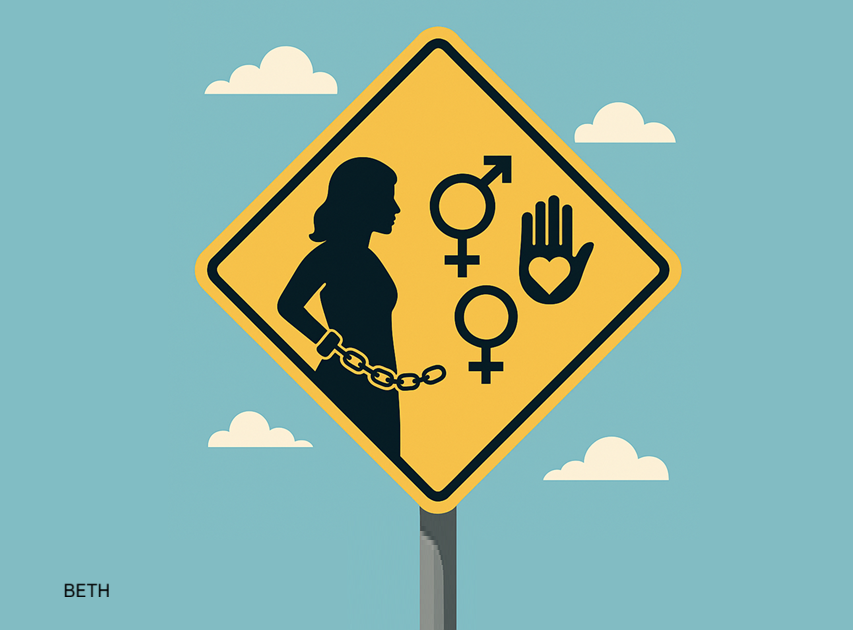
Strategic Media Department – BETH
🔹 The Oldest Trade in the World
Prostitution is no longer just an individual act, but has turned into an organized industry run by international networks. Today, Europe is considered one of the most prominent hubs for exporting women and girls to the world, a trade that generates billions of dollars annually and is fueled by cross-border mafias.
🔹 Site 55 in Europe
European reports have revealed "Site 55," a secret hub used as a launching point for exporting prostitutes, where operations are run in a mafia-style manner, including:
Recruiting girls from Eastern Europe and Africa through job offers or marriage promises.
Transporting victims with forged passports or under the cover of labor contracts.
Distributing them to prostitution hotspots in major cities such as Amsterdam, Berlin, and Paris, and from there to the Gulf, Asia, and America.
🔹 How Do the Operations Work?
Recruitment: through job advertisements and promises of a better life.
Transportation: using both legal and illegal smuggling routes.
Control: through drugs, threats, and confiscation of documents.
Marketing: networks managing websites, hotels, and nightclubs.
🔹 Main Export Hubs
Eastern Europe: Ukraine, Moldova, Romania.
West Africa: especially Nigeria.
Asia: the Philippines and Thailand.
🔹 Why Europe?
More lenient prostitution laws in countries such as the Netherlands and Germany.
Old mafia roots connected to the European Union.
Constant demand in Western markets for “new faces,” making export a continuous activity.
🔹 The Dark Side
This trade is not limited to prostitution, but also extends to organ trafficking and modern slavery in some cases, where women are treated as commodities to be bought and sold.
🔹 BETH’s Message
This investigation opens a silenced file: Europe is not only a symbol of civilization and democracy, but also a hub for exporting white slavery.
It is a reminder that the world’s oldest trade has not ended, but has reshaped itself in modern ways, exploiting technology and globalization.
🔹 The European Paradox
On the one hand: Europe raises the banners of human rights, women’s dignity, equality, and freedoms, and pressures the world through the EU and the UN.
On the other hand: the streets of Europe, from Amsterdam to Berlin, reveal the contradiction. Prostitution is legalized and even taxed, while thousands of victims from Africa and Eastern Europe remain in a state of disguised slavery.
🔹 How Can This Contradiction Be Explained?
Economy Over Values
The prostitution and white-slave industry brings in billions annually for governments through taxes and indirect revenues. Europe has reconciled with this trade because it is profitable, even if it contradicts its rights rhetoric.
Ambiguous Laws
In Germany and the Netherlands: prostitution is legal.
In France and Britain: officially banned but tolerated under loopholes.
This legal diversity created flexible networks that move between countries and hide behind the façade of “law.”
Human Rights as a Political Tool
European human rights groups shout loudly when it concerns other countries, but turn a blind eye to crimes inside their own borders. Here, rights rhetoric becomes more a tool of external pressure than internal commitment.
Social Hypocrisy
European society publicly condemns white slavery but secretly fuels it through constant demand. This demand is the fuel that keeps the industry alive.
🔹 The Result
Europe lives a human rights schizophrenia:
A global ideal discourse exported as if it were the truth.
A dark internal reality managed under the table.
The irony: most victims come from poor countries, while human rights organizations produce long reports that change nothing fundamental—because economic and political interests are stronger than the declared values.
🔹 BETH Commentary
This contradiction reveals that "human rights" in Europe are not always a fixed principle, but rather a flexible tool, used when it aligns with interests, and ignored when it exposes domestic scandals.
By the Numbers – UN & EU Reports
1️⃣ European Union – Eurostat
In 2023, 10,793 victims of human trafficking were recorded in the EU, a 6.9% increase compared to 2022, the highest since 2008.
Women and girls accounted for 63.3% of the total.
8,471 suspects of trafficking were identified (+5% from 2022), and 2,309 convictions (+10.1%).
Highest victim rates: Luxembourg (157 per million), Greece (51), Netherlands (49), Austria (47), Sweden (45).
2️⃣ UNODC – Europe Region
The report on “Trafficking in Persons for Sexual Exploitation in Europe” highlights the multiple source countries inside Central and Western Europe.
Key recruitment methods: fake jobs, bogus contracts, and “lover boy” tactics.
Sexual exploitation remains the most common form of trafficking in the EU; labor exploitation is rising.
Non-EU victims often come from Albania, Brazil, China, Nigeria, and Vietnam.
3️⃣ UNODC Global Report on Human Trafficking 2024
Globally, detected victims increased 25% in 2022 vs. 2019.
Children make up 38% of victims, a large share of them girls.
Girls mostly exploited sexually; boys forced into labor, begging, cybercrime, fraud.
Total victims registered worldwide in 2022: 69,627.
4️⃣ Europol
Human trafficking is among the most serious organized crimes in the EU.
Joint operations arrested 158 traffickers and freed 1,194 victims in a single campaign.
Shocking Headline
“America showcases human rights… Europe enslaves women in branded slavery.”
Europe exports slogans of liberty… but enslaves women by night.
BETH’s Concluding Analysis
Eurostat figures alone show that more than ten thousand victims are recorded yearly in the EU, with women and girls as the majority. Yet official discourse keeps repeating “rights” in the abstract.
UNODC data reveal a global surge, fueled by wars, crises, and demand for human bodies, enabled by Europe’s legal gaps and digital markets.
And when Europol announces hundreds of networks dismantled and thousands freed, it becomes clear: Europe is not only “the land of rights,” but also a nerve center of modern organized crime.
The real scandal: how can victim numbers rise in Europe despite advanced laws? The answer is simple: demand is domestic, policies are contradictory, and victims often remain outside the Western political consciousness.
✨ The Final Scene in This Unique Report
1️⃣ Israel and the Middle Eastern Context
Israel is, according to multiple international reports (U.S. State Dept., European estimates), the top hub in the Middle East for sex trafficking and export of women.
In the 1990s–2000s, UN and U.S. State Dept. reports revealed thousands of women trafficked to Israel, mainly from Eastern Europe.
Over time, networks turned into export hubs to the Gulf and Africa.
Despite Israel’s 2018 law criminalizing sex purchase, mafias remain active and Israel retains its reputation as a trafficking hub.
🔹 Core Question: Is the problem the distributors (Israel/Europe), or the consumers (regional/global demand)?
Truth: as with drugs, the market is created by demand. Without consumers, there is no trade.
2️⃣ What Is the Goal of Using Women?
Money & Trade: Prostitution estimated at over $180 billion yearly (unofficial). Unlike drugs, a victim can be “sold” multiple times a day.
Individual Pleasure: Fulfilling desire without responsibility—consumers buy a temporary illusion.
Destroying Societies: Politically weaponized—weakening families, distracting youth, eroding values. Some states are accused of using it as a destructive soft power to destabilize rival societies.
🔹 BETH Commentary
White slavery is not merely a trade, but a multi-layered weapon:
Economic: billions in shadow markets.
Social: family erosion, weakened values.
Political: an instrument of dominance and destabilization.
While Europe waves human rights flags, and Israel sells itself as “advanced,” the reality is a hidden network draining women and reinventing slavery in modern dress.
✒️ Conclusion
What this investigation reveals is not just numbers or anecdotes, but a shocking document confirming that slavery never disappeared—it only put on modern clothes and expanded under the cover of laws and slogans.
In the face of this contradiction—between human rights rhetoric and the spread of white slavery—our mission at BETH is to record reality as it is, with its raw shock, not to spread despair, but to awaken minds and restore dignity to humanity everywhere.
BETH – Strategic Media Department