



Twelve Days After the Strike… the Ending Is a Verified Constraint
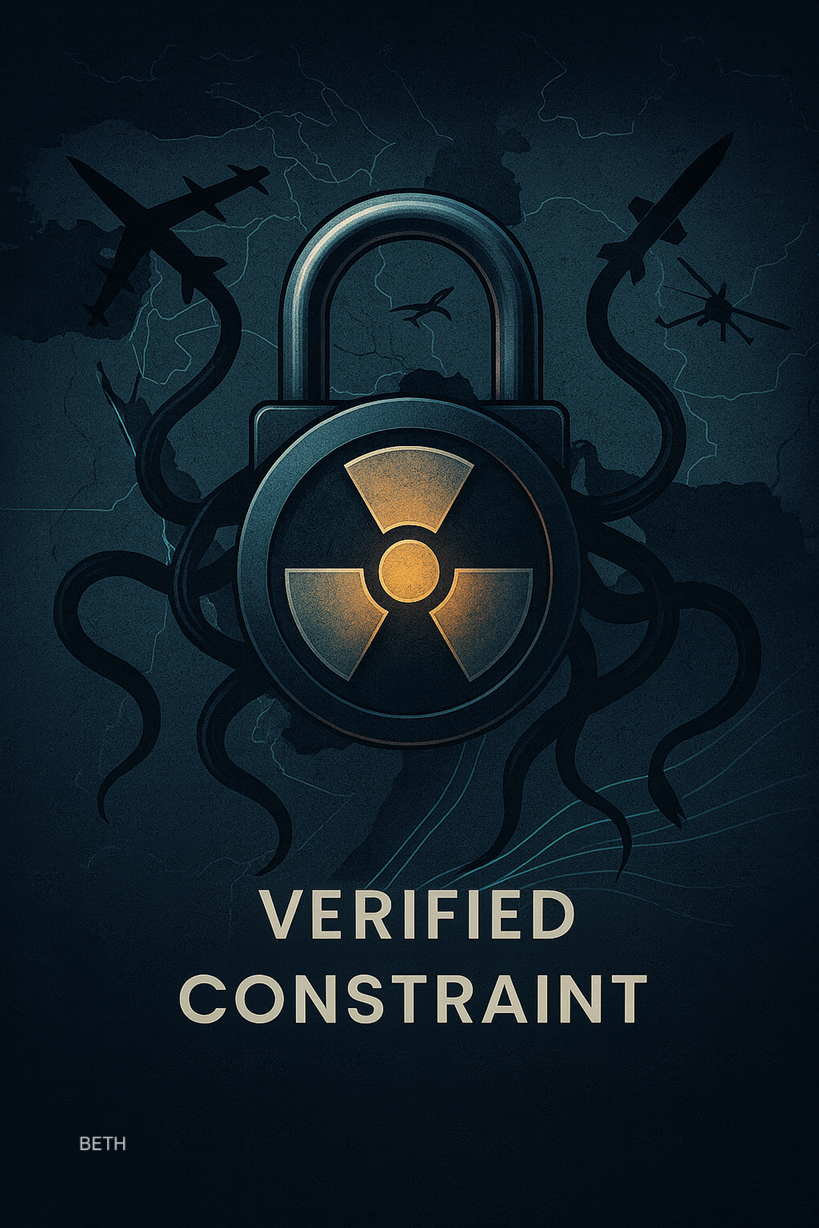
Reading & Analysis — Strategic Media Directorate at BETH
Introduction
BETH presents this report with full awareness of its high sensitivity. Our craft here is measured handling of a tangled subject—without one-sided opinion or agitation; rather, a smart analysis in a cinematic frame—close to a Hollywood scenario—with a modern Arab voice that engages a reality no longer hidden, even if players try to conceal it. In the end, we leave judgment to the reader: our role is to spark thought and open simpler, safer paths for the present—and better ones for the future.
Logline
A lightning strike was said to have ended the nuclear file in twelve days. Yet the world returns to the table: because bombing cannot erase knowledge, and because a network of proxies does not die by beheading a single head. Between the lure of “amputation” and the rigor of a “combined therapy,” a deal is woven—measured by implementation, not declarations.
The Cast (Key Actors)
Tehran: A networked mind linking nuclear, missiles/drones, proxies, shipping lanes, and currency.
Washington/Europe: Pressure seeking a verified, enforceable cap (inspections/limits/snapback).
The Region: Capitals that prioritize secure sea lanes and curbing proxies over a major war.
Markets: Oil, shipping, insurance—often reading risk before politicians do.
Civilians: The true payers of any decision’s cost.
Scene 1 — “Twelve Days That Changed Headlines”
Facilities are hit; headlines proclaim “the end.” Cut quickly to inspection maps and negotiating timetables. Fact: you can destroy hardware… you cannot bomb away know-how.
Scene 2 — Why Talks, Then?
The program is a network, not a single site: inspections widen the light to suppliers, labs, and depots.
Force creates leverage, not obligations; agreements create a legal ceiling and automatic penalties.
The file became a basket: nuclear + missiles/drones + proxies + maritime security + detainees/hostages.
Scene 3 — “Beheading” or “Combined Therapy”?
Hardline pitch: Iran spoils wherever it goes; cut the head after installing a peaceful government.
Strategic reply: Amputation is a tool, not a plan. It works only if the day after is prepared:
internal legitimacy, monopoly on force, secure control of sensitive sites, a recognition/finance umbrella, and regional understandings to prevent proxy wars in the vacuum. Otherwise, a Hydra emerges—more heads, harsher arms.
Clinching medical analogy:
Surgery = targeted, bounded strikes | Chemo/radiation = smart sanctions on front companies and critical components | Hormonal therapy = dismantling incentives via behavior-linked openings | Supportive care = a humanitarian firewall that isolates food/medicine from the pressure game.
Scene 4 — Possible “Hydra Deal” Formats
Freeze for freeze: capping enrichment/stock + enhanced inspections ↔ calibrated financial/oil relief.
Staged accord (JCPOA-Lite): deeper limits + wider inspections + automatic snapback alongside phased relief.
No deal—no big war: a return to the “shadow war” (cyber/logistics) and the costs of uncertainty.
Scene 5 — Proxies: Smart Containment, Not All-Out Ignition
Lebanon: real application of UNSCR 1701 (buffer/monitoring/denying precision inflows).
Gaza: alternative governance/security model tied to performance-conditioned reconstruction.
Yemen/Red Sea: joint ops center to intercept drones/missiles and alternative routes that cut insurance premiums.
Golden rule: Direct cost for every maritime/border attack… with a de-escalation lane to avoid a larger war.
Scene 6 — Money and Legitimacy
Suffocate front companies, shipping, and insurance that feed the arms—not civilian trade. Track results via: insurance rates, voyage times, freight costs, and currency indicators.
Scene 7 — How to Measure Success
A monthly drop in the frequency/range of proxy attacks.
IAEA report language improving on enrichment levels and stockpiles.
Lower insurance premiums and fewer work-around routes in the Red Sea.
Durable humanitarian corridors shielded from politicization.
Urgent Questions (Concise Finale)
1) Why did the world stay silent until the “Iranian boogeyman” grew?
Because the up-front cost of confrontation seemed higher than the cost of delay: war fatigue, a bet on capping via deals, counter-ISIS priorities, energy sensitivities, and proxy-enabled plausible deniability that muddied response decisions. Parts of the West chose risk management over a regional explosion.
2) On an “Iran lobby,” secret files… and Trita Parsi’s book
Western influence ecosystems are multi-polar (Iranian/Israeli/Arab/corporate/think-tanks). Narratives favorable to Tehran exist through legal and gray channels. Trita Parsi’s Treacherous Alliance (often rendered as “A Alliance of shared interests”) offers useful archival work and a realist lens, but tends to underplay ideology and rights. Treat it as one source among many, not the final word.
3) “Conspiracy phobia”: justified suspicion or cognitive trap?
History holds real covert operations—breeding understandable Arab sensitivity. But making every event a plot cripples understanding. Golden rule: responsible skepticism, not obsession—seek verifiable evidence, separate secrecy from conspiracy, compare competing explanations, and tally incentives and costs.
The Last Word
Declarations end; implementation remains. If a scalpel is ever needed, let it be inside a combined therapy that constrains capability, cools proxy wars, and protects sea lanes and people. Real victory is to need less noise… and more proof.
Beyond the Headline
Talks after twelve days of striking Iran… what comes next?