



Measured Peace… Directed Investment
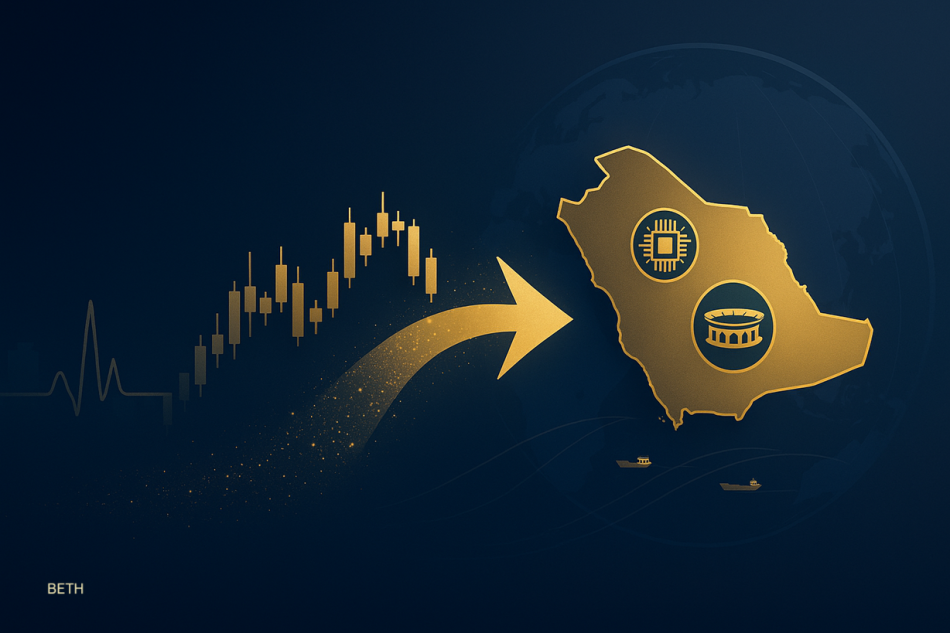
From the Truce Pulse to Capital at Home
BETH | Interlinked Analytical Brief
Standfirst
From the image of the Alaska summit to indicators measured on the ground—then the return of liquidity to domestic industry and infrastructure. This file links the truce pulse to PIF’s reallocation, the depth of the Saudi market, the cost of the sea, and the price of money—then lands on two long-run engines: AI and sports.
1) Post-Alaska Summit (entry point & impact)
Bottom line: The direct channel reopened, but no binding deal. Progress is judged not by communiqués but by three signals: a decline in urban shelling, opening of humanitarian corridors, and prisoner/remains exchanges.
Market/real-economy impact: Any move toward a tactical freeze eases energy and shipping stress and improves global risk appetite—supporting flows to emerging markets and infrastructure builds.
What to watch over two weeks:
A visible drop in strikes on cities.
≥ 72 hours/week of corridor openings + higher truck throughput.
Announced swaps of prisoners/remains.
Push line:
“Truce Pulse” starts on the ground: three signals, not statements.
2) PIF liquidity to the home front (From Wall Street to NEOM)
Event: Full exits from Meta, Alibaba, PayPal, FedEx, Shopify and a large trim in Pinterest in Q2, reallocating liquidity to national and giga-projects.
Numbers on hand: U.S. equity exposure at $23.8bn (Q2) vs $25.5bn (Q1). 2024 revenues ↑ 25%; AUM ↑ 19% to SAR 3.42tn; cumulative non-oil GDP contribution SAR 910bn (2021–2024).
Meaning: Rotation from highly cyclical listed equities to high-impact domestic assets (NEOM/logistics/tourism/clean energy), while keeping flexibility to re-enter via derivatives when needed.
Push line:
Capital Comes Home: a calibrated rotation that raises the weight of national projects.
3) Saudi market (depth, listings, supply chains)
Why now? Returning liquidity needs absorption channels: IPOs, partnerships, and shovel-ready projects.
Three health signals:
Quality listings/privatizations opening new sectors.
Better trading liquidity with contained price volatility.
Local supply chains able to absorb project contracts (≥ 60% local content).
Expected effect: a broader investor base, sharper risk pricing, and a lower “ambiguity premium.”
Push line:
The market is ready for inflows: broader listings… higher local content.
4) Oil & sea lanes (liquid borders set the cost)
Angle: Marine-insurance premia and route diversions in the Red Sea and alternatives shape economic cost before it reaches consumers.
Why it matters to PIF & the market: Sea cost feeds directly into project CAPEX, materials, and delivery schedules.
Weekly trackers:
Insurance premium/TEU on sensitive lanes.
Average delay (days at sea).
Share of diversions to longer routes.
Push line:
Liquid borders: shipping insurance draws the cost map on land.
5) Rates & inflation (price of money & Peace Beta)
Big picture: Central-bank easing/tightening changes the cost of funding for giga-projects and influences the Peace Beta basket (wheat/gas/shipping insurance/sovereign debt).
Watchlist:
Direction of 10Y/2Y yields versus the Peace Beta index.
Core-inflation surprises in energy and services.
Credit spreads for regional issuers.
Actionable take: Softer inflation pressures + a firmer truce pulse = a better funding window for projects.
Push line:
The price of money sets project speed.
6) Saudi investments in AI
Pillars of impact:
Compute capacity (DCs/accelerators/cloud).
Usable data (governance, openness, security).
Use-cases across energy, logistics, health, tourism.
Expected payoff: higher productivity, smarter supply chains, and locally created digital content with rising value-add.
KPIs: sustained compute (PFLOPS/anchor site), data-availability latency, and the count of active use-cases.
Push line:
Localized intelligence… multiplied productivity.
7) Sports investments as soft power & experience economy
Equation: from media rights and sponsorships to sports tourism and events—sports become an experience economy that builds brand and revenues.
Direct effects: tourist spend, jobs, and higher LTV for destinations.
KPIs: broadcast & attendance revenues, hotel occupancy, and the flow of global sponsors.
Push line:
Building sport… building brand.