



An Israeli Voice for Palestine: Signal or Shift? | קול ישראלי לפלסטין: סימן או שינוי?
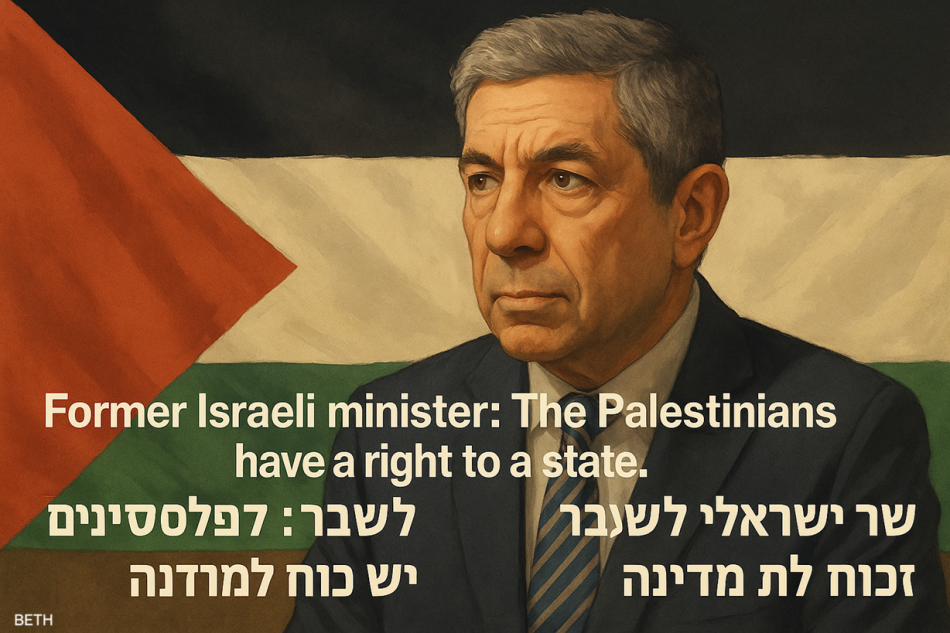
🇬🇧 English Translation
Israeli Minister Supports Palestinian Statehood – Between Truth and Tactic
🧭 BETH Follow-up and Analysis
Yossi Beilin’s Statement: Between Truth and Political Tactic
“Yes to a Palestinian state… but not with Hamas.”
That’s the essence of what Yossi Beilin — former Israeli Minister of Justice and a key architect of the Oslo Accords — recently told Al Arabiya English. He reaffirmed his support for a two-state solution, while stressing the need to distinguish between the Palestinian Authority and Hamas.
But has his opinion suddenly changed?
Is this his personal view, or a strategic message on behalf of the government?
And what is the actual impact of this statement on the Israeli-Palestinian conflict?
Let’s break down the questions one by one.
🔎 1. Why do politicians change their views after leaving office?
This phenomenon is not unique to Israel; it's a global political pattern. The reasons include:
Institutional Constraints: Officials in office are bound by security, political alliances, and public pressures.
Fear of Losing Power: Speaking out may cost them their positions.
Freedom After Power: Once out of office, they feel freer to express true beliefs or rebuild their legacy.
🔹 BETH Analysis: Beilin had supported the idea of a Palestinian state since Oslo. But later official stances suppressed that vision. Now, he reintroduces it with a louder voice.
🔎 2. Could a wave of similar voices trigger a political shift in Israel?
A radical shift is unlikely soon, but possibilities exist:
Gradual opinion change, especially among political and academic elites.
Emergence of new centrist or left-leaning movements reviving the two-state vision.
Right-wing fragmentation if Israel continues facing global and regional crises.
However, real change is hindered by:
Exaggerated security fears.
Dominance of ultra-nationalist politics.
Weak electoral influence of moderates and liberals.
🔎 3. Is this a “test balloon” reflecting future government policy?
Very likely. Governments often use former officials to leak sensitive messages or test public response.
✅ This message includes symbolic signals:
Reintroduction of the two-state solution.
Framing Hamas as a barrier, not the Palestinian people.
Preparing the public for future political compromises.
🔹 BETH Insight: It’s plausible that Beilin was nudged to speak out to explore how Israeli society and global audiences would react.
🔎 4. Does Beilin’s opinion still matter?
In terms of executive power: No.
In terms of symbolism and political legacy: Yes.
He remains respected in liberal Israeli circles and was part of historic moments (like Oslo). His words are seen as:
A mirror of Israel’s “silent current.”
A challenge to far-right ideology.
An opening for international discourse on ending occupation.
🔎 5. How can this be used politically and in the media?
Amplify internationally, showing that even Israelis support Palestinian rights.
Leverage in Arab diplomatic statements:
“Even an Israeli architect of Oslo now speaks of Palestinian statehood… what are we waiting for?”
Use in Western media (English, French) to influence public opinion.
Cite in UN sessions as internal testimony justifying statehood recognition.
Archive under “shifts in Israeli discourse” to highlight contradictions in official policy.
✅ BETH Conclusion:
When the opponent speaks the truth — silence is defeat.
Beilin’s statement is a rare opportunity to reignite global advocacy for justice — but only if acted upon wisely, not passively admired.
🎯 Analysis Code: Post-Position Rhetoric – Signals from Within
✍️ Strategic Political Analysis Unit – BETH Media Agency
🇮🇱 תרגום לעברית
שר ישראלי תומך במדינה פלסטינית – בין אמת לטקטיקה
🧭 מעקב וניתוח של BETH
הצהרת יוסי ביילין: בין אמת לטקטיקה פוליטית
"כן למדינה פלסטינית… אך לא עם חמאס"
זהו תמצית דבריו של יוסי ביילין – שר המשפטים לשעבר ואחד מאדריכלי הסכמי אוסלו – בראיון לערוץ "אל-ערביה אנגלית", שם הביע תמיכה בפתרון שתי המדינות, תוך הבחנה ברורה בין הרשות הפלסטינית לחמאס.
האם דעתו השתנתה בפתאומיות?
האם זו עמדה אישית, או איתות ממשלתי?
ומה משמעות ההצהרה על עתיד הסכסוך?
ננתח את השאלות אחת אחת:
🔎 1. למה משתנה עמדת פוליטיקאים לאחר תפקידם?
תופעה מוכרת בכל העולם. לרוב לא מדובר בשינוי דעת, אלא ב:
מגבלות מוסדיות: מחויבות לקואליציות ולשיקולים ביטחוניים.
פחד מאובדן תפקיד: עמדה נוגדת עלולה לעלות במחיר הקריירה.
חופש לאחר הכסא: לאחר תום תפקידם — מדברים בגלוי ומעצבים מורשת.
🔹 ניתוח BETH: ביילין תמך במדינה פלסטינית עוד באוסלו, אך עוכב ע"י הממסד. כעת חוזר לכך – בקול חזק יותר.
🔎 2. האם גל קולות דומים יכול לשנות את ישראל?
לא סביר שתהיה מהפכה בקרוב, אך ייתכנו:
שינוי דעה איטי בציבור ובאקדמיה.
הקמת גושים מרכזיים-שמאליים שיחיו מחדש את רעיון שתי המדינות.
פילוג בימין בעקבות לחץ פנימי ובינ"ל.
אך מכשולים קיימים:
פחדים ביטחוניים מופרזים.
שליטת הימין הקיצוני.
חולשת גוש המרכז והשמאל.
🔎 3. האם מדובר באיתות מכוון?
אפשרי מאוד. ממשלות נוהגות "לשלוח" דמויות בכירות לשעבר כאיתותי ניסוי.
✅ המסר כולל:
החזרת פתרון שתי המדינות לשיח.
בידול חמאס מהרשות.
הכנת הציבור לפשרות מדיניות.
🔹 ניתוח BETH: ייתכן שמאחורי ההצהרה עומדת יוזמה פנימית לבדוק תגובות ציבוריות ובינלאומיות.
🔎 4. האם לדברי ביילין יש השפעה?
מבחינה פוליטית: לא ישירה.
מבחינה סמלית והיסטורית: כן.
ביילין מוערך במחנה הליברלי, ודבריו עשויים:
לשקף זרם שקט בציבור.
לאתגר את השיח הקיצוני.
לספק קרקע לשיח בינלאומי חדש.
🔎 5. כיצד ניתן למנף את הדברים?
להפיץ בעולם, כדי להוכיח שגם ישראלים תומכים בפלסטינים.
להשתמש בהצהרה בדיוני או"ם ודיפלומטיה ערבית.
להבליט בתקשורת הבינ"ל – באנגלית וצרפתית.
לתעד כשינוי בדפוס השיח הישראלי.
ללחוץ על ממשלות מערביות לעבור ממילים למעשים.
✅ סיכום BETH:
כשהאויב מדבר אמת – אסור לשתוק.
הצהרת ביילין היא הזדמנות להצית מחדש את הדרישה לצדק ולשלום – אם נפעל בתבונה.
🎯 קוד ניתוח: שיח לאחר כהונה – רמזים מבפנים
✍️ יחידת הניתוח האסטרטגי – סוכנות BETH