



Day 133 🇺🇸⚔️🇮🇷: From Pressure to Coercion
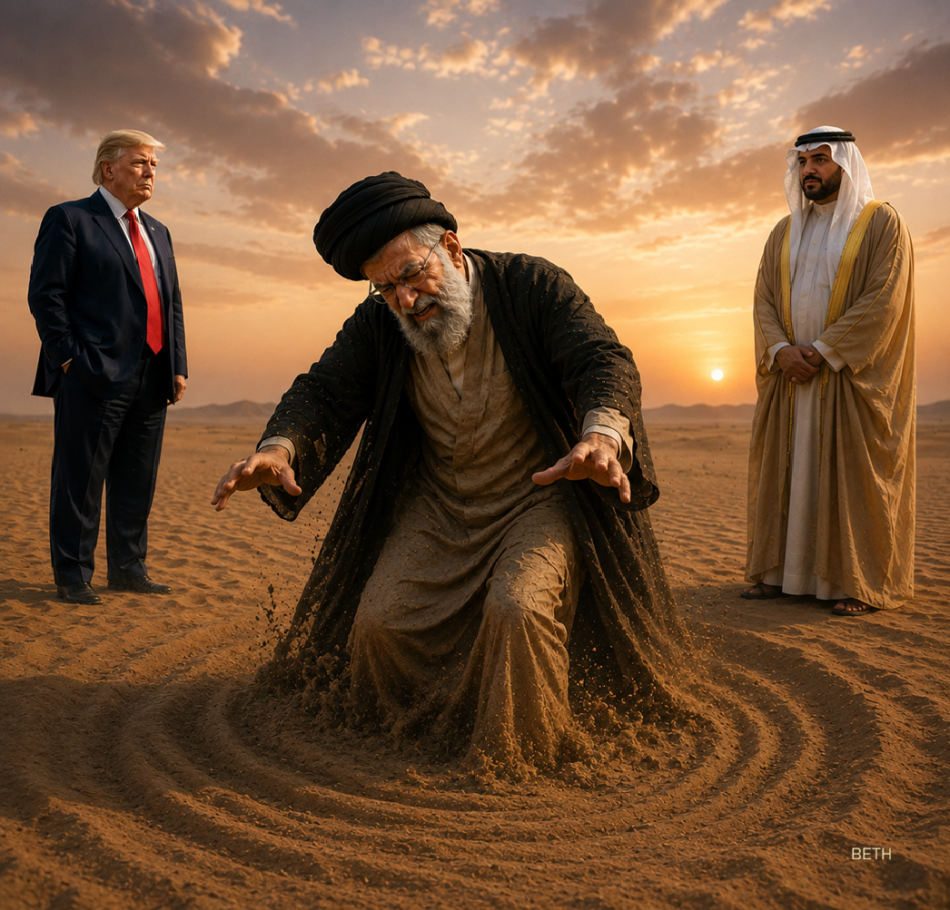
BETH | B
The coastal city of Bushehr, home to Iran's only nuclear power plant, came under new U.S. strikes as the U.S. Central Command (CENTCOM) announced it had carried out a third wave of strikes inside Iran this week.
The escalation follows the renewed fighting between Washington and Tehran last week, further eroding the fragile ceasefire reached in June. Reports also revealed that U.S. President Donald Trump convened a meeting in the White House Situation Room to discuss expanding military operations beyond the current strikes associated with the Strait of Hormuz.
According to the reports, the objective is to intensify pressure on Iran to reopen the Strait of Hormuz and accept U.S. conditions regarding its nuclear program.
Analysis
What is unfolding is no longer merely an exchange of military strikes.
It appears to represent a gradual shift from a strategy of pressure to a strategy of coercion.
The distinction is significant.
Pressure seeks to improve negotiating terms.
Coercion seeks to alter the decision itself by raising the cost of rejection until acceptance becomes less costly than continued confrontation.
If the strikes continue to expand both geographically and operationally, it could indicate that Washington no longer believes the ceasefire can achieve its objectives and has moved toward creating new realities on the ground before returning to any diplomatic track.
Meanwhile, Iran faces a far more complex dilemma:
How can it preserve the image of resilience without sliding into a confrontation that may exceed its capacity to absorb?
The central question, therefore, may no longer be:
Will the strikes continue to expand?
Instead, it becomes:
At what point does each side conclude that continuing the confrontation has become more costly than stepping back?
BETH Perspective
Wars do not merely change the balance of power.
They seek to reshape the way the adversary thinks.
When military operations move beyond protecting maritime navigation and containing escalation toward expanding pressure on Iran's strategic depth, the objective is no longer simply to inflict military damage, but to force decision-makers into increasingly narrow and costly choices.
Yet cost is not measured equally by all parties.
The United States weighs the cost of prolonging the conflict, its impact on military forces, global markets, maritime routes, and the risk of drifting into a wider war it does not seek.
The Iranian regime, however, does not calculate losses solely from the perspective of the state.
It also calculates them through the lens of regime survival.
It may tolerate economic deterioration, declining regional influence, and military losses, so long as it preserves the institutions capable of protecting the regime and rebuilding its strategic capabilities in the future.
The real question, therefore, is no longer:
When will Iran conclude that retreat is less costly?
Rather:
Less costly for whom?
What may represent salvation for the Iranian state could be viewed by the regime as a threat to its survival.
Likewise, what appears to Washington as a painful concession may be seen in Tehran as a tactical pause designed to preserve the governing structure, buy time, and eventually return with different tools and strategies.
This is where the American dilemma emerges.
If Washington succeeds only in temporarily changing Iranian behavior—without dismantling the structures that repeatedly generate that behavior—it may achieve an open Strait of Hormuz and a nuclear agreement while leaving the Islamic Revolutionary Guard Corps and the broader security apparatus capable of restoring the same threat under different circumstances.
If, however, regime change becomes the objective, the challenge grows substantially.
Removing a government is often easier than ensuring the emergence of a stable successor capable of reconciling with its people, its regional neighbors, and the international community while maintaining control over the state's institutions and armed forces.
This explains why Washington's calculations do not necessarily mirror those of the Gulf states.
For the United States, success may be defined as securing immediate objectives: an open Strait of Hormuz, restrictions on Iran's nuclear program, and the cessation of regional attacks.
The Gulf states, however, are looking beyond the agreement itself.
Their concern is not a single missile or a temporary crisis.
Their concern is whether the structures that produced missiles, proxy networks, threats to maritime security, and regional destabilization remain intact.
That is likely to become the decisive test of any future settlement.
Will Iranian policy genuinely change?
Or will the agreement simply provide the regime with another opportunity to survive, regroup, and return under different circumstances?
Ultimately, this conflict will not be decided merely by one side accepting a temporary adjustment.
It will be decided by the answer to a far larger strategic question:
Is American power seeking to eliminate the Iranian threat—or merely manage it at a level compatible with regional stability and U.S. strategic interests?
If the objective is threat management, the current system in Iran may survive in exchange for specific concessions.
If the objective is to eliminate the threat itself, neither a Hormuz agreement nor a nuclear deal alone will be sufficient, because the challenge would no longer be a single political decision, but a political and military structure capable of reproducing the same decisions in the future.
If the Gulf states continue to strengthen their military and strategic capabilities year after year, why do the world's major powers still regard Gulf security as an international issue rather than merely a regional one?
New Wave
The U.S. military announces the launch of strikes aimed at weakening Iran's anti-ship capabilities
The U.S. military announced today the launch of a new wave of strikes against targets inside Iran, stating that the operations are intended to weaken Iranian capabilities used to engage ships and threaten maritime navigation.
The strikes come amid the ongoing military escalation between Washington and Tehran, as tensions continue over security in the Gulf and the Strait of Hormuz, while prospects for restoring the ceasefire reached in June continue to fade.
These strikes further reinforce indications that Washington is moving beyond gradual pressure toward directly targeting the military capabilities associated with controlling and threatening vital maritime routes.
In modern warfare, the objective is not always to defeat the adversary outright—it is often to leave them standing on ground that no longer provides stability.