


Day 130 🇺🇸⚔️🇮🇷: U.S. Military Resumes Strikes
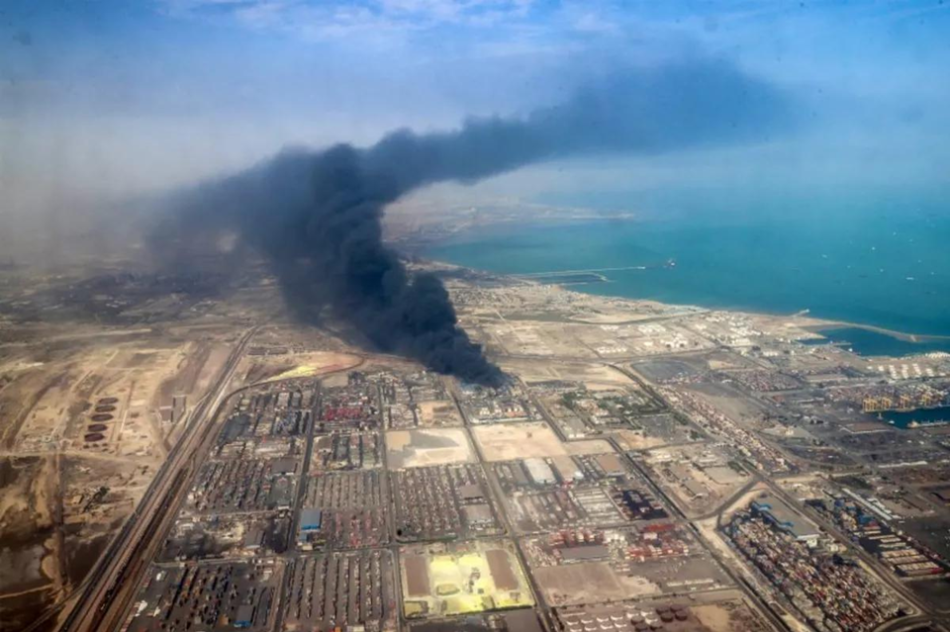
Iran Under Fire .. Hormuz the Primary Target
BETH | B
The United States resumed military strikes on targets inside Iran on Sunday, amid a broad escalation that included exchanges of missiles and drones between the two sides, with the conflict expanding across the Gulf region.
Reports indicated explosions in Bandar Abbas and Qeshm Island in southern Iran, while U.S. President Donald Trump stated that American forces had carried out "heavy strikes" in response to Iranian attacks targeting vessels in the Strait of Hormuz.
Meanwhile, Tehran once again announced the closure of the Strait of Hormuz, declaring that the waterway "will never return to what it was before." Washington, however, insisted that maritime navigation remains open and announced strikes targeting Islamic Revolutionary Guard Corps speedboats inside the strait.
The escalation also spread across the Gulf, with Qatar coming under attack for the first time since April, while the United Arab Emirates announced that it had intercepted Iranian missiles and drones.
Meanwhile, Pakistan expressed deep concern over the renewed escalation, urging all parties to exercise restraint and honor the commitments contained in the Islamabad Memorandum of Understanding, while reaffirming that dialogue and diplomacy remain the best path toward ending the crisis.
BETH Analysis
Today's developments indicate that the confrontation has moved beyond the stage of exchanging military signals and entered a phase of competing for control over one of the world's most strategic maritime corridors.
U.S. strikes inside Iran, Iranian attacks against targets across the Gulf, and direct engagements in the Strait of Hormuz all suggest that the waterway is no longer merely a bargaining chip in negotiations, but has become an active battlefield.
The expansion of tensions to Gulf states further raises regional security risks and places the temporary agreement between Washington and Tehran under its most severe test since it was signed.
At the same time, Pakistan's call to uphold the Memorandum of Understanding suggests that diplomatic channels have not been completely closed, despite the renewed military escalation.
Outlook
If the confrontation continues at its current pace, the Strait of Hormuz could evolve into a sustained conflict zone where military operations and efforts to keep maritime traffic flowing occur simultaneously.
The greatest challenge for all parties will be preventing the escalation from expanding into a broader regional war while keeping the door to negotiations open, even if only at a minimum level.
The Horizon
In major crises, geography does not change.
But the rules governing it sometimes do.
If the Strait of Hormuz has long served as one of the world's vital energy arteries, the question today is no longer:
Will it be closed?
Rather:
Who will determine the rules of passage through it in the next phase?