



Crown Prince Chairs Cabinet Session in Jeddah
Cabinet Condemns Iranian Attacks, Expands International Partnerships, and Approves a New Package of Regulations and Agreements
New International Training Visa, State Revenue Law Approved, and Broader Cooperation in Energy, Culture, Governance, and Anti-Corruption
Jeddah – B | BETH
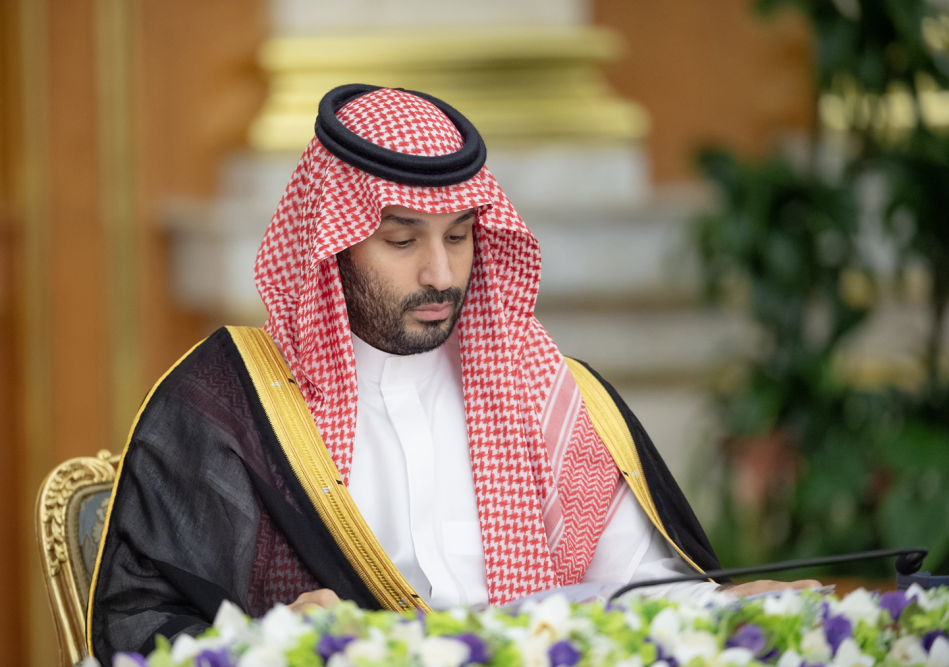
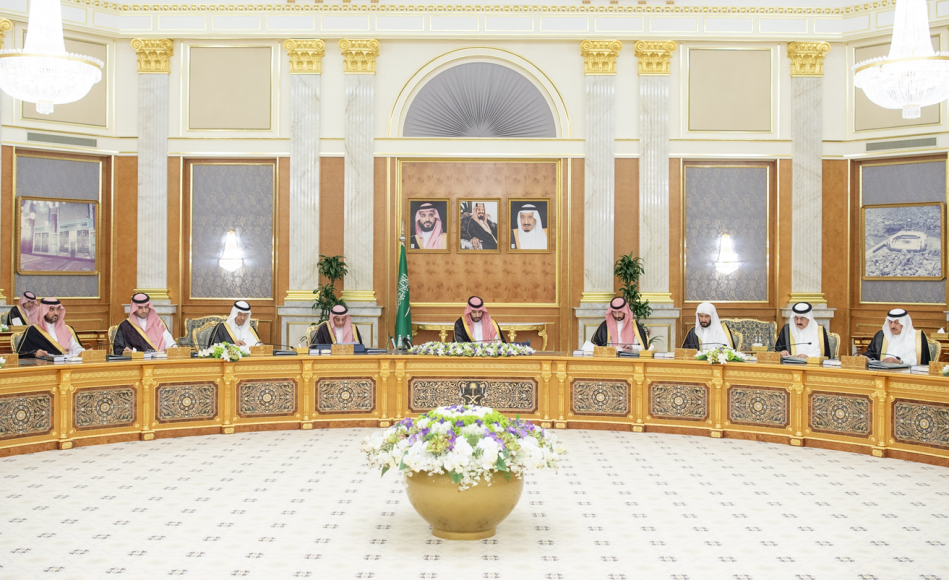
His Royal Highness Prince Mohammed bin Salman bin Abdulaziz Al Saud, Crown Prince and Prime Minister, chaired the Cabinet session held today in Jeddah, during which ministers reviewed developments in international relations, regional affairs, and approved a series of regulations, agreements, and development decisions.
At the beginning of the session, the Crown Prince briefed the Cabinet on his telephone conversation with U.S. President Donald Trump, which covered bilateral cooperation, regional and international developments, and reaffirmed support for all efforts aimed at strengthening security and stability in the region.
The Cabinet was also briefed on the results of the Crown Prince's talks with Canadian Prime Minister Mark Carney, which led to the signing of memoranda of understanding to establish the Saudi–Canadian Coordination Council, strengthen cooperation in energy, investment in artificial intelligence, and skills development, in addition to announcing commercial and investment agreements covering mining, engineering, infrastructure, advanced industries, education, financial services, and information and communications technology.
The Cabinet strongly condemned the repeated Iranian attacks on commercial vessels in the Strait of Hormuz and on Kuwait, Bahrain, Qatar, the United Arab Emirates, Oman, and Jordan, reaffirming Saudi Arabia's complete rejection of Iran's continued destabilizing actions and violations of international law and the principles of good neighborliness.
The Cabinet welcomed the outcomes of the Saudi-Iraqi meeting, including Iraq's commitment not to allow its territory or airspace to be used as a launching point for attacks against Saudi Arabia, the Gulf Cooperation Council countries, or other regional states, while reaffirming continued bilateral coordination.
It also welcomed the United States' announcement of the start of procedures to revoke Syria's designation as a State Sponsor of Terrorism, reiterating Saudi Arabia's support for the positive steps being taken by the Syrian government to strengthen security, restore stability, and rebuild state institutions.
The Cabinet approved a number of key decisions, including:
- Authorizing negotiations with Guatemala on a general cooperation agreement.
- Authorizing negotiations with Albania and Armenia on memoranda of understanding covering culture, labor, and social protection.
- Expanding cooperation with Türkiye in internal auditing, governance, risk management, and compliance.
- Approving a geological cooperation agreement with Iraq.
- Approving anti-corruption memoranda of understanding with Brazil and Côte d'Ivoire.
- Strengthening accounting and auditing cooperation with North Macedonia.
- Expanding cooperation in the non-profit sector with Bahrain and Singapore.
- Approving a memorandum of understanding between the King Salman Global Academy for Arabic Language and the GCC General Secretariat.
- Approving the State Revenue Law.
- Introducing a new Training Visa for international trainees.
- Appointing two new members to the Board of Directors of Saudi Post.
- Approving the final accounts of several development funds and public universities.
- Approving a number of senior government promotions.
BETH Analysis
Today's Cabinet session reflects Saudi Arabia's continued focus on two parallel priorities: managing regional developments while accelerating institutional and economic transformation at home.
On the international front, the Kingdom reaffirmed its commitment to regional stability through close coordination with international partners, strong condemnation of attacks threatening maritime security and neighboring countries, and continued support for regional de-escalation and cooperation.
Domestically, the decisions demonstrate the ongoing modernization of Saudi Arabia's regulatory and institutional framework through the approval of the State Revenue Law, the introduction of the International Training Visa, and expanded cooperation in governance, anti-corruption, culture, energy, and the non-profit sector, highlighting the broad scope of the Kingdom's institutional reforms.
The expansion of partnerships with Canada, Iraq, and other countries also reflects Saudi Arabia's strategy of building more diversified economic, scientific, and institutional partnerships that support the objectives of Saudi Vision 2030.
The Horizon
During periods of major national transformation, a country's strength is not measured by the number of decisions it makes.
It is measured by how well those decisions are connected.
When foreign policy, legislation, economic reform, education, investment, and governance all move in the same direction, they do not represent separate initiatives.
They represent a single national project driven by a unified vision.
Today's Cabinet sessions are therefore more than meetings where decisions are approved.
They are milestones through which vision becomes policy, policy becomes implementation, and implementation shapes the future.