



Day 69: Between Iran’s Response.. and the Possibility of Escalation
Follow-up & Analysis | BETH | B
The U.S.–Israeli war with Iran has entered its sixty-ninth day, amid contradictory signals combining the continuation of the negotiation track with rising military and political indications suggesting that the possibility of renewed escalation still exists.
The Situation
Iran’s IRNA news agency reported on Sunday that Tehran had delivered its response to the latest U.S. proposal aimed at ending the war to Pakistan, which continues to play the role of an undeclared mediator in one of the region’s most complex crises.
According to preliminary information, the proposed plan at this stage focuses on:
- ending the war,
- ensuring maritime safety,
- and protecting navigation routes in the Gulf and the Strait of Hormuz.
However, as of this afternoon — Mecca time — no additional details had been disclosed regarding the Iranian response, while no clear comment had been issued from the American side, leaving the scene open to multiple possibilities.
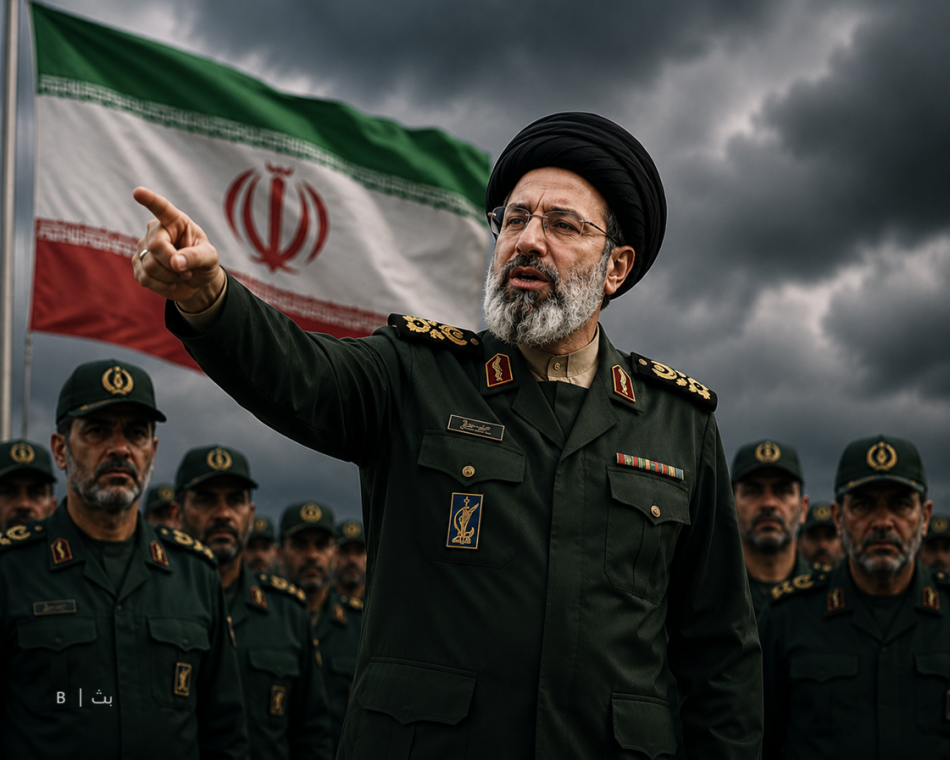
Meanwhile, Iran’s Fars News Agency reported that Iranian Supreme Leader Mojtaba Khamenei issued new directives to the commander of Iran’s unified armed forces leadership, including:
“continuing operations and confronting enemies firmly.”
The statement carries implications beyond the military dimension, especially as it was issued simultaneously with reports of a renewed negotiation track.
BETH Analysis
The question imposing itself today is not only:
Is the war approaching its end?
But rather:
Are the parties using negotiations… to improve the conditions of the next confrontation?
Iran’s response through Pakistan suggests that communication channels remain open, and that there is still a desire to preserve room for understanding, particularly regarding energy and maritime security.
At the same time, however, the language of “continuing operations” indicates that Tehran does not want to appear as a party negotiating under pressure or retreat.
Here, Iran’s equation appears extremely delicate:
- negotiations without surrender,
- escalation without full-scale explosion.
Washington, meanwhile, still appears more inclined toward managing pressure rather than entering a prolonged open confrontation, especially since any major renewed escalation could threaten:
- energy markets,
- international shipping,
- the global economy,
- and sensitive regional balances.
That is why the Americans may indeed have “another view”:
not ending the war completely for now,
and not igniting it completely either.
But rather keeping the opponent within a space of:
pressure… attrition… and containment.
And in the Middle East,
wars do not always begin when voices rise,
but sometimes when everyone believes escalation has become unlikely.
In the evening
Trump: Iranian Response “Completely Rejected”
U.S. President Donald Trump stated that the Iranian response to the American proposal aimed at launching peace talks to end the war was “completely rejected,” in a new indication of difficulties facing the negotiation track and the return of escalation to the forefront.
Trump discussed the Iranian response during a phone call with Israeli Prime Minister Benjamin Netanyahu, amid continuing political and diplomatic efforts related to the war file and maritime security in the Gulf and the Strait of Hormuz.
The American position came only hours after Tehran delivered its response to the U.S. proposal through Pakistan, which continues to play the role of an undeclared mediator between the two sides.
So far, no full details have been disclosed regarding the nature of the Iranian response or the clauses rejected by Washington. However, Trump’s description of the response as “completely rejected” reflects the widening gap between the positions of both sides, despite the continuation of indirect communication channels.
The American statement carries more than one message at a sensitive moment:
- pressure on Iran ahead of any new round of negotiations,
- reassurance to Israel that Washington will not accept an agreement perceived as a concession,
- and an attempt to raise the ceiling of demands before returning to the table.
At the same time, however, the continuation of contacts and mediation efforts indicates that the door to negotiations has not been fully closed, even amid rising political and media rhetoric.
And in crises like these,
sometimes harsh statements…
are part of the negotiation itself.