

Russia and Ukraine | Россия и Украина | Росія та Україна
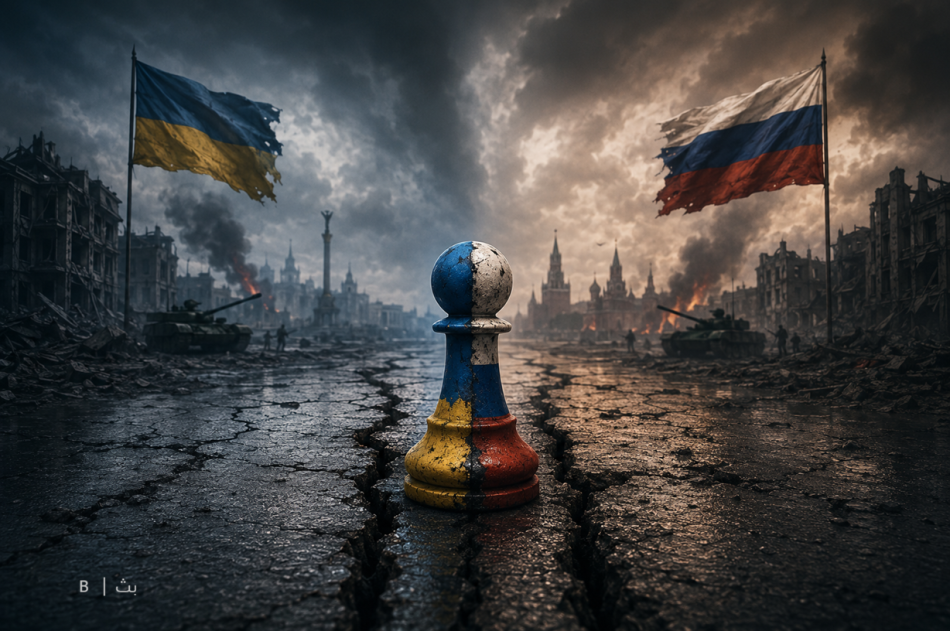
Russia and Ukraine: The War of Long Exhaustion
Prepared and Analyzed by | BETH | B
What Exactly Is Happening?
What is happening now is no longer a war seeking a “quick victory,” but a conflict that has transformed into open-ended attrition.
Russia is applying battlefield pressure, attempting gradual advances, consolidating its gains, and pushing Ukraine toward a settlement under harsh conditions.
Ukraine, meanwhile, is no longer relying solely on defending against attacks. It is increasingly striking deep inside Russia using drones and missiles, targeting energy facilities, refineries, airports, and supply centers to send a message:
The war will not remain confined within Ukraine.
In recent days, both Kyiv and Moscow proposed separate ceasefires, yet mutual accusations of violations revealed that the “language of negotiation” remains weaker than the “language of fire.”
Zelensky accused Russia of rejecting a ceasefire proposed by Kyiv amid stalled peace talks.
Have They Reached the Point of Exhaustion?
Yes. Both sides are exhausted, but each conceals its fatigue differently.
Ukraine faces growing manpower shortages, declining volunteer numbers, fatigue among veteran soldiers, and mounting social pressure caused by mobilization.
Russia is also exhausted, but it possesses broader room for maneuver:
a larger population,
a wartime economy,
greater tolerance for losses,
and a highly centralized state capable of suppressing visible signs of fatigue internally for a longer period.
But the important distinction is this:
Exhaustion does not necessarily mean readiness for peace.
Sometimes exhaustion pushes nations toward settlement.
And sometimes it pushes them toward escalation before settlement.
What Does Russia Want?
Russia seeks four primary outcomes:
First:
To consolidate control over occupied territories, or at minimum turn them into a non-negotiable bargaining card.
Second:
To prevent Ukraine from becoming an advanced Western military platform on Russia’s borders, particularly regarding NATO and Western armament.
Third:
To impose political recognition that Russia remains a major power that cannot easily be isolated or defeated.
Fourth:
To demonstrate that the West tires faster than Moscow.
For this reason, Moscow does not appear eager for a peace that offers no clear strategic gain.
It seeks a peace resembling “locking in the result,” not merely a temporary ceasefire.
What Does Ukraine Want?
Ukraine’s first objective is survival, followed by preventing Russia from turning occupation into permanent reality.
Kyiv wants:
- To recover as much territory as possible
- Real security guarantees preventing another war
- Continued Western support
- To weaken Russia’s ability to launch future offensives
- To keep its cause alive internationally
This is why Ukraine continues expanding medium- and long-range strikes inside Russia.
Kyiv has intensified attacks against Russian forces since March, while Zelensky described this strategy as “a priority.”
Is There No Solution?
A solution exists in theory, but it is extremely difficult in practice.
Any settlement requires answers to three painful questions:
Who controls the occupied territories?
What security guarantees will Ukraine receive?
How will sanctions be lifted, or how will relations with Russia be managed afterward?
This is where the core dilemma lies.
Russia does not want to withdraw without compensation.
Ukraine does not want to acknowledge defeat.
The West does not want to reward invasion.
And Moscow does not want to appear defeated.
Thus, the conflict turns into a harsh equation:
Stopping the war is possible.
Creating a just and stable peace is far more difficult.
Who Wants the War to Continue?
There is not necessarily one single side seeking endless war.
But there are actors who find strategic benefit in its continuation.
Russia may believe prolonged pressure improves its future negotiating position.
Ukraine may fear that a weak ceasefire would simply allow Russia to rearm.
Parts of the military industry benefit from prolonged conflict.
Some Western powers see the exhaustion of Russia as beneficial to the balance of power.
And some rivals of the West benefit from Europe and America remaining distracted.
But the deeper truth is this:
Wars sometimes continue not because everyone wants them…
but because every side fears a peace that grants the other side victory.
Ending .. or No Ending?
The most likely scenario:
No complete ending anytime soon.
We may see:
temporary ceasefires,
partial truces,
semi-frozen frontlines,
and prolonged negotiations.
But a genuine end to the war requires one of three moments:
A clear military collapse by one side.
Internal exhaustion forcing political compromise.
Or a major deal between great powers imposing a settlement on both parties.
So far, none of these moments appears fully mature.
Conclusion
The Russia–Ukraine war has entered a phase more dangerous than its beginnings:
The phase of normalizing war.
No side is capable of achieving rapid victory.
No side is capable of openly accepting defeat.
And no side possesses a peace formula that preserves dignity while stopping the bleeding.
Russia wants to prove that time is on its side.
Ukraine wants to prove that resilience can defeat time itself.
And the West wants to prevent Russia from winning without entering direct war.
That is why this war may not end soon.
Instead, it may gradually evolve into something even more dangerous:
A long war without an official ending.
No full peace.
No complete victory.
__
Россия и Украина: Война долгого истощения
Война между Россией и Украиной больше не выглядит как конфликт в поисках быстрой победы.
Она превратилась в открытую войну истощения.
Россия стремится закрепить свои территориальные gains и навязать политическую реальность,
в то время как Украина пытается выстоять, наносить удары вглубь России и сохранить международную поддержку.
Обе стороны устали.
Но ни одна не готова признать поражение.
Главная проблема сегодня — не отсутствие возможности остановить войну,
а отсутствие мира, который обе стороны готовы принять.
Война может не закончиться скоро.
Она постепенно превращается в долгий конфликт без окончательной победы и без полноценного мира.
__
Росія та Україна: Війна тривалого виснаження
Війна між Росією та Україною більше не виглядає як конфлікт у пошуках швидкої перемоги.
Вона перетворилася на відкриту війну виснаження.
Росія прагне закріпити свої територіальні здобутки та нав’язати нову політичну реальність,
тоді як Україна намагається вистояти, завдавати ударів углиб Росії та зберегти міжнародну підтримку.
Обидві сторони виснажені.
Але жодна не готова визнати поразку.
Головна проблема сьогодні — не відсутність можливості зупинити війну,
а відсутність миру, який обидві сторони готові прийняти.
Війна може не завершитися найближчим часом.
Вона поступово перетворюється на тривалий конфлікт без остаточної перемоги та без повноцінного миру.