



Saudi Arabia Joins the Beijing Convention 2010
Riyadh | B
Saudi Arabia has joined the Convention on the Suppression of Unlawful Acts Relating to International Civil Aviation, known as the “Beijing Convention 2010,” under the International Civil Aviation Organization, in a step that reflects its commitment to enhancing the safety and security of civil aviation at the international level.
The Convention comes in response to the growing global concern over threats targeting civil aviation, and the risks they pose to the safety of individuals and property, as well as their impact on public confidence in the efficiency of air transport.
It aims to criminalize such acts, strengthen legal frameworks to deter them, and establish general principles to combat them comprehensively, contributing to the development of the international legal system in this field.
The “Beijing Convention 2010” also contributes to updating and unifying related agreements, particularly the Montreal Convention of 1971 and its supplementary protocol of 1988, enhancing the effectiveness of addressing threats related to civil aviation.
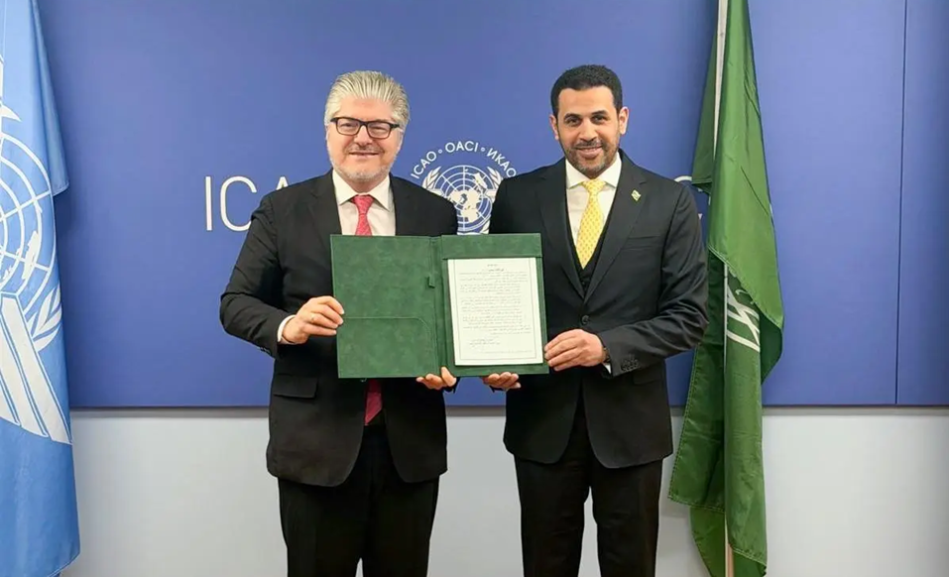
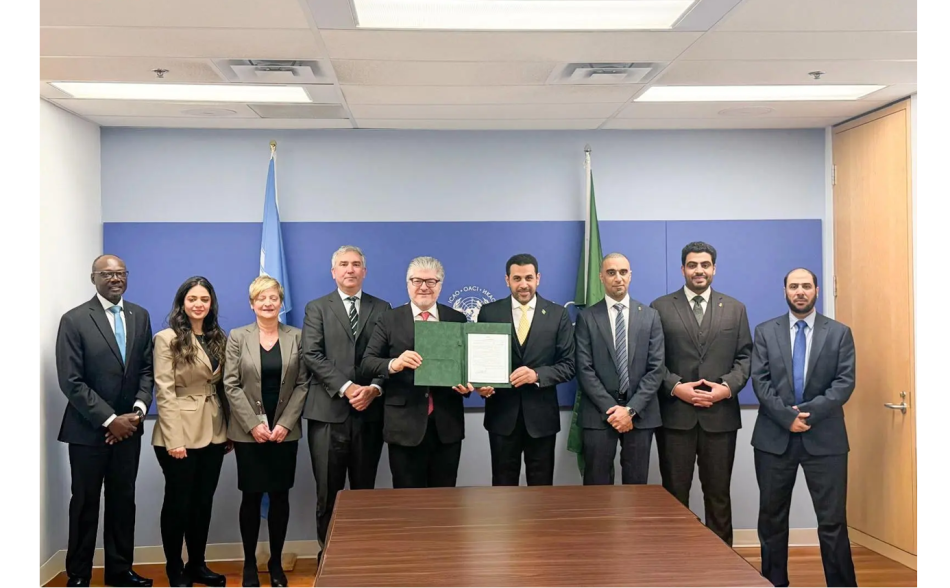
The instrument of accession was deposited by the Kingdom’s Permanent Representative to the organization, Engineer Mohammed bin Sami Habib, with Secretary General Juan Carlos Salazar, during an official ceremony held on April 24, 2026, in the presence of a number of officials from the organization.
Accordingly, Saudi Arabia becomes the 57th state party to the Convention, with its provisions set to enter into force for the Kingdom on June 1, 2026.
Saudi Arabia’s accession to the “Beijing Convention 2010” should not be read merely as a technical legal step,
but as part of a broader framework redefining its position in global aviation security
What has actually changed?
The Convention focuses on criminalizing unlawful acts related to civil aviation, including:
- Using aircraft as a means of attack
- Targeting airports or navigation systems
- Using modern technologies for purposes that threaten aviation security
With the Kingdom’s accession, these acts fall under a binding international legal framework, enhancing its ability to:
- Conduct cross-border legal prosecution
- Exchange security information
- Standardize procedures for dealing with threats
B Analysis: Beyond the Step
1. From “protection” to “system”
The Kingdom is not only securing its airspace,
but engaging in building a shared global aviation security system.
2. A message of confidence to aviation and investment sectors
With the expansion of aviation and tourism projects (airports, airlines, air transport),
the Kingdom sends a clear signal:
Airspace is secure… and the law is present.
This is a key factor in attracting:
- Global airlines
- Investors in transport and tourism sectors
3. Keeping pace with new threats
Threats are no longer traditional.
The Convention addresses:
- Cyberattacks on aviation systems
- Misuse of technology
- “Invisible” threats that cannot be addressed by military means alone
The accession indicates that the Kingdom is acting with a proactive, not reactive, mindset
4. Reinforcing Saudi Arabia’s international position
Being the 57th state party is not just a number,
but a position within a group of countries committed to modernizing global aviation security.
This strengthens the Kingdom’s role as:
- A trusted partner
- An influential player in international civil aviation affairs
Conclusion
This step is not about an “agreement”…
but about expanding the concept of security.
From protecting the aircraft…
to protecting the entire system.
From the boundaries of the state…
to international partnership in addressing threats.
Saudi Arabia does not only secure its skies…
it contributes to securing the world’s skies.