

Media in Wars: Positions in the United States
Prepared, Monitored, and Analyzed by the Strategic Media Department – B News Agency (B)
Supervised by: Abdullah Al-Omairah
Introduction: The Battle of Narratives in Times of War
In every war, confrontation is not limited to the battlefield; it extends to another arena of equal significance—the media. In the United States, this reality has become evident through the repeated attacks by President Donald Trump and the Secretary of Defense on American media outlets, accusing them of distorting facts or downplaying military achievements. This confrontation raises important questions about the nature of the relationship between authority and the media during times of conflict, and the role of media narratives in shaping public opinion both domestically and globally.
Why Do Trump and the Secretary of Defense Attack the Media?
1. The Battle for Control of the Narrative
Political and military leaderships during wartime seek to control the media narrative due to its direct impact on public morale and support for military operations. When media outlets present alternative accounts or focus on losses and challenges, such coverage may be interpreted as undermining the war effort.
2. Domestic Political Considerations
Attacking the media serves as an effective political tool to mobilize the support base. Trump has consistently used the term “Fake News” to strengthen trust between himself and his supporters, portraying himself as a defender of “truth” against what he perceives as media bias.
3. Protecting the International Image
During wars, international perception plays a pivotal role. Therefore, media reports that criticize military performance or highlight humanitarian consequences may be seen as threats to political legitimacy or international alliances.
4. Reducing the Impact of Leaks
American media enjoy a broad margin of freedom and often publish leaks or independent analyses that may reveal sensitive aspects of military operations. This prompts officials to attack the media in an attempt to limit their influence.
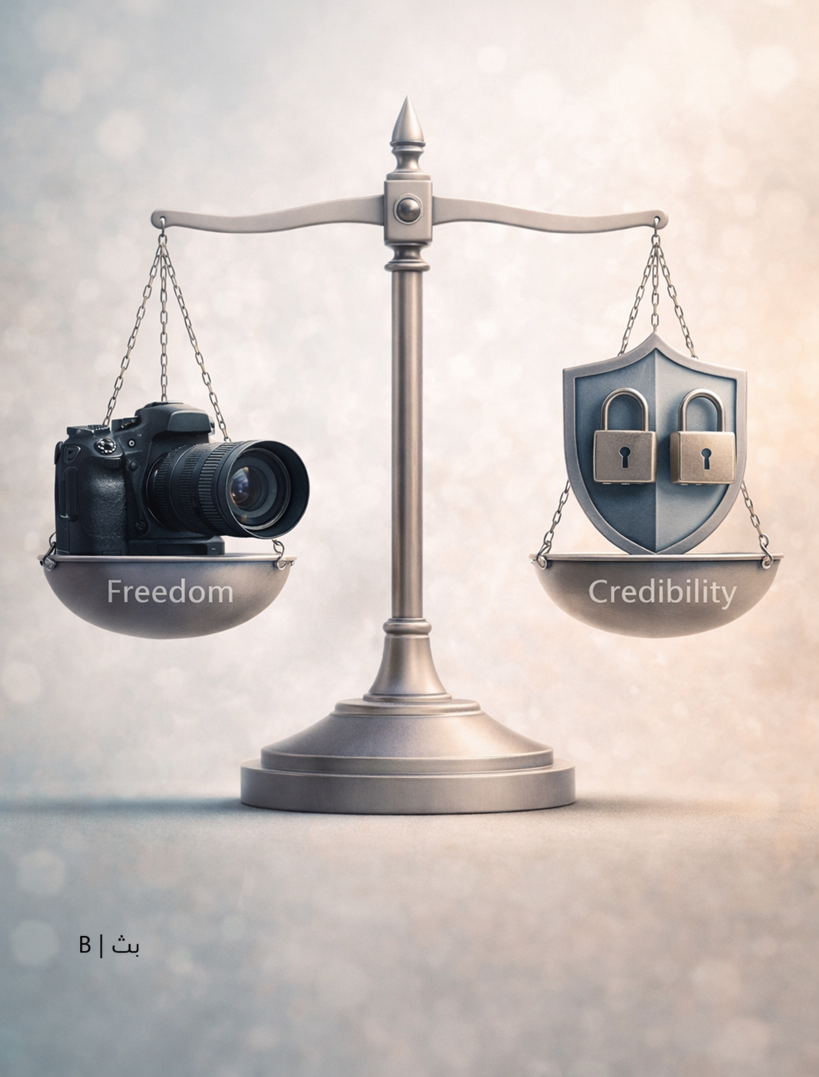
In this context, the concept of the “margin of freedom and credibility” emerges, where the strength of the media lies not only in accessing and disseminating information but also in its responsibility to verify and present it objectively, balancing the public’s right to know with national security requirements.
What Does Trump Seek Through These Attacks?
1. Unifying the Domestic Front
Trump aims to create a unified narrative that supports his military policies and reduces critical voices that may influence public opinion or congressional decisions.
2. Enhancing the Legitimacy of Military Decisions
By questioning the media, Trump seeks to portray his military decisions as necessary and legitimate in the face of what he describes as “biased” media coverage.
Is Trump Right?
The answer is not absolute and is characterized by complexity. On one hand, some media outlets may focus on the negative aspects of wars, such as human losses or operational setbacks, which decision-makers may interpret as bias or as undermining the war effort. On the other hand, the watchdog role of the media is a fundamental pillar of the American democratic system, contributing to accountability, transparency, and the prevention of the misuse of power. Thus, the conflict between Trump and the media does not necessarily indicate that one side is entirely right or wrong; rather, it reflects the natural tension between national security requirements and the media’s duty to convey the truth.
3. Influencing Election Outcomes
In the American context, political discourse cannot be separated from electoral considerations. Attacking the media is often used as a means to enhance popularity and gain political support.
Media Between Special Agendas and National Rights
Amid this conflict, a fundamental question arises regarding the role of the media: Does it truly reflect the national interest, or is it influenced by political or economic agendas? While some political leaders accuse media outlets of bias or of promoting specific orientations, defenders of the media argue that its primary role is to protect the public’s right to information and to exercise oversight over authority. This highlights the delicate balance between media freedom and independence on one hand, and its national responsibility to provide accurate and objective information on the other, ensuring that it is not exploited as a tool in political or electoral conflicts.
Are American Media Negative Toward the War?
The answer is not absolute but rather complex:
1. A Naturally Critical Media
American media are characterized by their watchdog role, striving to hold authority accountable and uncover the truth. This may sometimes be interpreted as negativity toward military operations.
2. Diversity of Media Orientations
The American media landscape is diverse; some outlets tend to support government policies, while others adopt critical positions, reflecting pluralism within the media environment.
3. Focus on the Human Dimension
Media coverage often highlights human losses and the humanitarian consequences of wars, which may contrast with the official narrative that emphasizes military achievements.
The Influence of American Media on Global Media
1. Centrality of the American Narrative
Given the global prominence of the United States in the media sphere, many media organizations worldwide rely on American news agencies and networks as primary sources, granting these narratives extensive global influence.
2. Risks of Unverified Transmission
When international media outlets relay news from American sources without scrutiny or independent analysis, they may inadvertently reproduce the same narrative, whether supportive or critical.
3. Shaping Global Public Opinion
American media coverage significantly influences how global audiences perceive wars, underscoring the necessity for more balanced and independent media approaches.
Media and Wars – Between Professionalism and Alignment
The relationship between the media and authority during wartime is highly sensitive. The media stand between two essential duties:
- Conveying the truth with professionalism and objectivity.
- Respecting national security without descending into propaganda.
In this context, the media become an arena of tension between freedom of expression and national security requirements—a dynamic that reflects the nature of democratic systems that allow for diverse voices and perspectives.
Conclusion: The War of Narratives Before the War of Weapons
The attacks by Trump and the U.S. Secretary of Defense on the media cannot be understood in isolation from the war of narratives that accompanies any military conflict. American media are not inherently negative but are rather critical and diverse, while political leaders seek to unify the narrative in ways that serve their strategic objectives.
Globally, the excessive reliance on the American narrative without scrutiny places a greater responsibility on international media to provide independent and balanced interpretations of events.
Ultimately, wars are not decided solely on the battlefield but also in the minds of the public, where competing narratives shape perceptions of victory or defeat.